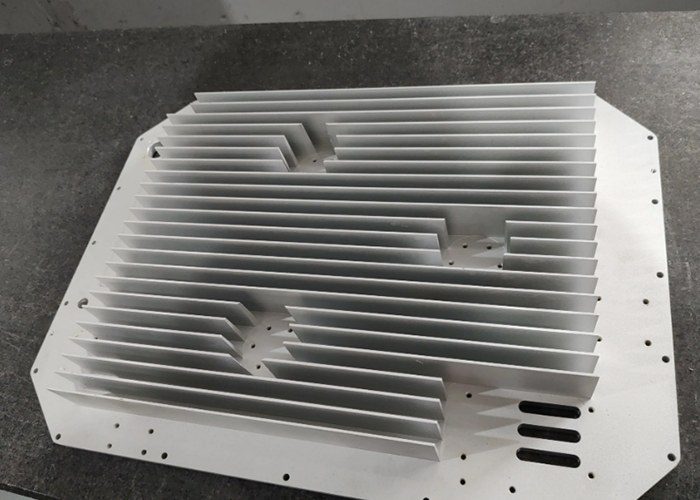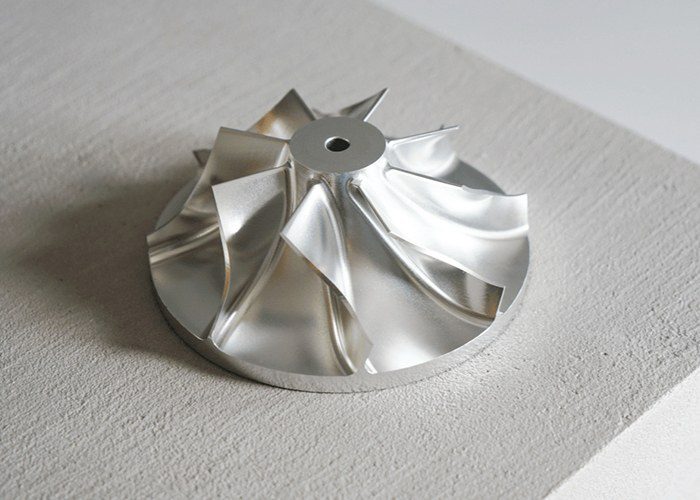
Mechanical machining, often simply referred to as machining, is the cornerstone of modern manufacturing. It is a controlled material-removal process used to shape raw stock—such as metal, plastic, wood, or ceramic—into a desired final form and size with a high degree of precision. By employing machine tools and cutting tools, machining subtracts material in the form of chips to create parts that meet exact specifications. This transformative process is fundamental to producing everything from simple bolts and gears to the complex components found in jet engines, medical implants, and automotive systems.
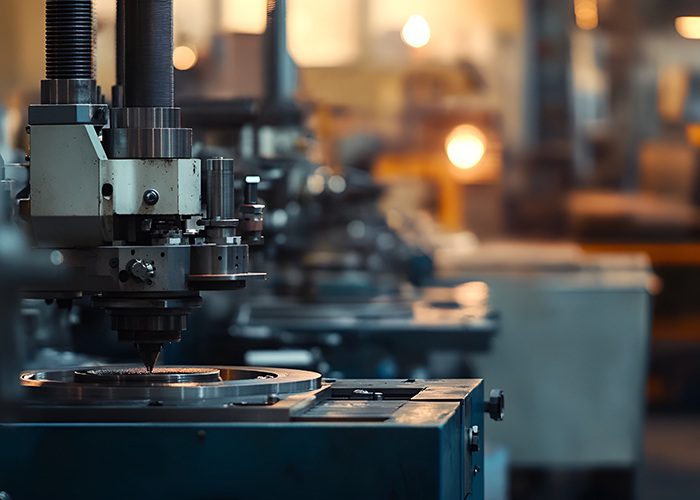
At its core, machining is a subtractive manufacturing technique, contrasting with additive processes like 3D printing, which build parts layer by layer. The principle is straightforward: a cutting tool, harder than the workpiece, is brought into controlled contact with it. This interaction, involving precise movements and forces, shears away layers of material. The success of this operation hinges on the interplay of several key elements: the machine tool (providing power and motion), the cutting tool (geometry and material), the workpiece (its properties), and the operating parameters (speed, feed, depth of cut). Mastery of these variables determines the quality, accuracy, and efficiency of the machined part.
The science of machining also delves deep into material science and mechanics. Understanding how different materials behave under stress, how they deform, and how heat is generated and dissipated at the cutting zone is critical. Excessive heat can soften the tool, alter the workpiece’s material properties, or cause thermal expansion, ruining tolerances. Therefore, strategies like using cutting fluids (coolants) are essential to lubricate, cool, and flush away chips. Furthermore, the theory of chip formation—whether continuous, discontinuous, or segmented—provides insights into cutting forces, surface finish, and tool wear, guiding machinists in selecting optimal conditions.
The universe of machining is vast, encompassing several primary processes, each capable of generating distinct geometries:
- Turning: Performed on a lathe, this process rotates the workpiece while a single-point cutting tool moves linearly along it. Turning is ideal for producing cylindrical parts, creating features like diameters, tapers, grooves, and threads. Engine shafts, pistons, and bushings are classic products of turning.
- Milling: One of the most versatile processes, milling uses a rotating multi-point cutting tool to remove material from a stationary workpiece. The tool can move in multiple axes, allowing for the creation of complex flat, contoured, and threaded surfaces. Operations like face milling, pocket milling, and slotting are all within its purview. Engine blocks, aerospace frames, and mold dies are typically milled.
- Drilling: The fundamental process for creating round holes using a rotating drill bit. While conceptually simple, precision drilling requires careful consideration of hole straightness, diameter accuracy, and surface finish. Related processes like reaming (enlarging and finishing a hole) and boring (enlarging a hole with a single-point tool for high precision) are often used in sequence with drilling.
- Grinding: This process uses an abrasive wheel, composed of thousands of hard grains, as the cutting tool. Grinding is primarily a finishing operation, achieving exceptional dimensional accuracy and surface finishes unmatched by conventional cutting. It is used for hardening already-machined parts, creating ultra-precise tooling, and sharpening other cutting tools.
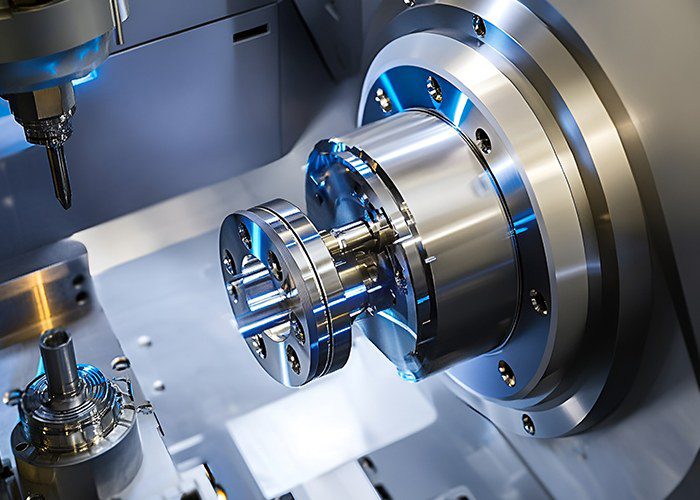
The advent of Computer Numerical Control (CNC) has revolutionized mechanical machining. CNC machines follow programmed instructions (G-code) to control all movements and functions with superhuman consistency and complexity. This automation allows for the mass production of identical parts, the machining of intricate 3D shapes that would be impossible manually, and a dramatic increase in productivity and repeatability. Modern machining centers often combine multiple operations (milling, turning, drilling) into a single, automated cell, further enhancing efficiency.
From the craft of a manual machinist shaping a one-off prototype to the relentless, lights-out operation of a fully automated CNC factory line, mechanical machining remains indispensable. It is the bridge between design and reality for high-strength, high-precision components. While additive manufacturing opens new frontiers for complex geometries and prototyping, machining continues to be unrivaled for the volume production of parts where material integrity, tight tolerances (often within microns), and superior surface finish are paramount. In essence, mechanical machining is the disciplined art and rigorous science of sculpting the modern industrial world, one precise cut at a time.