In the world of modern manufacturing, few technologies have been as transformative as Computer Numerical Control (CNC) machining. At the heart of this revolution lie two foundational processes: CNC turning and CNC milling. While both are subtractive manufacturing methods—meaning they create parts by removing material from a solid workpiece rather than adding it—they operate on fundamentally different principles and excel at producing distinctly different types of geometries. Understanding the difference between these two processes is essential for anyone involved in design, engineering, or production.
The Core Difference: What Spins?
The simplest way to distinguish CNC turning from CNC milling is to ask one question: which piece rotates? In CNC turning, the workpiece spins. The raw material—typically a cylindrical bar of metal, plastic, or other material—is securely held in a chuck and rotated at high speed by the lathe’s spindle. A stationary cutting tool then advances into the spinning material, shaving away excess stock to achieve the desired shape. This is often compared to a potter’s wheel: the clay spins while the potter’s hands (the cutting tools) shape it.
In CNC milling, the situation is reversed. The cutting tool rotates at high speed while the workpiece remains stationary, clamped firmly to a machine bed. The rotating tool—equipped with multiple cutting edges—moves along various axes to carve out material. Think of it like a drill press, but one capable of moving in multiple directions to create complex shapes, slots, holes, and contours.
CNC Turning: The Art of the Cylinder
CNC turning is performed on a machine called a CNC lathe or turning center. Because the workpiece rotates, turning is inherently suited for producing parts with rotational symmetry. Common applications include shafts, bushings, bolts, valves, threaded components, and pipes. The process can shape both the external diameter (outside turning) and the internal diameter (boring), as well as perform operations like facing (creating a flat end surface), grooving, threading, and drilling along the center axis.
One of turning’s greatest strengths is its efficiency and surface quality. Because the cutting tool maintains continuous contact with the rotating workpiece, turning produces exceptionally smooth surface finishes and can hold tight concentricity tolerances. It is also highly cost-effective for high-volume production of cylindrical parts, with fast cycle times and minimal setup requirements for repeatable geometries.
CNC Milling: Versatility in Three Dimensions
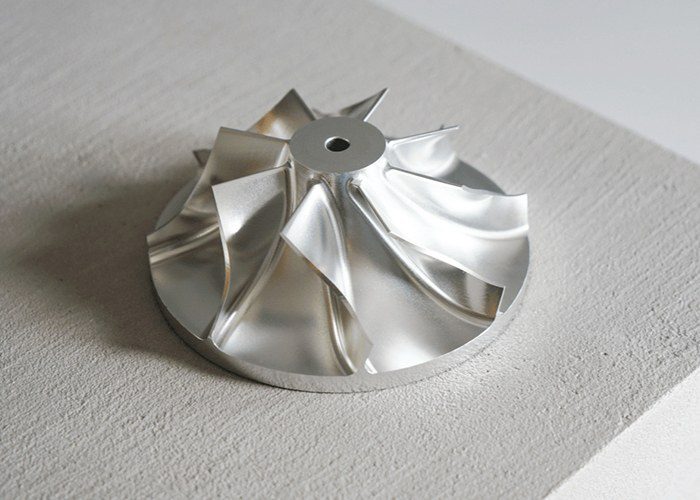
CNC milling, performed on a milling machine or machining center, offers far greater geometric flexibility. The rotating multi-point cutting tool—such as an end mill or face mill—can move along multiple linear axes (typically X, Y, and Z) and, on advanced machines, rotational axes as well. This allows milling to produce flat surfaces, pockets, slots, complex 3D contours, angled features, and intricate details that turning simply cannot achieve.
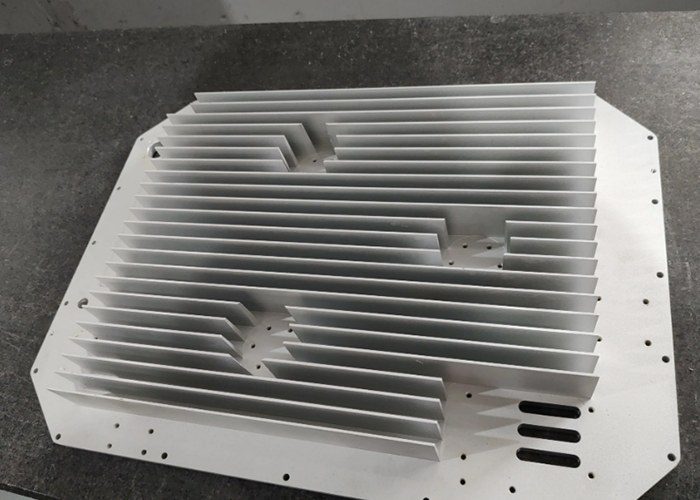
Milling is the go-to process for prismatic parts—components with flat faces and irregular shapes—such as engine blocks, molds, housings, brackets, and heat sinks. Multi-axis milling machines (4-axis and 5-axis) can machine complex parts from multiple angles in a single setup, reducing the need for repositioning and improving accuracy.
However, milling has its trade-offs. The intermittent cutting action—where the tool engages and disengages the material—can be harder on tooling, and milling generally requires more setup time and higher tooling costs compared to turning for simple cylindrical parts.
Mill-Turn: The Best of Both Worlds
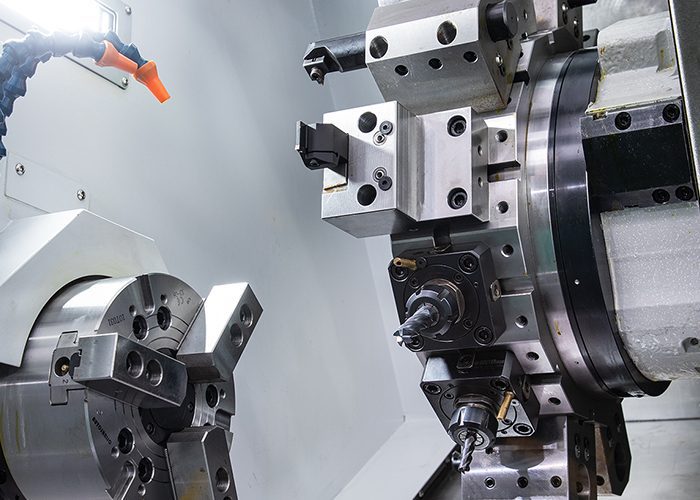
Modern manufacturing has given rise to a hybrid solution: mill-turn centers. These multitasking machines combine the workpiece rotation of a lathe with the rotating tool capability of a milling machine, all in a single setup. With live tooling, C-axis spindle positioning, and often a Y-axis, mill-turn centers can perform both turning and milling operations without moving the part to a different machine. This eliminates secondary setups, reduces human error, improves part accuracy, and can complete up to four operations for every one performed by a standalone mill or lathe. Mill-turn is particularly valuable for complex rotational parts that require both cylindrical features and off-axis milling details, such as flats, keyways, or cross-holes.
Choosing the Right Process
The decision between turning and milling ultimately comes down to part geometry. As a general rule of thumb: if the part is round, turn it; if it’s any other shape, mill it. Turning excels at cylindrical, rotationally symmetrical components requiring high concentricity and smooth surface finishes. Milling offers unparalleled flexibility for complex, multi-faceted, and irregular geometries. For parts that demand both—cylindrical bodies with milled features—mill-turn centers provide a powerful, integrated solution that streamlines production and enhances precision.
Both CNC turning and CNC milling are indispensable pillars of precision manufacturing. By understanding their differences, strengths, and ideal applications, engineers and manufacturers can make informed decisions that optimize quality, cost, and lead time—turning raw material into finished parts with remarkable speed and accuracy.