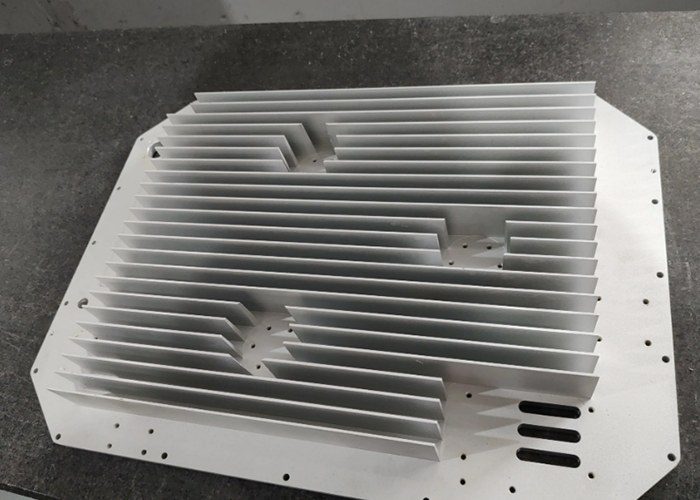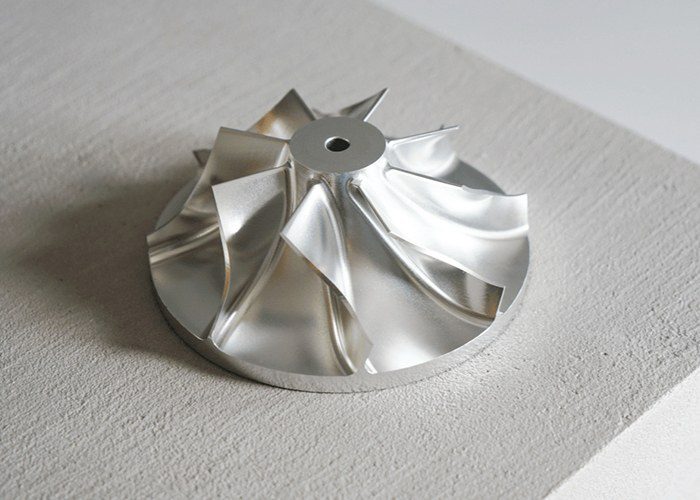
In the landscape of modern manufacturing, few technologies have reshaped industrial production as profoundly as Computer Numerical Control (CNC) machining. Among the various CNC processes, turning and milling stand as the two foundational methods for producing precision metal parts. While often discussed together, these processes are fundamentally distinct in their kinematics, each excelling at different geometries and serving complementary roles in the production ecosystem. Understanding how CNC turning and milling work—individually and in concert—is essential for engineers, manufacturers, and anyone involved in the production of high-quality metal components.
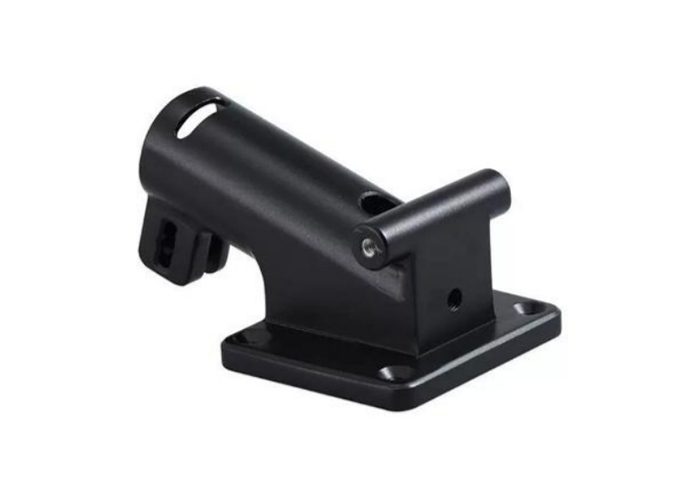
The Art of CNC Turning
CNC turning is a subtractive manufacturing process in which the workpiece rotates around its central axis while a stationary or slowly feeding cutting tool removes material to shape the exterior or interior. This kinematic arrangement naturally produces axisymmetric features: outside and inside diameters, shoulders, grooves, tapers, radii, and threads. The process is performed on CNC lathes or multi-axis turning centers, where the part is clamped and spun at high speed while rigid cutting tools engage the material.
The beauty of turning lies in its efficiency and precision for cylindrical geometries. Because all critical features reference the spindle axis, concentricity is straightforward to maintain. The continuous cutting action generates mostly continuous chips and a steady cutting load, which is gentle on tool edges and delivers long tool life with stable thermal conditions. For shafts, bushings, bearing seats, pulleys, and other cylindrical parts, a lathe is typically the fastest route from bar stock to finished dimension. Core turning operations include facing, external and internal diameter turning, boring, grooving, parting-off, on-center drilling, and thread turning.
The Versatility of CNC Milling
CNC milling operates on a fundamentally different principle. In milling, a rotating cutting tool—typically an end mill or face mill—removes material from a securely clamped, stationary workpiece. The relative motion between tool and workpiece is produced by the tool’s rotation combined with CNC-controlled linear and rotary axes that move the workpiece and/or spindle.
This configuration excels at prismatic and freeform shapes: flat surfaces, pockets, slots, bosses, planar faces, and sculpted 3D surfaces that turning cannot generate. Multi-axis milling machines—ranging from 3-axis to 5-axis configurations—can reach undercuts, compound angles, and complex contours. Common milling operations include face milling for planar surfaces, end milling for pockets and vertical walls, contouring and 3D surfacing, as well as drilling, tapping, and reaming. The geometric versatility of milling makes it indispensable for producing fixtures, housings, plates, brackets, molds, and intricate mechanical assemblies.
Complementary Strengths, Not Competition
The relationship between turning and milling is not one of competition but of complementarity. A simple rule of thumb guides the choice: if the part is round, turn it; if it is any other shape, mill it. Turning delivers superior surface finish on cylindrical features, high concentricity, and efficient production of rotationally symmetric components with tight diameter tolerances. Milling offers unparalleled flexibility for complex and irregular shapes, with the ability to machine multiple faces and features in a single setup.
Yet the distinction is increasingly blurred by modern machine tool technology. Advanced turning centers now incorporate live tooling—powered rotary tools mounted on the turret—that enable drilling, milling, tapping, and engraving without removing the part from the lathe. With C-axis spindle positioning and Y-axis movement, these machines can mill flats, keyways, and off-axis features directly on the turning platform. Conversely, some machining centers can perform limited turning operations through interpolation.
The Rise of Mill-Turn Centers
The most significant advancement in recent years has been the emergence of CNC mill-turn centers—hybrid machines that combine true turning and full-power milling in a single platform. Built on a lathe architecture with a main spindle (and often a sub-spindle), these machines add live tooling, a milling spindle, and linear axes to perform both cylindrical and prismatic operations in one coordinated program.
The advantages are compelling. By consolidating multiple processes into a single setup, mill-turn centers eliminate secondary operations, reduce errors from manual transfers between machines, and significantly increase overall part accuracy. Gone are the days of moving a part across a lathe, mill, and drill press—it is now produced in one seamless cycle. Modern mill-turn centers can reduce cycle time by up to 40% in high-mix production while achieving repeatability as tight as ±0.005 mm. The result is tighter feature relationships on parts that combine cylindrical and prismatic features—valve bodies, connectors, medical implants, and aerospace components—all sharing one coordinate system and one datum.
Applications Across Critical Industries
CNC turning and milling together serve virtually every sector of advanced manufacturing. In the automotive industry, turning produces engine components, transmission housings, wheel hubs, and axles, while milling handles complex brackets, cylinder heads, and mold components. The aerospace sector relies on turning for lightweight yet strong components such as landing gear and structural parts, and on milling for complex housings, turbine blades, and precision fittings. In medical device manufacturing, both processes are essential for creating surgical instruments, implants, orthopedic screws, and custom prosthetic joints machined from medical-grade alloys with micron-level precision. Electronics, oil and gas, robotics, and defense industries similarly depend on these processes for everything from miniature connectors to heavy-duty equipment components.
Precision, Materials, and the Future
Modern CNC turning and milling achieve remarkable precision. Tolerances as tight as ±0.01 mm are routinely attainable, with standard CNC milling achieving surface finishes of Ra 0.8–3.2 μm and fine milling reaching Ra 0.4–0.8 μm. The processes work with an extensive range of materials including aluminum, steel, stainless steel, titanium, brass, bronze, copper, and zinc alloys, as well as engineering plastics and composites.
As manufacturing demands continue to evolve toward greater complexity, tighter tolerances, and faster lead times, the integration of turning and milling capabilities will only deepen. The distinction between “turning” and “milling” is giving way to a unified vision of multi-tasking machining—one in which parts are completed in a single setup, with a single program, on a single machine. This is not merely a technological evolution; it is a fundamental shift in how precision metal parts are conceived, designed, and produced. For manufacturers committed to quality, efficiency, and innovation, mastering both CNC turning and milling—and understanding how they work together—is no longer optional. It is essential.