
In an era defined by technological miniaturization, extreme performance demands, and zero tolerance for failure, precision CNC machining has emerged as the foundational manufacturing process upon which countless industries depend. From the turbine blades that power commercial aircraft to the surgical implants that save lives, precision-machined metal components are everywhere — yet their creation remains one of the most sophisticated engineering endeavors in the industrial world.
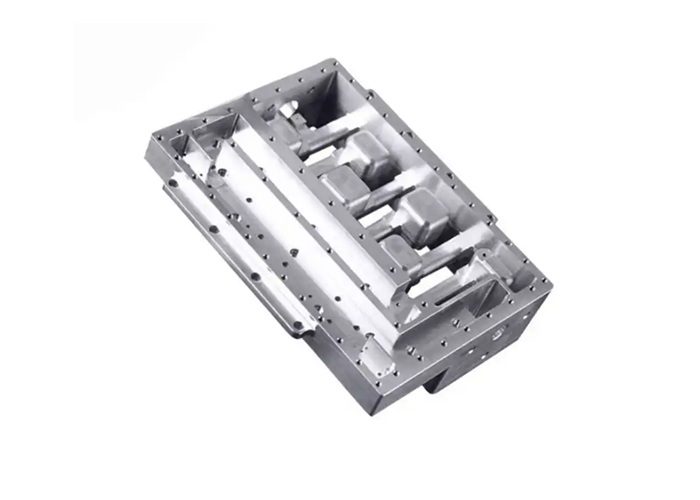
What Defines Precision CNC Machining?
At its core, precision CNC (Computer Numerical Control) machining is a subtractive manufacturing process that removes material from a workpiece to produce parts adhering to exceptionally tight dimensional tolerances. While standard CNC machining typically achieves tolerances of approximately 0.12 to 0.2 millimeters, precision machining pushes far beyond — achieving tolerances as close as 0.0025 millimeters (0.0001 inches). This level of accuracy is not merely a marketing claim; it represents the technical capability to consistently hit tolerances of 0.01 millimeters or tighter.
The process begins with digital blueprints created in CAD (Computer-Aided Design) software, which are then translated into machine instructions through CAM (Computer-Aided Manufacturing) systems. These instructions — G-codes and M-codes — direct every movement of the cutting tool with micron-level precision. However, achieving true precision requires far more than sophisticated software. It demands a controlled synergy between the machine, the tooling, and the environment. Machine rigidity dampens vibrations that cause “chatter,” high-quality tooling resists deflection under load, and climate-controlled environments prevent the thermal expansion that can push a part beyond its specified limits. A temperature change of just a few degrees can cause a metal component to expand beyond tolerance, rendering hours of machining work useless.
Materials That Define the Craft
Precision CNC machining works with an extraordinary range of metals, each presenting unique challenges and opportunities. Aluminum alloys remain the most widely machined material, prized for their excellent machinability, high strength-to-weight ratio, and natural corrosion resistance. Stainless steel offers exceptional corrosion resistance and is ubiquitous in medical devices, food equipment, and industrial machinery. Titanium alloys — essential in aerospace and medical implant applications — provide remarkable strength and biocompatibility but are notoriously difficult to machine, demanding strict control over tooling and cutting conditions. Copper and brass materials, valued for their electrical and thermal conductivity, are common in electronic and electrical components. The growing use of advanced high-performance metals, including superalloys like Inconel and Hastelloy, continues to push the boundaries of what precision machining can achieve.
Industries That Depend on Precision
The applications of precision CNC machining span virtually every sector of advanced manufacturing. In the aerospace industry, components must withstand extreme temperatures, pressures, and stresses while maintaining absolute reliability. Engine critical components, aircraft structural parts, and complex surface geometries are all produced through precision machining of titanium alloys and high-temperature alloys.
The medical device industry demands equally exacting standards. Implantable devices, surgical instruments, and micro-structure components require not only tight dimensional tolerances but also high surface finish requirements and strong batch consistency. A single micron of deviation in a surgical tool or implant can have life-altering consequences.
In automotive manufacturing, the rise of electric and smart vehicles has driven increasing demand for precision-machined components. Engine parts, transmission systems, and precision molds must be produced with high consistency across massive production volumes. The electronics and communication industry — as devices become smaller and more integrated — requires micro-structures and precision housings manufactured with both speed and accuracy.
The Multi-Axis Revolution
One of the most transformative developments in precision machining has been the adoption of multi-axis CNC machines, particularly 5-axis systems. Unlike traditional 3-axis machines, 5-axis machining allows the cutting tool to approach the workpiece from multiple angles, enabling the completion of complex geometries in a single setup. This consolidation is critical because every time a part is moved or re-fixtured, the risk of losing a few micrometers of accuracy increases — and in precision machining, micrometers matter. Multi-axis machining also improves surface finish, reduces setup time, and enables features that would be impossible to create with 3-axis methods.
Quality Through Tolerances and Surface Finish
Two critical factors determine whether a precision-machined part performs as intended: tolerances and surface finish. CNC machining tolerances define the allowable variation in a part’s dimensions from its nominal value. Tighter tolerances demand more precise machines, slower cutting speeds, additional inspection steps, and stable, often climate-controlled processes. Surface finish — commonly measured in Ra (roughness average) values — affects friction, wear resistance, sealing performance, fatigue strength, and aesthetic quality. A standard machined finish might measure Ra 3.2 µm, while high-precision functional surfaces require Ra 0.8 µm or lower. The key is not to achieve the tightest possible tolerance, but the right tolerance for the application — over-specifying increases cost and lead time without necessarily improving performance.
Challenges and Emerging Trends
Despite its capabilities, precision machining faces significant challenges. Thermal management remains critical — heat generated during machining causes tool wear, dimensional inaccuracies, and reduced surface quality. Tool wear introduces dimensional drift, and managing the complex interplay of feed rates, speeds, and cooling is essential for maintaining consistency.
Looking ahead, the industry is being reshaped by several powerful trends. AI-native machining is moving from experimental to mainstream, with real-time sensor feedback automatically adjusting feeds, speeds, and toolpaths in response to vibration, load, or temperature changes. Digital twins — living ecosystems that mirror the entire machining process — are becoming the production backbone, enabling virtual commissioning and defect elimination before the first chip is cut. Hybrid manufacturing, combining metal deposition with CNC cutting, is gaining traction in aerospace, energy, and medical sectors. And sustainability is becoming a core metric, with greater adoption of minimum quantity lubrication, dry cutting, coolant recycling, and material recycling — particularly of titanium and nickel alloys.
Conclusion
Precision CNC machining of metal parts is far more than a manufacturing process — it is the enabling technology behind the most demanding applications in modern engineering. From the operating room to the flight deck, from the assembly line to the semiconductor fab, precision-machined components make possible what would otherwise be impossible. As AI, digital twins, and hybrid manufacturing continue to evolve, the capabilities of precision machining will only expand — delivering ever-tighter tolerances, ever-more-complex geometries, and ever-greater reliability. In a world where a fraction of a millimeter can mean the difference between success and failure, precision CNC machining remains the gold standard.


