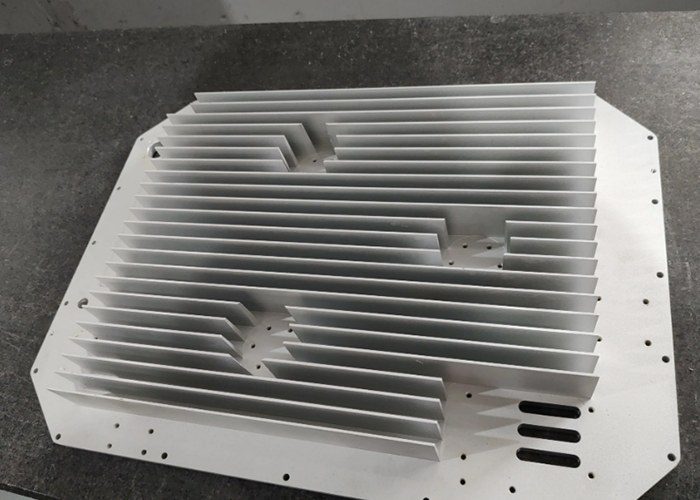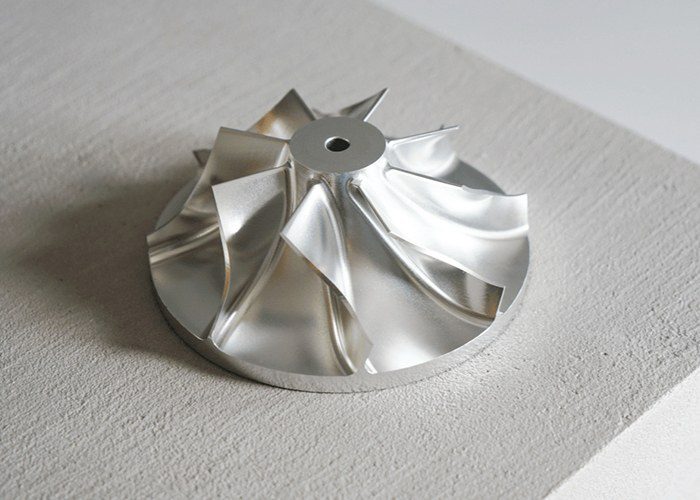
In the landscape of contemporary manufacturing, few technologies have proven as transformative as Computer Numerical Control (CNC) machining. This subtractive manufacturing process—in which pre-programmed software directs the movement of machine tools such as mills, lathes, and grinders—has become the indispensable standard for producing industrial parts across virtually every sector of the global economy. From the turbine blades that power commercial aircraft to the surgical instruments that save lives, CNC-machined components form the silent infrastructure of the modern world.
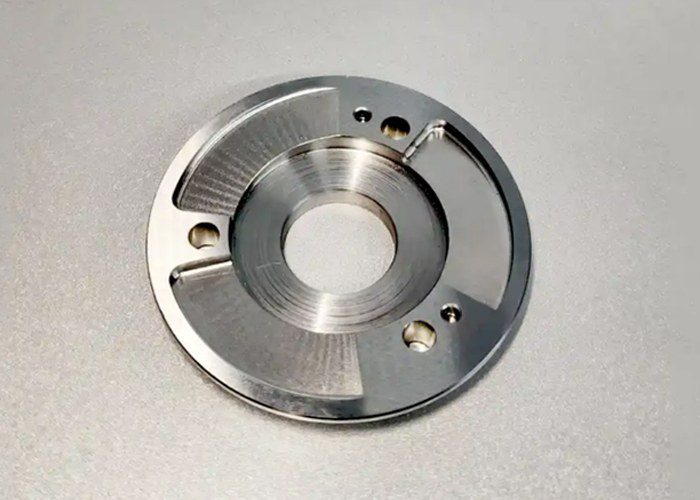
The Anatomy of the CNC Process
The journey from raw material to finished industrial part begins with a digital blueprint. Engineers create a three-dimensional model of the component using Computer-Aided Design (CAD) software, defining every dimension, tolerance, and geometric feature. This digital model is then translated through Computer-Aided Manufacturing (CAM) software, where cutting tools, feed rates, spindle speeds, and machining strategies are selected based on the material and required precision. The CAM system generates G-code—a sequence of instructions that dictates every movement of the cutting tool with microscopic precision.
Once the program is loaded, the operator secures the raw workpiece to the machine table and installs the appropriate cutting tools. The CNC controller reads the G-code line by line, converting digital commands into physical motion through servo motors and actuators. Unlike manual machining, where accuracy depends on the skill and steadiness of the operator, CNC machining ensures repeatability across thousands of parts with minimal variation. Modern machines are equipped with sensors and closed-loop feedback systems that monitor spindle loads, vibrations, and tool conditions in real time, automatically adjusting toolpaths if deviations are detected.
Core Processes: Milling, Turning, and Beyond
Two primary processes dominate CNC machining of industrial parts: milling and turning. CNC milling employs a rotating cutting tool to remove material from a stationary workpiece, making it ideal for producing flat surfaces, complex contours, pockets, and slots. Multi-axis milling machines—ranging from three-axis to five-axis configurations—enable the production of intricate geometries in a single setup, eliminating the errors that accumulate when parts are repositioned manually. CNC turning, by contrast, rotates the workpiece while a stationary cutting tool shapes it, making it the go-to process for cylindrical components such as shafts, bushings, and threaded fasteners. Modern turning centers can now create complex parts with contours, grooves, and asymmetric features across multiple axes. Additional processes—including grinding, drilling, and electrical discharge machining (EDM)—further expand the capabilities of CNC manufacturing, enabling surface finishes as fine as Ra 0.1–0.4 µm and tolerances down to ±0.005 mm.
The Material Spectrum
CNC machining is remarkably versatile in its ability to work with an extensive range of materials. Aluminum alloys are among the most commonly machined metals, prized for their excellent strength-to-weight ratio and superior machinability. Stainless steel provides superior mechanical strength and reliable corrosion protection for use in harsh industrial settings. Titanium alloys and high-temperature nickel alloys—while more challenging to machine—are indispensable in aerospace and medical applications where lightweight strength and biocompatibility are paramount. Engineering plastics such as PEEK, PTFE, and polycarbonate offer chemical resistance, thermal stability, and electrical insulation for specialized components.
Industries Transformed by CNC Precision
The reach of CNC machining extends across virtually every industrial sector. In aerospace, the demand for lightweight, high-strength components with complex geometries drives the use of CNC machining for turbine blades, engine components, structural elements, and landing gear. The automotive industry relies on CNC machining for engine blocks, transmission parts, suspension components, and precision molds—applications where repeatability and tight tolerances are non-negotiable. In the medical device sector, CNC machining produces surgical instruments, orthopedic implants, and complex device components with the absolute precision that patient safety demands. The electronics and mold-making industries equally leverage CNC machining for intricate microstructures, precision-engineered housings, and high-fidelity cavities.
Advantages That Define the Standard
The ascendancy of CNC machining in industrial parts production rests on several decisive advantages. First is precision: modern CNC machines routinely achieve tolerances within microns, producing parts that fit together perfectly without grinding, fitting, or rework. Second is repeatability: once a program is validated, the machine can produce identical parts by the thousands with minimal variation. Third is efficiency: CNC machines can run unattended around the clock, dramatically reducing labor costs and lead times. Fourth is flexibility: the same machine can produce entirely different parts simply by loading a new program, making CNC machining equally suitable for rapid prototyping and high-volume production.
The Future: Smarter, Faster, More Integrated
The CNC machining industry is entering a new phase of transformation. Artificial intelligence is moving from experimental pilots to daily machine control, with AI-powered systems optimizing toolpaths in real time and predicting failures before they occur. Digital twin technology—once limited to simulation—now integrates design, process engineering, machining, and inspection into continuously updated models that make each production cycle smarter than the last. The convergence of additive 3D printing and subtractive CNC machining within hybrid platforms empowers manufacturers with enhanced design agility, expedited prototyping, and optimized material utilization. As global supply chains rebalance and sustainability becomes a core metric, CNC machining in 2026 is defined by integration and insight—factories that treat every machine cycle as a data event, captured, analyzed, and used to improve the next.
Conclusion
CNC machining has evolved far beyond its origins as a numerically controlled metal-cutting process. Today, it is the foundation upon which modern industrial manufacturing is built—a technology that transforms digital designs into physical reality with a precision, consistency, and efficiency that manual methods could never achieve. As artificial intelligence, digital twins, and hybrid manufacturing continue to reshape the landscape, CNC machining of industrial parts will only grow more capable, more intelligent, and more indispensable. In an era defined by complexity, customization, and unrelenting demands for quality, CNC machining remains the definitive answer to how the world makes things that matter.