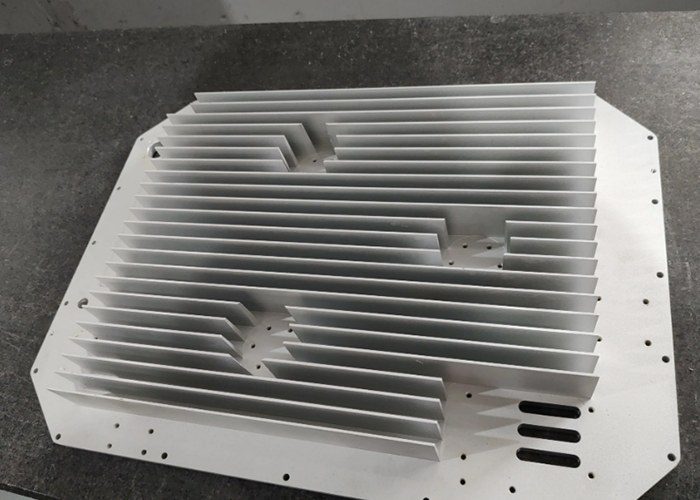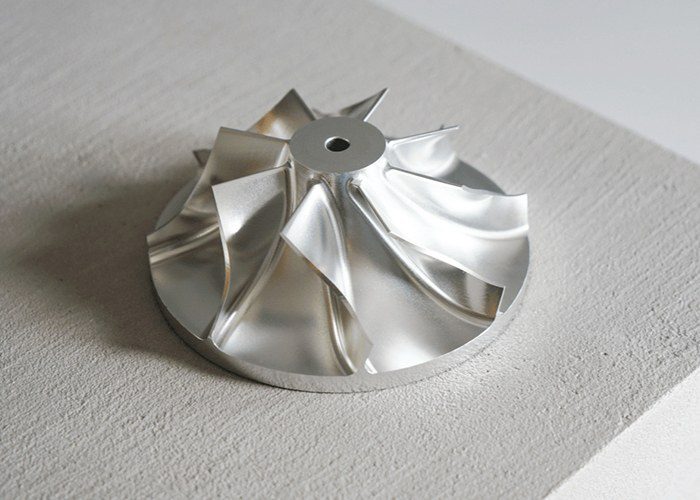
In the landscape of modern manufacturing, few technologies have reshaped production as profoundly as Computer Numerical Control (CNC) lathe machining. This process represents the convergence of traditional metalworking craftsmanship with digital precision, enabling industries to produce components with accuracy and efficiency that were unimaginable just a few decades ago.
Understanding the Fundamentals
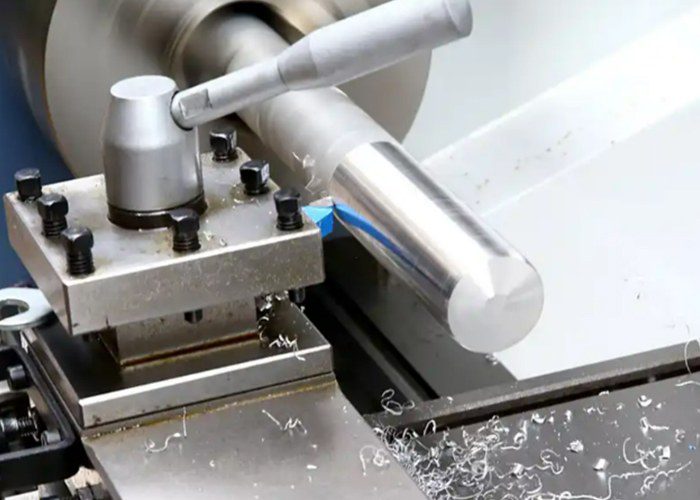
At its core, CNC lathe machining is a subtractive manufacturing process in which a rotating workpiece is shaped by stationary cutting tools under computer control. The workpiece is securely mounted in a chuck or collet and rotated around its central axis, while cutting tools move along multiple axes to remove material and create the desired geometry.
The “CNC” designation refers to the computer system that governs every aspect of the machining operation. Unlike conventional manual lathes that rely on an operator’s skill to control spindle speed, feed rates, and tool positioning through handwheels and levers, CNC lathes execute pre-programmed instructions with minimal human intervention. This digital control enables the production of parts with exceptional accuracy and repeatability, making CNC lathe machining indispensable across virtually every manufacturing sector.
How CNC Lathe Machining Works
The CNC turning process follows a systematic workflow that transforms a digital design into a finished physical component. It begins with engineering drawing analysis, where machinists examine part geometry, material characteristics, and tolerance requirements to develop an appropriate machining strategy. This information is then translated into a CNC program—typically using G-code—that contains precise instructions for tool movements, spindle rotation speeds, feed rates, and other critical parameters.
Once the program is loaded into the machine’s computer, the setup phase begins. The workpiece is mounted on the spindle, cutting tools are loaded into the turret, and the machine’s coordinate system is calibrated to ensure accurate positioning. During the machining operation itself, the spindle rotates the workpiece at controlled speeds while the turret indexes automatically to position the appropriate tool for each stage of the sequence. The process typically progresses through roughing (removing large amounts of material), semi-finishing, and finishing passes to achieve the final dimensions and surface quality.
Types of CNC Lathe Operations
CNC lathe machines are remarkably versatile, capable of performing a wide range of operations beyond basic turning. Turning removes material from the external surface of the rotating workpiece. Facing produces flat, smooth surfaces at the ends of the workpiece. Thread cutting creates screw threads on external or internal surfaces. Grooving cuts channels or recesses into the workpiece. Drilling, boring, and reaming create and refine holes. Parting separates finished components from the raw material stock. By integrating knurling for improved grip and chamfering for burr-free edges, CNC lathes can turn out fully finished components in a single clamping cycle—minimizing manual handling and maximizing dimensional accuracy.
Machine Configurations
CNC lathes are available in various configurations to suit different production requirements. Horizontal lathes are the most common, offering flexibility for workpieces ranging from tiny precision components to parts up to four metres in diameter. Vertical lathes are ideal for large-diameter, short-length workpieces that are difficult to clamp on horizontal machines. Swiss-type lathes (long turning machines) achieve superior stability in small, complex precision part production by supporting the workpiece with a guide bushing right at the point of cut. Multi-tasking machines combine turning with milling, drilling, and other operations, enabling complete machining of complex parts in a single cycle.
Applications Across Industries
The precision and efficiency of CNC lathe machining make it essential across a remarkable range of industries. In aerospace, CNC lathes produce critical components for aircraft programs, where dimensional accuracy and material reliability are paramount. The automotive industry relies on CNC turning for engine components, transmission parts, and powertrain elements. Medical device manufacturing demands the tight tolerances that CNC lathes deliver for surgical instruments and implants. Electronics manufacturers use CNC turning for connectors, housings, and other precision components. From defense and shipbuilding to energy and general industrial machinery, CNC lathe machining underpins modern production.
Advantages Over Conventional Machining
The advantages of CNC lathe machining over conventional manual turning are substantial and transformative. Precision and repeatability stand at the forefront—CNC machines can produce identical parts with minimal tolerance variation, a critical requirement for high-volume production and industries where component consistency is non-negotiable. The automation of the machining process eliminates many manual steps, with some manufacturers reporting production time reductions of up to 40 percent. Once a program is created, it can be reused indefinitely, making CNC lathes exceptionally efficient for large batches and repeat orders. The multi-axis capability of modern CNC lathes allows for complex geometries that would be unfeasible or impossible on manual machines. Additionally, CNC lathes can operate with minimal supervision, including unmanned operation with bar loader magazines, further enhancing productivity.
Evolution and Future Directions
Emerging from the numerical control innovations of the 1950s, CNC lathe technology developed as conventional lathes were integrated with early computer control systems. By the 1970s, CNC lathes had become widely adopted across medium and large manufacturing enterprises. Today, the technology continues to evolve, with five-axis machining centers achieving micron-level precision and multi-spindle, multi-turret configurations enabling simultaneous operations that dramatically increase throughput. As industries demand ever-greater precision, complexity, and efficiency, CNC lathe machining will undoubtedly remain at the heart of modern manufacturing.
In essence, CNC lathe machining represents the synthesis of human ingenuity and digital precision—a technology that transforms raw material into the precision components that power our world, from the cars we drive to the planes that unite the world.