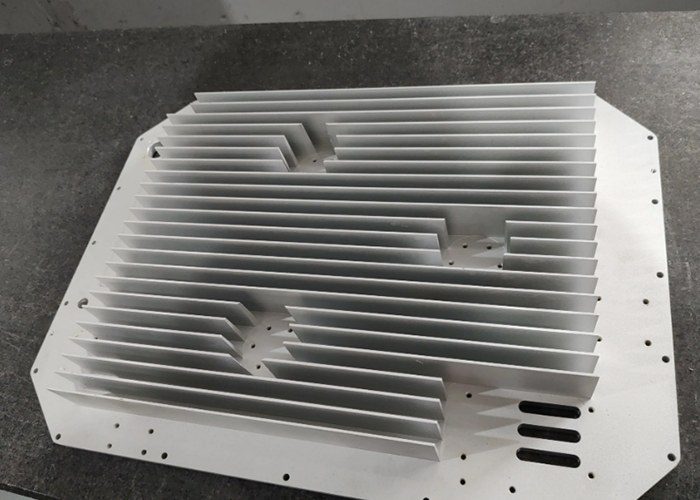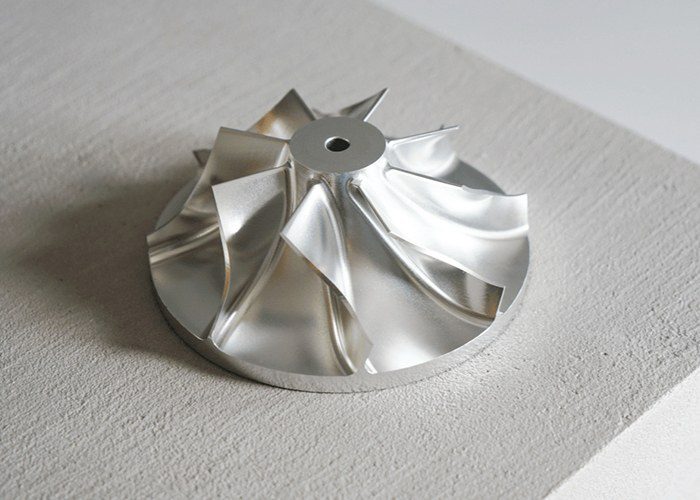
In the relentless pursuit of speed, durability, and weight reduction, the bicycle industry has undergone a profound transformation over the past decade. At the heart of this evolution lies CNC (Computer Numerical Control) milling—a manufacturing process that has redefined what is possible in bicycle component design and production. From aerospace-grade aluminum frames to intricately machined drivetrain components, CNC milling has become the gold standard for producing high-performance bicycle parts that meet the exacting demands of professional cyclists and enthusiasts alike.
Understanding CNC Milling in Bicycle Manufacturing
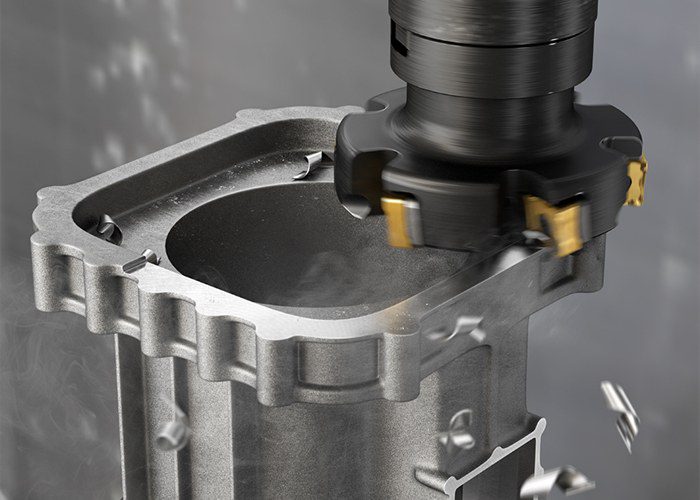
CNC milling is a subtractive manufacturing process that uses computer-controlled rotating cutting tools to remove material from a solid block—known as a billet—to create precise, complex geometries. The process begins with engineers creating detailed CAD (Computer-Aided Design) models of the desired bicycle part. These digital blueprints are then translated into machine code—typically G-code and M-code—that directs the movements of the CNC machine with extraordinary precision. The result is a component that matches its digital design within tolerances as tight as ±0.01mm, ensuring that every part functions exactly as intended.
This level of precision is not merely a matter of manufacturing convenience; it is essential for bicycle performance. A bottom bracket that deviates from its specified dimensions by even a fraction of a millimeter can compromise bearing alignment, increasing friction and reducing power transfer efficiency. Brake mounts that are not perfectly positioned can lead to uneven pad wear and diminished stopping power. CNC milling eliminates these variables, producing components that fit together seamlessly and perform optimally under the most demanding conditions.
The Advantages of CNC-Milled Bicycle Components
The benefits of CNC milling for bicycle parts extend far beyond dimensional accuracy. Perhaps the most significant advantage is the ability to achieve exceptional strength-to-weight ratios through strategic material removal. Unlike casting or forging, which produce parts with uniform material distribution, CNC milling allows engineers to place material precisely where it is needed and remove it where it is not. This capability is vividly demonstrated by companies like Pole Bicycles, which machines its Hiisi frames from solid aluminum billets—transforming 100 kilograms of raw material into a 3,934-gram frame that matches its CAD model within ±0.05mm. Every wall thickness is individually optimized: stress-bearing areas remain thicker while low-stress sections are machined away to save weight.
Another compelling advantage is design freedom. CNC milling can produce intricate geometries that would be impossible or prohibitively expensive with traditional manufacturing methods. Complex internal pockets, compound curves, and organic shapes inspired by generative design software can all be realized through multi-axis CNC machining. Five-axis CNC machines, in particular, can complete complex parts in a single setup, machining multiple faces and undercuts without the need for repositioning. This capability has enabled the creation of one-piece frames milled from single blocks of aluminum—a concept that was once considered impractical but is now a reality, as demonstrated by the FRACE F160 mountain bike milled from a 70-kilogram slab of 7075 aluminum.
Customization is yet another strength of CNC milling. Because the process is software-driven, modifying a design for a specific rider or application is straightforward. This adaptability establishes CNC machining as the preferred solution for customized and low-volume production, empowering manufacturers to produce personalized components while circumventing the substantial die and mold costs inherent in traditional metal forming.
Materials That Define Performance
The choice of material is critical in bicycle parts manufacturing, and CNC milling accommodates a wide range of options. Aluminum alloys—particularly 6061 and 7075—are among the most popular choices. 7075-T6 aluminum, originally developed for aerospace applications, offers an exceptional strength-to-weight ratio with strength and hardness comparable to steel. Its lightweight nature—approximately one-third the density of steel—makes it ideal for applications where every gram counts. Titanium alloys such as Ti-6Al-4V are also commonly machined for high-end components, offering superior corrosion resistance and fatigue life. For certain applications, stainless steel and even carbon fiber composites are processed using CNC machining techniques.
The use of aerospace-grade materials in bicycle manufacturing underscores the seriousness with which modern manufacturers approach performance. When a bicycle frame is milled from 7075 aluminum—a material typically reserved for aircraft fuselages and wing structures—it is a testament to the demanding standards of contemporary cycling.
The Manufacturing Process: From Billet to Bicycle
The journey from raw material to finished bicycle part is a carefully orchestrated sequence of operations. After the initial design phase, the CNC machine is set up with appropriate cutting tools and calibrated for the specific material and geometry. Machining typically proceeds through several stages: roughing operations remove the bulk of the material quickly, followed by finishing passes that achieve the final dimensions and surface quality.
Post-processing is equally important. Machined parts undergo rigorous quality inspection using coordinate measuring machines (CMM), laser scanners, and other precision measurement tools. Surface finishing techniques such as anodizing, bead blasting, and polishing enhance both appearance and corrosion resistance. Heat treatment may also be applied to relieve internal stresses and optimize mechanical properties.
The Future of CNC-Milled Bicycle Parts
As CNC technology continues to advance, the possibilities for bicycle component design and manufacturing will only expand. The integration of generative design software, which uses algorithms to optimize part geometry for strength and weight, is already producing components that push the boundaries of traditional engineering. Automation and robotics are streamlining production, reducing lead times, and improving consistency.
CNC milling has not replaced traditional manufacturing methods like forging or casting; each has its place. However, for applications where precision, customization, and weight optimization are paramount, CNC milling stands unrivaled. It represents the convergence of digital design and physical manufacturing—a process that transforms virtual concepts into tangible, high-performance bicycle components that enable riders to go faster, climb higher, and ride with confidence. In the world of cycling, where marginal gains can mean the difference between victory and defeat, that precision is not just an advantage—it is essential.