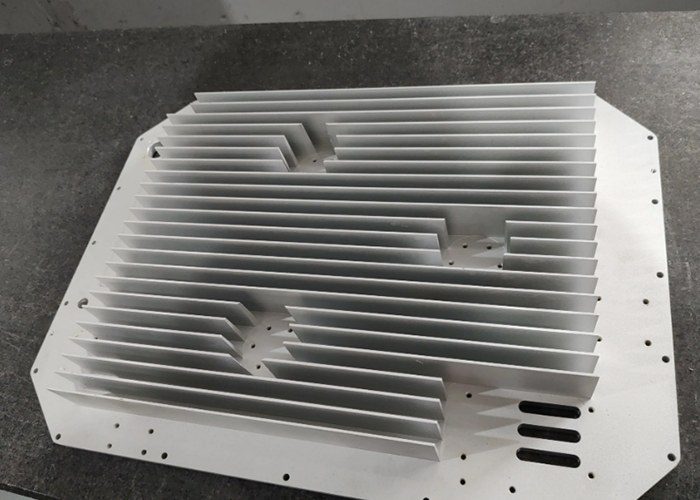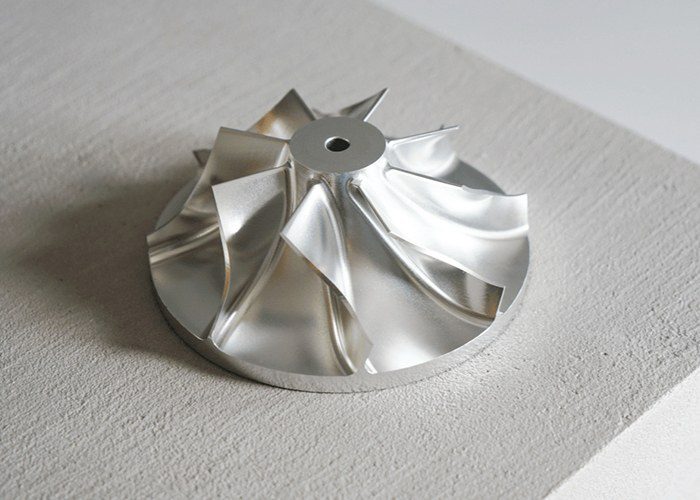
In the world of modern manufacturing, precision and efficiency are paramount. As industrial products have grown increasingly complex over time, manufacturing processes have evolved alongside them. While traditional 3-axis CNC milling remains widely used across the industry, the addition of a fourth axis has opened up new possibilities for creating intricate parts with greater accuracy and fewer setups. This article explores what 4-axis CNC milling is, how it works, its key advantages, and where it is commonly applied.
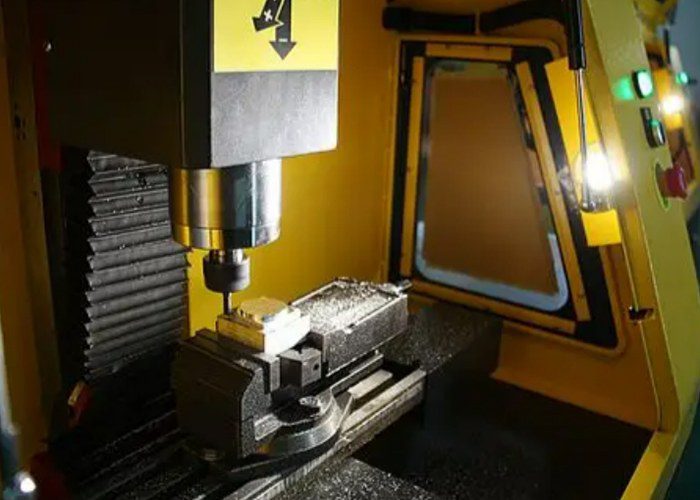
Understanding the Basics
At its core, 4-axis CNC milling is a machining process that expands upon traditional 3-axis CNC machining by adding a rotary axis—typically referred to as the A-axis—to the standard X, Y, and Z linear axes. A standard 3-axis milling machine moves the cutting tool in three linear directions: left to right (X-axis), front to back (Y-axis), and up and down (Z-axis), while the workpiece remains stationary. To machine multiple sides of a part on a 3-axis machine, the operator must remove the part from the fixture, reposition it, re-clamp it, and run the program again—a time-consuming process that introduces potential positioning errors.
A 4-axis CNC milling machine changes this paradigm by adding a rotational axis that allows the workpiece to rotate. In a typical vertical machining center, this fourth axis is mounted on the machine table and provides rotation around the X-axis. From the operator’s perspective, the A-axis allows the workpiece to roll forward or backward, exposing different faces to the cutting tool without requiring manual repositioning.
Two Operating Modes: Indexing and Simultaneous
4-axis CNC milling operates in two primary modes: indexing (also called 3+1 machining) and simultaneous machining.
Indexing involves rotating the workpiece to a programmed angle and locking it in place. The rotary axis remains stationary while the cutting tool executes standard 2D or 3-axis machining operations in the X, Y, and Z directions. This method is excellent for gaining improved access to different sides of the part and can significantly reduce the number of setups needed. Indexing is simpler to program and is often the entry point for shops new to 4-axis machining.
Simultaneous 4-axis machining, on the other hand, involves continuous rotation of the rotary axis while cutting takes place. All four axes move together as the tool follows complex three-dimensional surfaces. This allows for the machining of features wrapped around cylindrical geometry, such as helical paths, cam lobes, and contoured surfaces. Simultaneous machining produces cleaner cuts, tighter tolerances, and better surface finishes on rotary and cylindrical parts that indexing simply cannot match.
Key Advantages Over 3-Axis Machining
The primary benefit of 4-axis over 3-axis CNC machining is its capacity to achieve tighter tolerances and reduce fixturing requirements when manufacturing complex workpieces. This is particularly beneficial for high-volume production and complex designs.
Reduced Setups and Greater Efficiency: By incorporating rotational capabilities, a 4-axis CNC mill minimizes the need for repositioning the workpiece. Faces that would have required individual setups become accessible by simply rotating the part to the correct angle, all within one fixture and one reference datum. Not only does this reduce setup time, but it also enhances machining efficiency, resulting in faster cycle times and reduced overall costs.
Improved Precision and Accuracy: Each time a part is repositioned on a 3-axis machine, there is a risk of introducing positioning errors. By keeping the part in a single setup throughout the machining process, 4-axis machining eliminates these cumulative errors and improves positional accuracy between features on different faces.
Enhanced Geometric Flexibility: The additional rotational axis allows for the machining of complex geometries that would be challenging or impossible with a traditional 3-axis machine. Features such as angled holes, contoured surfaces, and helical profiles can be machined efficiently and accurately.
Better Surface Finish: The ability to perform continuous, uninterrupted cutting operations with a 4-axis CNC mill results in superior precision and surface finish quality. Consistent spindle speed and feed rate adjustments, combined with the ability to rotate the workpiece, contribute to superior surface finishes that are particularly advantageous in industries where surface integrity is paramount.
Common Applications
Celebrated for their flexibility, 4-axis CNC machines see widespread use, spanning everything from aerospace to consumer goods across multiple industries.
In the aerospace sector, 4-axis CNC machines are essential for producing complex components such as turbine blades, aircraft structural parts, and engine housings. The high precision and intricate geometries required in these parts are achievable due to the additional rotational axis. Similarly, in the automotive industry, 4-axis machining is used for engine components, structural parts, and complex industrial machinery. The medical device industry also benefits significantly from 4-axis capabilities, particularly for surgical tools and implants that require tight tolerances and complex geometries. Other applications include mold making, electronics, and general industrial manufacturing.
Programming Considerations
Programming 4-axis CNC machines is more complex than programming 3-axis machines. While indexing operations can often be programmed using standard G-code, simultaneous 4-axis work typically requires advanced CAM (Computer-Aided Manufacturing) software. Modern CAM solutions offer features such as wrapped toolpaths—which transform 2D and 3D strategies to wrap around a cylinder—and full simultaneous 4-axis motion control. These software tools enable teams to program complex toolpaths efficiently and reduce the risk of errors.
A Practical Middle Ground
4-axis CNC machining sits between 3-axis and 5-axis in terms of capability and cost. While it represents a significant investment compared to 3-axis machines, it is substantially more affordable than full 5-axis systems. For the right part geometry—cylindrical parts, multi-face components, and medium-complexity geometry—4-axis machining hits a sweet spot that neither 3-axis nor 5-axis can match as efficiently.
Conclusion
4-axis CNC milling represents a powerful advancement in manufacturing technology. By adding a rotary axis to the standard three linear axes, it enables the production of more complex parts with greater accuracy, fewer setups, and higher efficiency. Whether operating in indexing mode for multi-face machining or in simultaneous mode for continuous contouring, 4-axis CNC milling has become an indispensable tool in modern manufacturing across aerospace, automotive, medical, and countless other industries. As manufacturing demands continue to evolve, the fourth axis will undoubtedly remain a critical component of the precision machining landscape.