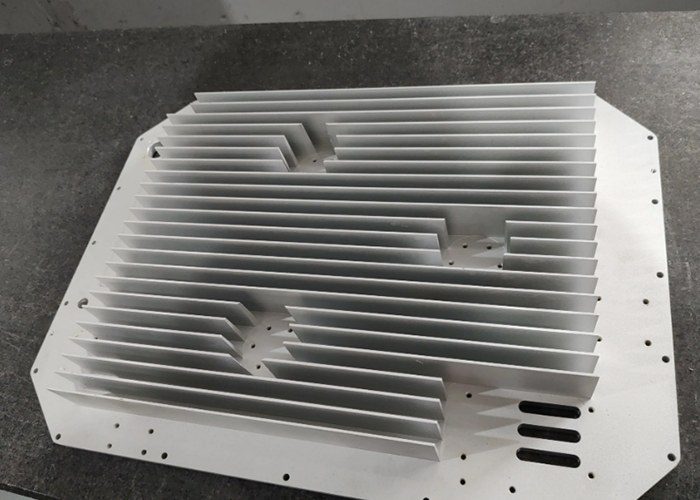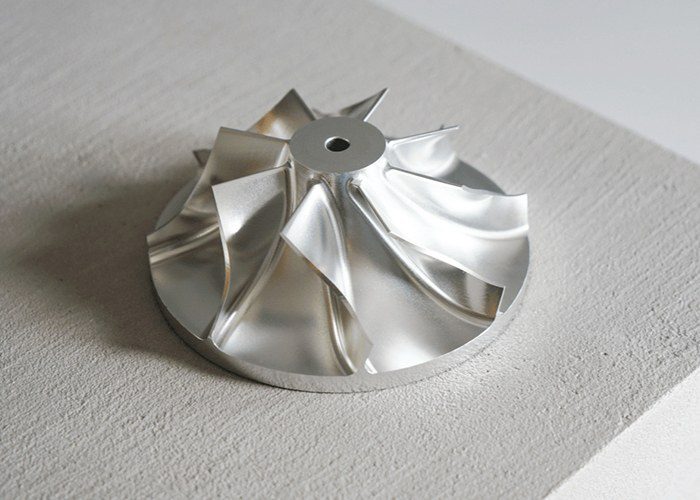
In the landscape of contemporary industrial production, few technologies have reshaped manufacturing as profoundly as Computer Numerical Control (CNC) machining. From the turbine blades that power commercial aircraft to the surgical implants that restore human mobility, CNC machined mechanical components have become indispensable across virtually every sector of the modern economy. This article explores the fundamentals, processes, materials, applications, and future trajectory of this transformative manufacturing technology.
Understanding CNC Machining
At its core, CNC machining is a subtractive manufacturing process in which pre-programmed computer software controls the movement of machining tools to remove material from a solid workpiece with extraordinary precision. Unlike manual machining, where operators directly guide cutting tools, CNC systems translate digital design files into numerical coordinates that direct motors along multiple axes—typically X, Y, and Z—to shape the raw material into finished components.
The process begins with the creation of a digital 3D model using Computer-Aided Design (CAD) software, which is then converted into machine-readable instructions (G-code). This digital thread runs from design through programming, setup, machining, and final inspection, ensuring that every part matches the original specifications within defined tolerances. Modern CNC systems can achieve tolerances as tight as ±0.005 mm, enabling the production of components with micron-level accuracy.
Core Machining Processes
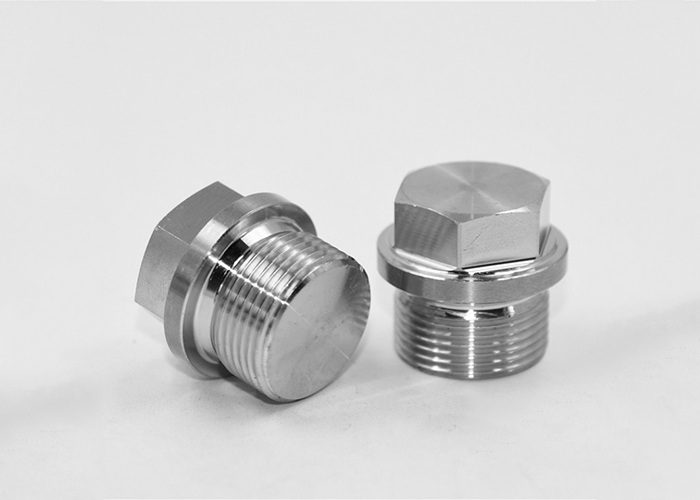
CNC machining encompasses several distinct processes, each suited to different geometries and requirements. CNC milling uses rotating cutting tools to remove material from a stationary or indexed workpiece. Multi-axis configurations—ranging from 3-axis to 5-axis machines—enable increasingly complex designs, with 5-axis systems capable of producing intricate curved surfaces and undercuts in a single setup. CNC turning, by contrast, rotates the workpiece against a stationary cutting tool, making it ideal for cylindrical components such as shafts, bushings, and threaded parts. Additional processes like CNC grinding achieve exceptional surface finishes (Ra 0.1–0.4 µm) for hardened steel components, while Electrical Discharge Machining (EDM) enables complex internal geometries without cutting forces.
Materials: Versatility Across the Spectrum
One of CNC machining’s greatest strengths is its compatibility with an exceptionally wide range of materials. Aluminum and its alloys remain the most commonly machined materials, prized for their lightweight properties, corrosion resistance, and excellent machinability—making them ideal for aerospace structural components, electronic housings, and automotive parts. Stainless steel offers superior strength and corrosion resistance for medical devices, food processing equipment, and industrial components, though its hardness demands careful process control. Titanium alloys, while challenging to machine due to poor thermal conductivity, deliver an exceptional strength-to-weight ratio for aerospace parts and medical implants. Engineering plastics such as PEEK, nylon, and ABS provide lightweight, chemical-resistant alternatives for low-friction components. Composite materials like carbon-fiber-reinforced polymers are increasingly specified for high stiffness-to-weight performance in demanding environments.
Critical Applications Across Industries
The precision, repeatability, and material versatility of CNC machining have made it the manufacturing method of choice across numerous high-stakes industries. In aerospace and defense, CNC-machined components form the backbone of mission-critical systems—from satellite brackets and jet engine blades to landing gear assemblies and hydraulic valves. The medical device industry relies on CNC machining for surgical instruments, orthopedic implants, dental components, and micro-structures where precision is literally a matter of life and safety. Automotive manufacturing depends on CNC for engine components, transmission systems, suspension parts, and precision molds, with electric vehicles driving new demands for increasingly accurate drivetrain components. The electronics and communications sector benefits from CNC’s ability to produce miniature housings, precision connectors, and intricate micro-structures with high efficiency.
Advantages and Limitations
The advantages of CNC machining are substantial and well-documented. The technology delivers exceptional precision and consistency—a well-programmed CNC machine performs the same operation identically every cycle, whether it is the first part or the thousandth. This repeatability, combined with automated operation, significantly reduces human error and ensures dimensional consistency across production runs. CNC machining offers high-speed production, enabling the fabrication of simple components in under an hour. The process eliminates the need for expensive dedicated tooling, making it cost-effective for small to medium batch production and prototyping.
However, CNC machining is not without limitations. The process is inherently subtractive, generating material waste as chips and swarf. Extremely small or very large parts present challenges: tiny components require fragile cutting tools, while oversized parts may exceed machine capacity. Complex internal geometries can be difficult to achieve due to tool access constraints. Additionally, the initial costs of programming, setup, and fixturing can be significant, though these are amortized over production volume.
The Future of CNC Machined Components
The precision machining market is experiencing robust growth, driven by increasing demand for high-precision components across automotive, aerospace, healthcare, and electronics sectors. Emerging technologies are pushing the boundaries of what CNC machining can achieve. AI-guided systems now generate optimized toolpaths, adjust parameters in real time using sensor data, and predict tool wear to prevent breakdowns. At recent manufacturing exhibitions, AI-driven CNC machines have demonstrated the ability to produce aerospace components with micron-level accuracy while operating faster, cleaner, and with less waste than ever before. The integration of CNC machining with Industry 4.0 frameworks, real-time monitoring, and digital thread technologies promises to further enhance efficiency, quality, and traceability.
Conclusion
CNC machined mechanical components represent far more than a manufacturing technique—they are the foundational elements upon which modern industrial capability is built. From the smallest medical implant to the largest aircraft structural member, CNC machining delivers the precision, consistency, and material flexibility that today’s demanding applications require. As artificial intelligence, automation, and digital integration continue to advance, CNC technology will undoubtedly reach new heights of capability, further cementing its role as the backbone of precision manufacturing for decades to come.