In the vast landscape of manufacturing, few processes are as fundamental or as widely applied as turning and milling. Together, these two machining methods form the backbone of precision component production across industries ranging from aerospace to medical devices. While each process has its distinct characteristics and ideal applications, their combination—often in advanced machining centers—has revolutionized how engineers approach complex part geometries. This article explores the principles, advantages, differences, and synergistic integration of turning and milling machining.
Understanding Turning: The Art of Rotational Symmetry
Turning is a machining process where the workpiece rotates and the cutting tool moves in a linear path. Performed on a lathe (or turning center), the operation removes material from the outer diameter of a cylindrical workpiece to achieve desired dimensions, surface finish, and geometric features. The workpiece is held in a chuck or between centers and spun at high speeds, while a stationary single-point cutting tool traverses along the axis of rotation.
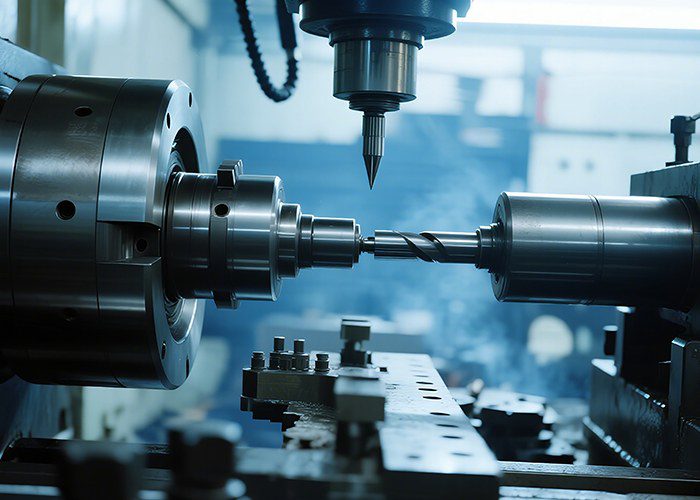
Typical turning operations include facing (creating a flat reference surface), straight turning (reducing diameter along the length), taper turning (producing conical shapes), contouring (creating complex curved profiles), threading (cutting screw threads), and boring (enlarging internal holes). Modern Computer Numerical Control (CNC) lathes can perform these operations with micron-level precision, handling materials from soft plastics to hardened steels and superalloys.
The primary advantage of turning lies in its efficiency for producing axisymmetric parts—components like shafts, bushings, pulleys, and discs. Because the cutting action is continuous, turning generates excellent surface finishes and maintains tight tolerances on concentricity and roundness. Additionally, turning is highly economical for medium to large production runs, especially when combined with automatic bar feeders and part catchers.
Understanding Milling: Versatility in Three Dimensions
Unlike turning, milling rotates the cutting tool rather than the workpiece. A milling machine uses a multi-tooth rotary cutter that moves across a stationary (or slowly moving) workpiece to remove material. The cutter’s teeth engage the workpiece intermittently, creating a shearing action that produces chips. Milling can generate flat surfaces, slots, pockets, gear teeth, complex 3D contours, and virtually any shape that can be defined by tool paths.
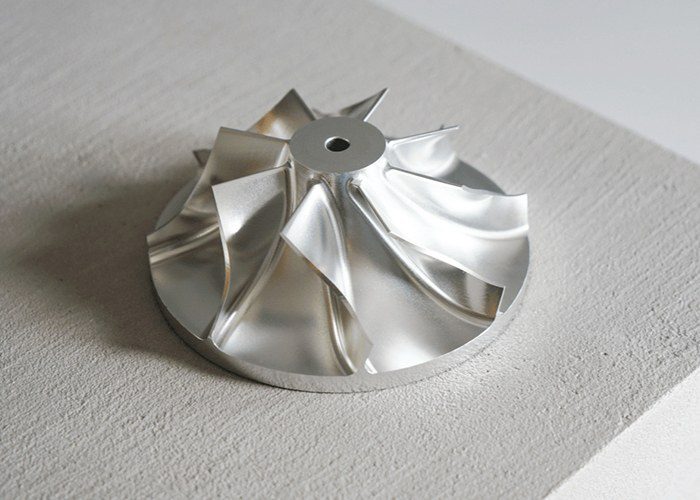
Vertical and horizontal milling machines are the two main configurations. Within these, operations include face milling (producing flat surfaces perpendicular to the cutter axis), peripheral milling (cutting along the workpiece edge), slotting, profiling, pocketing, and contouring. With the advent of multi-axis CNC milling—ranging from 3-axis to 5-axis simultaneous control—machinists can now produce highly intricate components like turbine blades, hip implant stems, and injection mold cavities in a single setup.
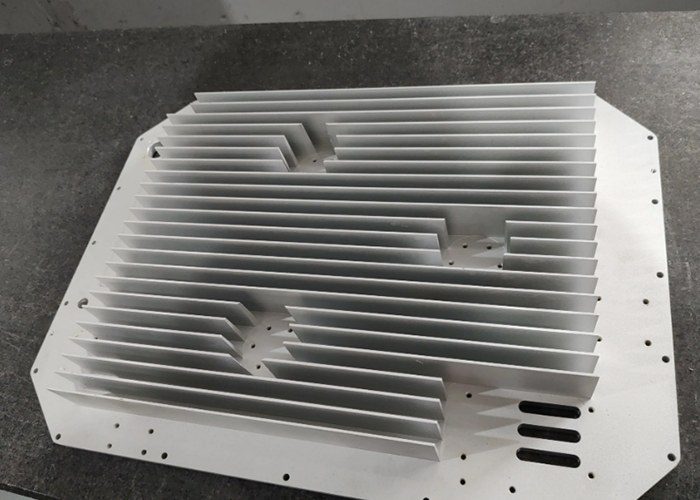
Milling’s strength is its geometric flexibility. It can machine prismatic parts (blocks, brackets, housings) and create features such as keyways, dovetails, and undercuts that turning cannot easily produce. However, because milling is intermittent (the tool teeth cut and then withdraw), it can produce lower surface roughness compared to turning unless fine finishing passes or high-speed machining strategies are employed.
Key Differences and Complementary Nature
The most fundamental distinction between turning and milling is which element rotates: in turning, the workpiece rotates; in milling, the tool rotates. This difference leads to several practical implications:
- Part geometry: Turning specializes in cylindrical or conical shapes; milling excels at prismatic and freeform geometries.
- Material removal rate: Turning typically achieves higher removal rates for long, round workpieces; milling is more adaptable but may be slower for certain volumes.
- Tooling: Turning uses single-point tools (one cutting edge), while milling uses multi-point tools (many edges). Milling cutters wear more evenly but require complex tool paths.
- Setup complexity: Turning often requires simpler fixturing for round parts; milling may need vises, clamps, or custom fixtures, especially for multi-sided machining.
Rather than competing, turning and milling complement each other. Many real-world components—like a hydraulic piston rod with a hexagon socket in its end—require both processes. Traditionally, a part would first be turned to form its cylindrical body, and then transferred to a milling machine for operations such as cutting keyways, flats, or cross-holes.. This sequential processing involves multiple setups, each introducing alignment errors (“inaccuracies stack up”) and non-productive handling time.
The Game Changer: Turn-Mill Machining Centers
To overcome the limitations of separate machines, machine tool builders developed turn-mill centers—also called multitasking machines. These advanced CNC systems combine a lathe’s spindle (which rotates the workpiece) with a milling spindle (which rotates tools) and often a second, counter-rotating spindle. The workpiece can be held stationary while the milling spindle moves (like a mill) or rotated while a turning tool is engaged (like a lathe). With live tooling—rotary cutting tools driven by independent motors—the machine can perform off-center drilling, tapping, contour milling, and even gear hobbing without unclamping the part.
The benefits of turn-mill integration are substantial:
- Reduced setup errors: A single clamping maintains datum references throughout all operations, dramatically improving geometric accuracy (e.g., concentricity of a milled flat to a turned diameter).
- Shorter lead times: Eliminating transfer between machines and manual re-fixturing can reduce total production time by 50% or more for complex parts.
- Lower costs: Reduced handling, fewer machines, less work-in-progress inventory, and lower labor requirements cut unit costs.
- Greater complexity: Turn-mill centers can produce parts impossible to make with separate processes—for example, a component with a turned outer shape, an angled milled slot, and a cross-drilled hole intersecting a threaded bore.
Modern turn-mill machines often include Y-axis capability (allowing off-center milling without interpolation), B-axis swivel heads (for angular milling and drilling), and automatic tool changers with large tool magazines. Some models operate in “mill-turn” mode—the workpiece is stationary and the machine behaves as a full 5-axis mill—offering the ultimate flexibility.
Applications Across Industries
Turning and milling, separately or combined, serve virtually every manufacturing sector:
- Aerospace: Turbine discs (turned profiles and milled fir-tree slots), landing gear components, structural brackets.
- Automotive: Engine crankshafts (turned journals and milled counterweights), brake rotors (turned friction surfaces and milled cooling vanes), transmission shafts.
- Medical: Bone screws (turned threads and milled drive recesses), knee implants (turned articular surfaces and milled bone interfaces), surgical instruments.
- Mold and die: Injection mold cores and cavities (milled complex 3D surfaces, turned ejector pin holes).
- Oil and gas: Valve bodies (turned flanges and milled ports), drill pipe connectors.
Future Trends
As Industry 4.0 advances, turning and milling are evolving toward greater automation and intelligence. Adaptive machining uses in-process sensors to adjust feeds and speeds based on real-time cutting forces. Digital twins simulate the entire machining process before a chip is cut. Hybrid additive-subtractive machines combine laser or wire-arc deposition (3D printing) with turning and milling to repair or build near-net shapes before finishing.
Moreover, the rise of high-speed machining (HSM) and hard turning (replacing grinding) continues to blur traditional boundaries. Swiss-type lathes with live tooling can now turn, mill, and even grind in a single pass on micro-components as small as 0.5 mm in diameter.
Conclusion
Turning and milling are not rival technologies but enduring partners in precision manufacturing. Turning provides the speed and finish for rotationally symmetric parts; milling offers the versatility for complex, multi-faceted features. Together—especially when integrated into turn-mill machining centers—they enable a level of accuracy, efficiency, and part complexity that defines modern engineering. As materials become tougher and designs more intricate, the synergy between these two classic processes will only grow stronger, ensuring their place at the heart of industrial production for decades to come.