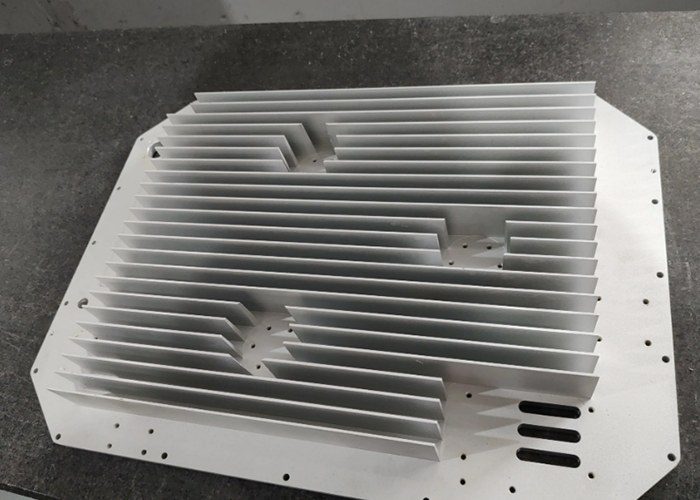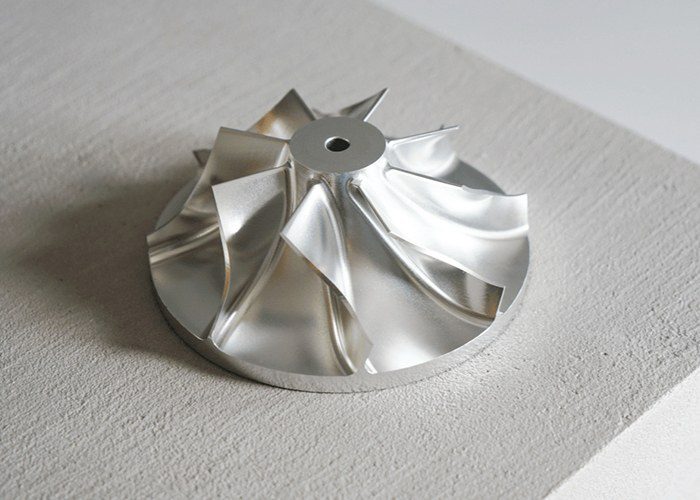
In the ever-evolving landscape of modern manufacturing, precision is not just a requirement—it is the foundation of reliability, safety, and performance. Among the many machining processes that enable industrial progress, CNC turning stands out as one of the most efficient and accurate methods for producing mechanical components. From automotive shafts to aerospace fittings, CNC turning has become the backbone of cylindrical part production. This article explores the nuances of CNC turning for mechanical components, highlighting its process, advantages, materials, applications, and quality control measures.
Understanding CNC Turning
CNC (Computer Numerical Control) turning is a subtractive manufacturing process in which a cutting tool moves linearly while the workpiece rotates at high speed on a spindle. The machine used is called a CNC lathe or turning center. Unlike conventional lathes that require manual adjustments, CNC turning is fully automated, driven by pre-programmed software and G-code instructions. This automation enables complex geometries to be machined repeatedly with micron-level accuracy.
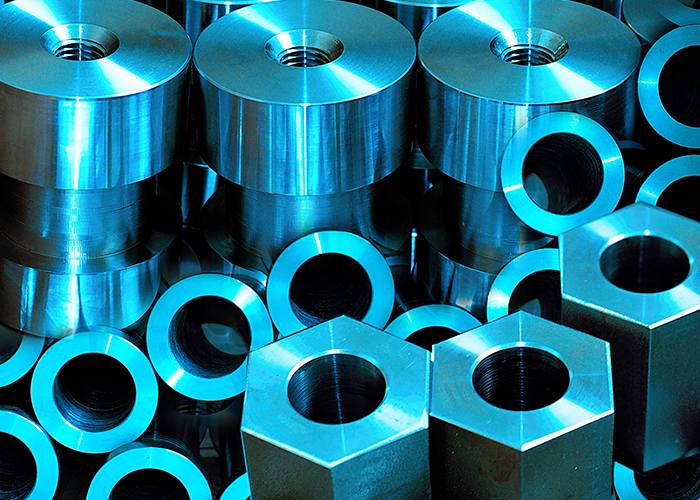
The process is ideal for creating symmetrical, cylindrical, or conical parts. Common features produced by CNC turning include external diameters, internal bores, grooves, threads, tapers, and chamfers. Live tooling options on modern turning centers even allow milling and drilling operations without repositioning the part, significantly enhancing productivity.
Why CNC Turning for Mechanical Components?
Mechanical components are used in systems where failure is not an option—engines, pumps, valves, gearboxes, and hydraulic systems. The key advantages of CNC turning in this context are:
- Exceptional Precision and Repeatability
CNC turning achieves tolerances as tight as ±0.005 mm or better. This level of accuracy ensures that components fit perfectly within assemblies, reducing wear and vibration. - High Efficiency for Medium to Large Volumes
Once the program is verified, a CNC lathe can produce hundreds or thousands of identical components with minimal operator intervention. - Material Versatility
CNC turning works with a wide range of materials: stainless steel, carbon steel, aluminum alloys, brass, titanium, Inconel, plastics like PEEK and nylon, and even ceramics. - Complex Geometry Capability
With multi-axis turning centers (e.g., 3-axis, 4-axis, or 5-axis), parts with eccentric features, polygonal profiles, and deep holes can be machined in one setup. - Excellent Surface Finish
Properly tuned CNC turning operations produce fine surface finishes (Ra 0.4–1.6 µm), often eliminating the need for secondary grinding or polishing.
Typical Mechanical Components Made by CNC Turning
Across industries, CNC turning is used to manufacture countless mechanical parts, such as:
- Shafts and Axles – Transmission shafts, motor rotors, and pump shafts.
- Bushings and Bearings – Sleeve bearings, thrust washers, and flanged bushings.
- Fasteners – Custom bolts, nuts, studs, and threaded inserts.
- Pulley and Roller Components – Grooved pulleys, conveyor rollers, and idlers.
- Valve Parts – Valve stems, seats, and ball valve cores.
- Connectors and Couplings – Hydraulic couplings, threaded adapters, and pipe fittings.
- Precision Rings and Flanges – Mechanical seals, retaining rings, and mounting flanges.
The CNC Turning Workflow for a Mechanical Component
A typical production cycle follows these steps:
- Design and CAD Modeling
The component is designed using 3D CAD software (e.g., SolidWorks, AutoCAD). Critical dimensions, tolerances, and surface finish requirements are defined. - CAM Programming
The CAD file is imported into CAM software (e.g., Mastercam, Fusion 360), where toolpaths, cutting speeds, feed rates, and depth of cut are determined. Simulation verifies collision-free machining. - Machine Setup
The operator selects appropriate tooling (turning tools, boring bars, threading inserts, grooving tools) and mounts the raw material—usually a round bar or a pre-cut blank—into the chuck or collet. - Proofing and First Article Inspection
The program runs on a single piece. The first article is measured using micrometers, calipers, CMM, or optical comparators to confirm adherence to specifications. - Production Run
Once validated, full-scale production proceeds. In-process inspections are performed at regular intervals. - Post-Processing (if needed)
Depending on requirements, parts may undergo deburring, heat treatment, anodizing, plating, or passivation.
Materials Selection for CNC Turned Mechanical Components
Material choice directly impacts machinability, strength, cost, and application suitability. Common selections include:
- Aluminum 6061 / 7075 – Lightweight, easy to machine, good thermal conductivity. Ideal for aerospace and automotive components.
- Steel (1018, 4140, 12L14) – High strength, wear resistance. 12L14 contains lead for superior machinability, perfect for high-volume turned parts.
- Stainless Steel (303, 304, 316) – Corrosion-resistant; 303 is free-machining grade. Used in medical, food processing, and marine components.
- Brass C360 – Excellent machinability, attractive finish, good electrical conductivity. Common for fittings and connectors.
- Titanium Grade 5 – High strength-to-weight ratio, biocompatible, but challenging to machine. Used in aerospace and medical implants.
- Engineering Plastics (Acetal, PEEK, Nylon 6/6) – Lightweight, chemical resistant, self-lubricating. Suitable for bushings and insulators.
Quality Control in CNC Turning
Quality is non-negotiable for mechanical components. Manufacturers employ rigorous inspection protocols:
- Dimensional Checks – Using digital calipers, micrometers, bore gauges, and thread gauges.
- Surface Roughness Testing – Profilometers measure Ra values to ensure functional surfaces meet standards.
- Hardness Testing – Rockwell or Brinell tests confirm material heat treatment outcomes.
- CMM (Coordinate Measuring Machine) – Ideal for complex parts with multiple critical dimensions.
- Runout and Concentricity Checks – Especially important for rotating components like shafts.
Challenges and Solutions
Despite its advantages, CNC turning faces certain challenges:
| Challenge | Solution |
|---|---|
| Tool wear when machining hard materials (e.g., Inconel, titanium) | Use coated carbide inserts (TiAlN, AlCrN) and optimize cooling with high-pressure coolant systems. |
| Vibration or chatter affecting surface finish | Adjust spindle speed, feed rate, or use steady rests/follow rests for slender parts. |
| Thermal distortion in high-volume runs | Implement coolant recirculation systems and monitor ambient temperature. |
| Long setup time for small batch quantities | Use quick-change tooling systems and offline CAM simulation to reduce machine idle time. |
Applications Across Industries
- Automotive – Alternator shafts, brake caliper pistons, transmission hubs.
- Aerospace – Hydraulic fittings, engine mounts, landing gear components.
- Medical – Bone screws, surgical instrument handles, implantable pins.
- Oil & Gas – Valve bodies, drill collars, downhole tool components.
- Robotics – Joint actuators, precision spacers, end-effector connectors.
Future Trends in CNC Turning for Mechanical Components
The demand for faster, smarter, and greener manufacturing drives innovation in CNC turning:
- Automation and Robotics – Bar feeders, robotic arms, and part conveyors enable lights-out manufacturing.
- Digital Twin and IoT Integration – Real-time monitoring of tool wear, vibration, and temperature improves predictive maintenance.
- Hybrid Manufacturing – Combining additive processes with CNC turning to repair or coat existing mechanical components.
- Sustainable Machining – Minimum Quantity Lubrication (MQL) reduces coolant waste; dry turning with ceramic inserts lowers environmental impact.
Conclusion
CNC turning is indispensable to modern mechanical component manufacturing. Its ability to produce precise, durable, and complex cylindrical parts with high repeatability makes it the preferred choice for industries ranging from automotive to aerospace. With continuous advancements in software, tooling, and automation, CNC turning will remain a cornerstone of industrial production for decades to come. For engineers and manufacturers seeking reliability and precision, investing in high-quality CNC turning operations is not just a decision—it is a necessity.