
In the modern landscape of manufacturing, where innovation cycles accelerate and the demand for unique, high-performance components grows, the phrase “custom CNC service” has become synonymous with capability, precision, and limitless possibility. More than just a procurement option, it represents a fundamental shift in how products are conceived, prototyped, and produced, democratizing access to industrial-grade manufacturing for startups and Fortune 500 companies alike. A custom CNC service is the nexus where a client’s digital design meets the physical world with uncompromising accuracy, offering a tailored, on-demand production solution without the need for massive capital investment in machinery and specialized labor.
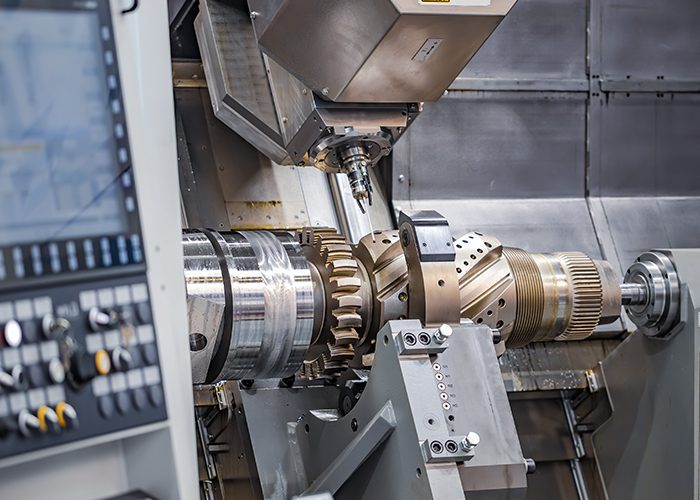
At its core, custom CNC machining is a subtractive manufacturing process where computer-controlled machines—mills, lathes, routers, or grinders—remove material from a solid block (like metal, plastic, or composite) to yield a final part. The “custom” aspect is paramount; it means the entire process is configured to a single, specific set of requirements. This begins with a client’s concept, often delivered as a 3D CAD model. The service provider’s engineering team then collaborates with the client to optimize the design for manufacturability (DFM), suggesting tweaks that enhance strength, reduce cost, or simplify machining without compromising function. This consultative partnership is the first critical value-add, transforming a theoretical design into an efficient, machinable blueprint.
The capabilities offered by a top-tier custom CNC service are vast. Advanced multi-axis machining centers (like 5-axis machines) can produce extraordinarily complex geometries—contoured surfaces, deep cavities, and intricate internal features—in a single setup, which ensures exceptional accuracy and reduces lead times. The material selection is virtually boundless: from common aluminum and stainless steel to exotic alloys like titanium or Inconel, engineering plastics such as PEEK or Ultem, and even certain composites. Furthermore, these services provide complete in-house finishing, from basic deburring and bead blasting to anodizing, plating, painting, and heat treatment, delivering a part that is truly ready for use.
The advantages of leveraging such a service are transformative. Speed and Agility: In a world that prizes rapid iteration, custom CNC services enable quick-turn prototyping and low-to-medium volume production. A design can transition from a digital file to a finished, tested part in days, dramatically accelerating R&D cycles and time-to-market. Cost-Effectiveness: It eliminates the overhead of machine purchase, maintenance, and operator training. Clients pay only for the service and material, converting fixed capital costs into variable operational expenses. This makes precision manufacturing accessible. Unmatched Quality and Consistency: CNC machines, guided by digital instructions, produce each part with microscopic repeatability. Human error is minimized, ensuring that every unit in a batch, from the first to the thousandth, meets the exact same stringent specifications. This is critical for aerospace, medical devices, and automotive applications where failure is not an option. Risk Mitigation and Scalability: Entrepreneurs can prototype and validate designs with minimal risk before committing to high-volume tooling like injection molds. Conversely, established companies can use these services for bridge production, spare parts, or fulfilling unexpected demand spikes without disrupting their main production lines.
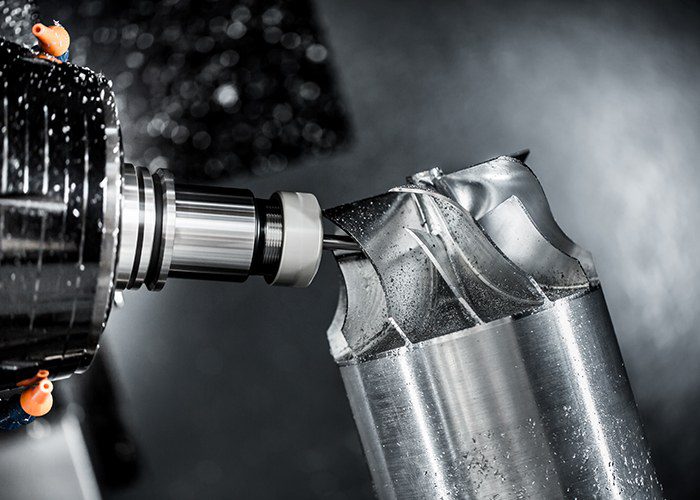
The applications span every industry pushing the boundary of innovation. A robotics startup uses it to create lightweight, high-strength actuator housings. A medical researcher machines a one-off component for a new surgical device prototype. An automotive racing team iterates on a custom titanium exhaust manifold for optimal performance. An aerospace firm orders a small batch of satellite brackets from specialized aluminum. In each case, the custom CNC service provides the critical link between ambitious engineering and tangible reality.
Ultimately, a custom CNC service is more than a workshop; it is an enabler of innovation. It empowers inventors, engineers, and businesses to transcend the limitations of off-the-shelf components and traditional manufacturing constraints. By offering precision on demand, flexibility in scale, and expert guidance, these services have become the backbone of modern product development. They ensure that the only limit to what can be built is the creativity of the design itself, fueling progress one precisely machined part at a time. In the journey from idea to implementation, the custom CNC service is the indispensable, reliable partner turning vision into value.


