
In the world of precision manufacturing, the quest for perfection is a relentless drive toward greater accuracy, complexity, and efficiency. At the pinnacle of this evolution stands 5-axis Computer Numerical Control (CNC) machining, a technology that has transcended the limitations of traditional manufacturing to become the cornerstone of modern advanced fabrication. Far more than just an incremental upgrade, 5-axis machining represents a paradigm shift, offering a constellation of advantages that empower industries from aerospace to medical devices to push the boundaries of what can be created.
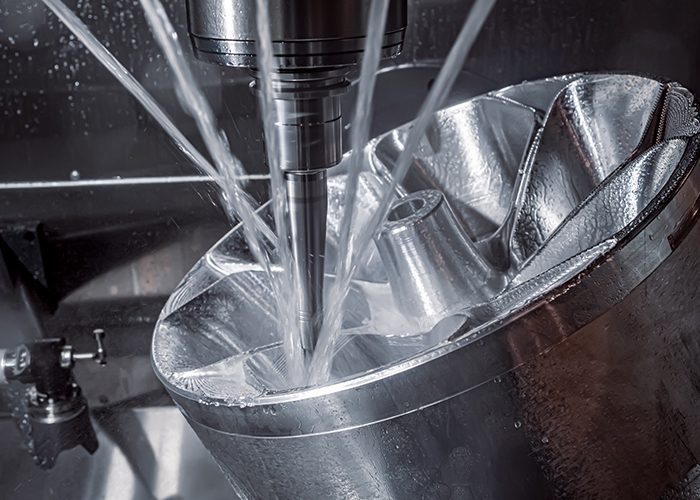
The fundamental advantage lies in its very name: simultaneous movement along five axes. While conventional 3-axis machines (X, Y, Z) are limited to approaching a workpiece from essentially one direction, a 5-axis machine adds two rotational axes (typically A and B, or B and C). This allows the cutting tool to approach the part from virtually any angle in a single setup. This singular capability unlocks a cascade of transformative benefits.
First and foremost is the dramatic enhancement in geometric complexity and precision. Complex contours, undercuts, deep cavities, and organic shapes that were once impossible, required multiple specialized fixtures, or demanded lengthy manual intervention are now machined in a single, fluent operation. Imagine sculpting a turbine blade, a biomedical implant mirroring human bone, or an intricate aerospace component with compound curves. 5-axis machining handles these with elegant precision, maintaining exceptional surface finish and tolerances that are often unattainable with multiple setups, where each re-fixturing introduces potential error.
This leads directly to the second critical advantage: radically improved efficiency and reduced lead times. The “single setup” paradigm is revolutionary. By eliminating the need to manually reposition the workpiece for different operations, manufacturers slash non-cut time, streamline workflow, and drastically reduce total machining time. What once took days with multiple fixtures and machines can now be accomplished in hours. Furthermore, the ability to use shorter cutting tools, optimally positioned to maintain perpendicularity to the surface, allows for higher feed rates and deeper cuts without sacrificing tool life or precision, further accelerating production.
Enhanced surface finish and superior part quality are inherent byproducts of the 5-axis process. The machine can maintain the optimal cutting position and constant chip load, which is crucial for materials like titanium or high-performance alloys. By tilting the tool to keep its tip, rather than its side, in contact with the material, it achieves better cutting conditions. This minimizes tool deflection, reduces vibration, and eliminates the cusps or scallop marks often left by 3-axis machines on complex surfaces, frequently resulting in a near-net-shape finish that requires minimal post-processing.
Another pivotal advantage is extended tool life and cost savings. The optimized tool orientation and consistent chip loads reduce heat generation and uneven wear on the cutting edges. Tools last significantly longer, lowering consumable costs and reducing machine downtime for tool changes. While the initial investment in a 5-axis machine is substantial, the long-term savings in labor, fixtures, secondary operations, and tooling present a compelling return on investment. It consolidates processes, reduces floor space, and minimizes the need for a vast inventory of specialized jigs and fixtures.
Perhaps the most profound advantage is the unprecedented freedom for innovation in design. Engineers and designers are no longer constrained by the limitations of 3-axis machining. They can create lighter, stronger, more integrated monolithic components that replace complex multi-part assemblies. This drives innovation in product performance—allowing for aerodynamic profiles in automotive and aerospace, fluid-optimized impellers in energy sectors, and patient-specific, anatomically perfect implants in medicine. It enables part consolidation, reducing potential failure points, assembly time, and overall weight, which is paramount in industries like aerospace where every gram counts.
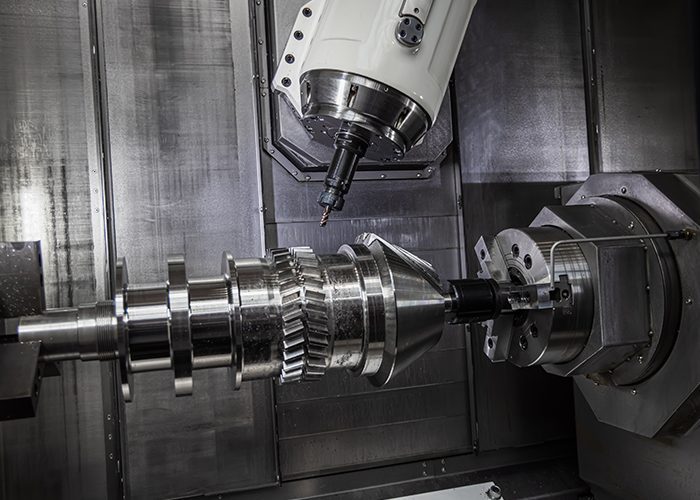
In conclusion, the advantage of 5-axis CNC machining is not merely a technical specification; it is a transformative capability that reshapes manufacturing philosophy. It synthesizes precision, efficiency, quality, and innovation into a single, powerful process. By allowing the tool to move with an almost artistic freedom around the workpiece, it turns digital designs into physical reality with a fidelity and speed previously unimaginable. As the demand for more complex, high-performance, and customized components grows across advanced industries, 5-axis CNC machining stands as the indispensable technology, quietly mastering the geometry of the future and redefining, day by day, the very art of the possible.


