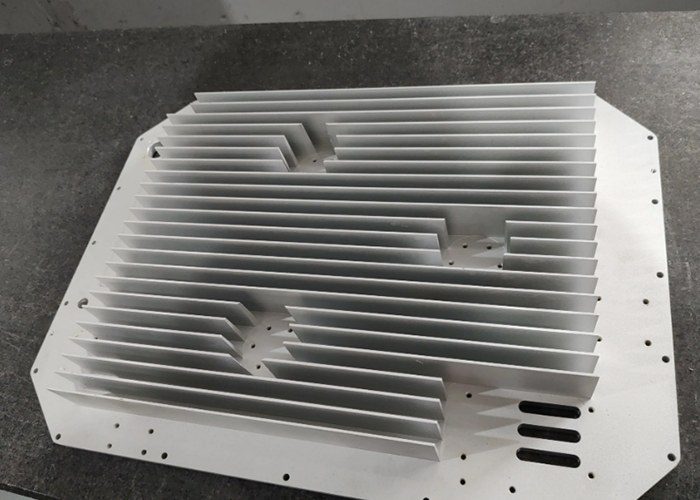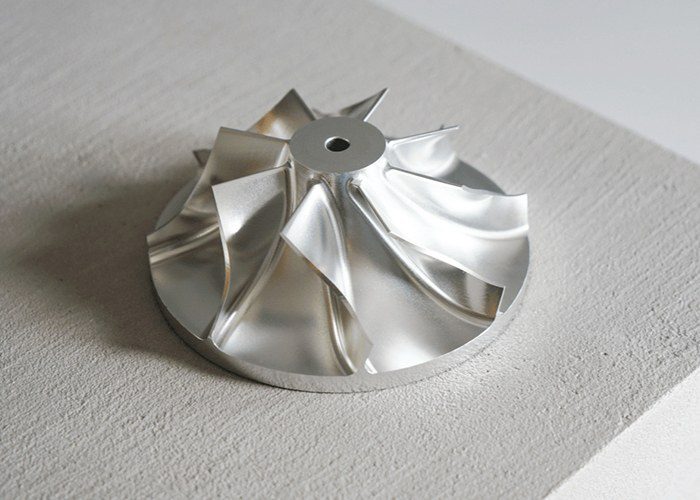
In the world of modern manufacturing and prototyping, the Computer Numerical Control (CNC) milling machine stands as a cornerstone of precision and automation. While 3-axis mills (capable of moving a cutting tool along the X, Y, and Z linear axes) form the backbone of many workshops, the introduction of a fourth axis unlocks a new dimension of capability. The 4-axis CNC mill represents a significant leap forward, enabling the creation of more complex parts, reducing setup times, and dramatically improving efficiency for a wide range of applications.
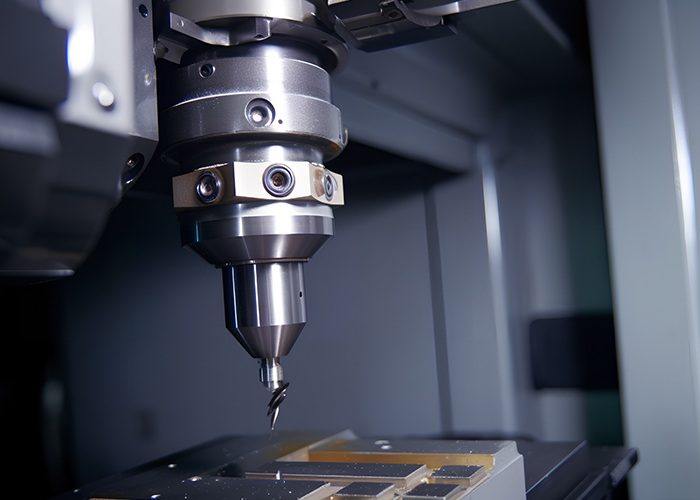
Beyond the Flat Plane: Defining the Fourth Axis
At its core, a 4-axis CNC mill incorporates all the movements of a standard 3-axis machine but adds a rotational axis, typically designated as the A-axis. This axis rotates the workpiece about the X-axis. Imagine a cylindrical part clamped in a chuck; the A-axis enables this part to spin precisely under the command of the CNC program. While other configurations exist (like a B-axis rotating around Y, common on 5-axis machines), the A-axis rotary table is the most common implementation for a dedicated 4-axis mill.
This rotary movement is not merely continuous spinning like a lathe. It is indexed and interpolated with the other three linear axes. This means the machine can pause rotation at any precise angle (indexing) or, more powerfully, rotate simultaneously while the cutter moves linearly (contouring). This simultaneous 4-axis interpolation is the key to machining complex contours and geometries that wrap around a part.
Key Components and Integration
A standard 4-axis setup consists of:
- The 3-Axis Mill: The foundational frame, spindle, and linear motion systems.
- The Rotary Axis (Fourth Axis): This is usually a high-precision rotary table or an indexing head mounted on the machine’s bed or within its working envelope. It features a chuck or fixture plate to hold the workpiece.
- The CNC Controller: The brain of the operation. It must be capable of processing and executing commands for four synchronized axes of motion (X, Y, Z, A). Advanced software allows for programming the rotary movements seamlessly.
- CAM Software: Crucially, programming a 4-axis mill moves beyond simple 2.5D toolpaths. Computer-Aided Manufacturing (CAM) software is essential for defining toolpaths that efficiently utilize the rotary axis, whether for indexed machining on multiple sides or for continuous contouring operations.
The Power of Rotation: Advantages and Applications
The benefits of adding a fourth axis are transformative:
- Reduced Setup and Improved Accuracy: A single setup is often sufficient. Instead of manually repositioning a part to machine different sides (introducing potential errors and misalignment), the part is rotated automatically by the A-axis. This ensures all features are machined in perfect relation to each other, holding tighter tolerances.
- Machining Complex Geometries: This is the primary advantage. A 4-axis mill can create features that are impossible on a 3-axis machine, such as:
- Cylindrical Cam Grooves
- Helical Features (like threads, worms, or helical cooling fins)
- Contoured Surfaces that wrap around a cylinder (e.g., custom knobs, propellers, turbine blades in a simplified form)
- Engraving or Machining on a Curved Surface
- Complex 3D Sculptures with undercuts from a radial perspective.
- Increased Production Efficiency: By machining multiple faces or continuous features in one automated cycle, labor intervention is minimized, and cycle times can be significantly reduced, especially for batch production.
- Enhanced Versatility: It bridges the gap between a milling machine and a lathe for certain operations. While not a replacement for a lathe for purely concentric turning, it can perform milling operations around a cylinder, combining turning and milling in a single setup (a concept leading to mill-turn machines).
Typical applications span diverse industries:
- Aerospace: Manufacturing brackets, connectors, and housings with angled features.
- Automotive: Prototyping engine parts, creating custom intake manifolds, or machining camshafts.
- Medical: Producing intricate components for surgical tools, implants, and orthopedic devices.
- Mold & Die: Manufacturing intricate mold cores, cavities, and electrodes with drafted walls and integrated side features.
- General Engineering & Prototyping: Applicable to parts requiring precision machining on multiple orthogonal faces or those characterized by radial symmetry.
The Bridge to Advanced Manufacturing
The 4-axis CNC mill occupies a crucial middle ground. It is more accessible and cost-effective than a full 5-axis machine (which adds a second rotational axis for near-unlimited tool-angle access), yet it offers far greater capability than a standard 3-axis mill. For many job shops and product developers, it represents the optimal point of investment, providing the ability to tackle more sophisticated work without the extreme complexity and cost of 5-axis programming and operation.
Furthermore, the proliferation of advanced CAM software and more affordable, reliable rotary tables has made 4-axis technology accessible to smaller workshops and even serious hobbyists. This democratization allows for innovation at all levels.
Looking Ahead
The future of 4-axis milling is intertwined with broader trends in manufacturing automation and digitization. Integration with robotics for part loading/unloading, the use of in-process probing for automated calibration and inspection, and the adoption of smarter CAM software with simulation and collision avoidance are becoming standard. The 4-axis mill is evolving from a standalone machine into a connected node in a digital manufacturing ecosystem.
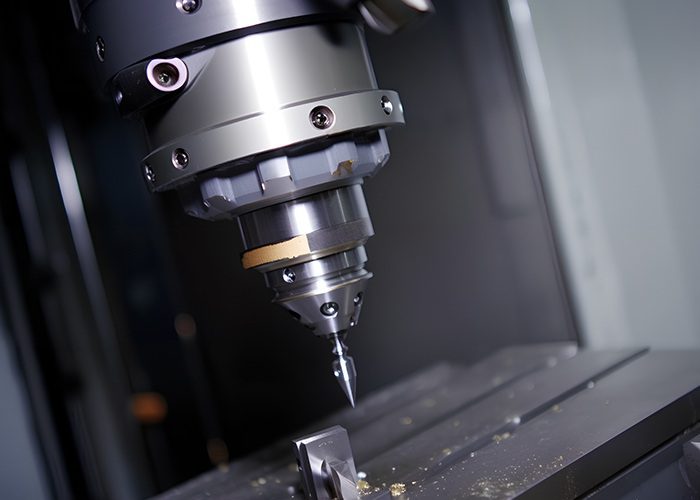
In conclusion, the 4-axis CNC mill is far more than just a 3-axis machine with an add-on. It is a fundamentally more capable platform that expands the realm of the possible in subtractive manufacturing. By introducing controlled rotation, it solves fundamental limitations, enhances precision, unlocks geometric complexity, and drives significant gains in productivity. For any operation looking to advance beyond basic profiling and pocketing, investing in 4-axis capability is a strategic step towards mastering modern, efficient, and competitive manufacturing.