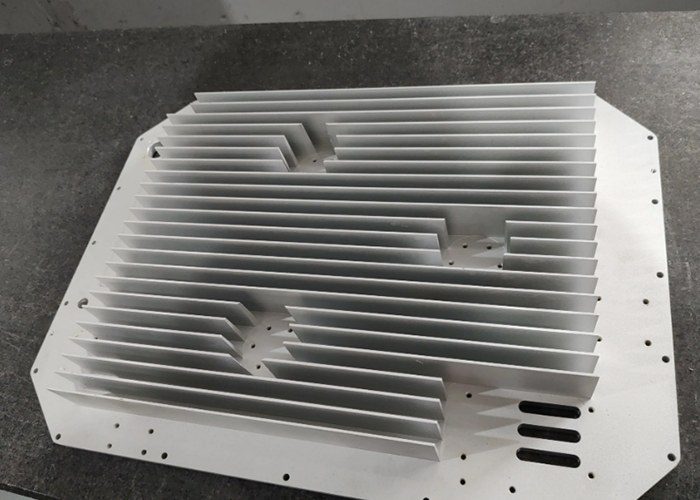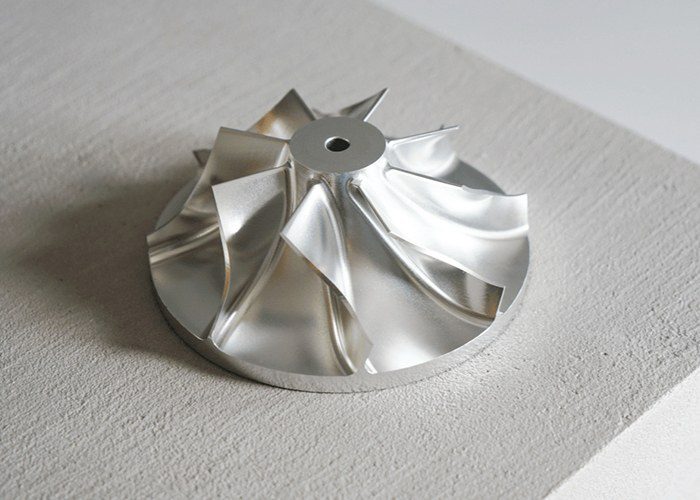
Imagine carving a perfect sphere from a solid block of titanium, machining the complex, flowing contours of a turbine blade in a single setup, or creating a medical implant that mirrors the precise geometry of human bone. These feats, once the domain of master craftsmen and countless manual operations, are now achieved with astonishing speed and repeatability thanks to one transformative technology: multi-axis CNC machining. Moving far beyond the linear paths of traditional machining, multi-axis CNC represents the zenith of subtractive manufacturing, where cutting tools and workpieces move in synchronized, multi-dimensional ballet to create shapes of breathtaking complexity and precision.
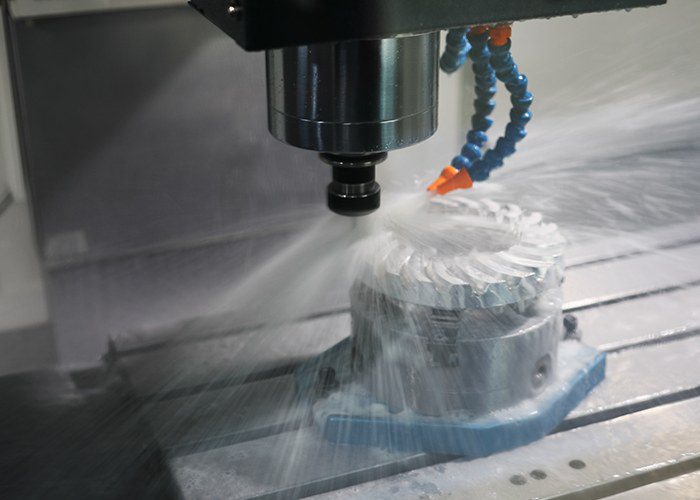
At its core, Computer Numerical Control (CNC) is the automated control of machining tools via pre-programmed computer software. Traditional 3-axis CNC machines perform the fundamental movements: the tool moves along the X (left-right), Y (front-back), and Z (up-down) axes relative to a stationary workpiece. This is sufficient for many prismatic parts. Multi-axis machining, however, introduces rotational axes, unlocking new dimensions of capability. The most common evolution is the 5-axis machine, which adds two rotational axes (typically A and B, or B and C) to the three linear ones. This allows the cutting tool to approach the workpiece from virtually any direction in a single clamping.
The leap from 3-axis to 5-axis and beyond (such as in 7-axis or 9-axis turning-milling centers) is transformative. The primary advantage is complex geometry in a single setup. A complex aerospace component with undercuts, compound curves, and angled features no longer requires multiple fixtures and manual repositioning, which introduces error. The part is fixed once, and the machine’s head or table rotates to present the optimal angle to the tool. This leads directly to the second major benefit: dramatically improved accuracy and surface finish. With continuous, smooth toolpaths and the ability to maintain the optimum cutting angle, multi-axis machines produce superior finishes and tighter tolerances across the entire part.
Furthermore, this technology enables the use of shorter cutting tools. In 3-axis machining, deep cavities might require long, slender tools that are prone to vibration (chatter), reducing accuracy and finish. A 5-axis machine can tilt the head, using a shorter, more rigid tool to reach the same depth, resulting in faster cutting speeds, better finishes, and extended tool life. Perhaps one of the most significant advantages is the ability to perform simultaneous 5-axis machining, where all five axes move in a coordinated, continuous motion. This is essential for machining sculpted, organic forms like impellers, propellers, and molds with unparalleled efficiency and fluidity.
The applications of multi-axis CNC machining are critical to the most advanced sectors of modern engineering. In aerospace, it is indispensable for manufacturing monolithic structural components, turbine blades, and engine housings from high-strength, heat-resistant alloys. The weight-saving, high-strength geometries required are simply not feasible with older methods. The medical and dental industries rely on it to produce patient-specific implants, orthopedic devices, and surgical guides from biocompatible materials like titanium and cobalt-chrome, where anatomical accuracy is paramount. In automotive motorsport and high-performance engineering, multi-axis machines create lightweight, aerodynamic components and complex engine parts. The mold and die industry uses it extensively to machine intricate cores and cavities for injection molding and die-casting, where surface quality defines the final product.
However, this power comes with increased complexity. Multi-axis CNC programming is exponentially more challenging than 3-axis work. Programmers must not only define the toolpath but also manage complex tool orientation, avoid collisions between the toolholder and the workpiece or machine components, and optimize for the machine’s kinematic limits. This requires sophisticated CAM (Computer-Aided Manufacturing) software and highly skilled engineers. The capital investment for multi-axis machines is also significantly higher, and not all parts justify this cost. The decision to use multi-axis machining is therefore a strategic one, balancing the need for complexity, precision, and consolidation of operations against programming time and machine expense.
Looking ahead, the future of multi-axis CNC is one of greater integration and intelligence. The convergence with additive manufacturing (3D printing) is leading to hybrid machines that can both add and subtract material, enabling entirely new design and repair paradigms. Advances in CAM software, driven by AI and cloud computing, are automating programming tasks, optimizing toolpaths in real-time, and predicting potential errors before they happen. Furthermore, integration into the Industrial Internet of Things (IIoT) and Industry 4.0 frameworks means these machines are becoming nodes in a smart factory, communicating performance data, predicting maintenance needs, and adapting processes for peak efficiency and quality control.
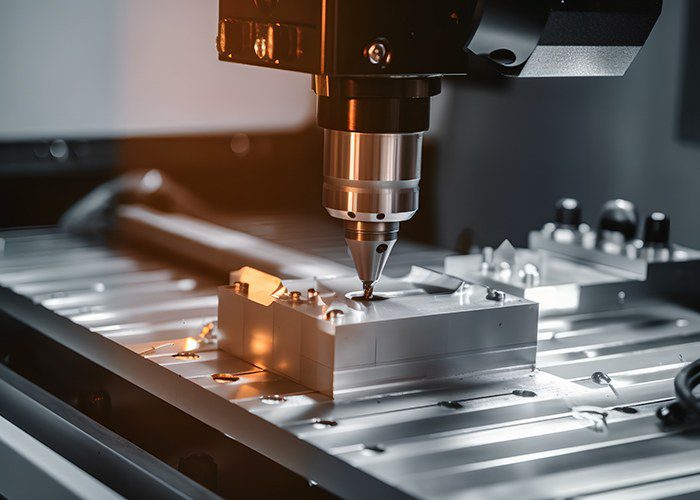
In conclusion, multi-axis CNC machining is far more than an incremental improvement in manufacturing; it is a fundamental enabler of modern technological progress. By mastering motion in multiple dimensions, it transforms digital designs into physical realities with a level of complexity, precision, and efficiency previously unimaginable. From the engines that propel aircraft to the implants that restore mobility, it shapes the critical components of our advanced world. As software intelligence and hybrid processes continue to evolve, multi-axis CNC will remain at the forefront, continually redefining the art of the possible in precision engineering and manufacturing. It is the silent, dynamic force carving the path toward a more innovative and intricately crafted future.