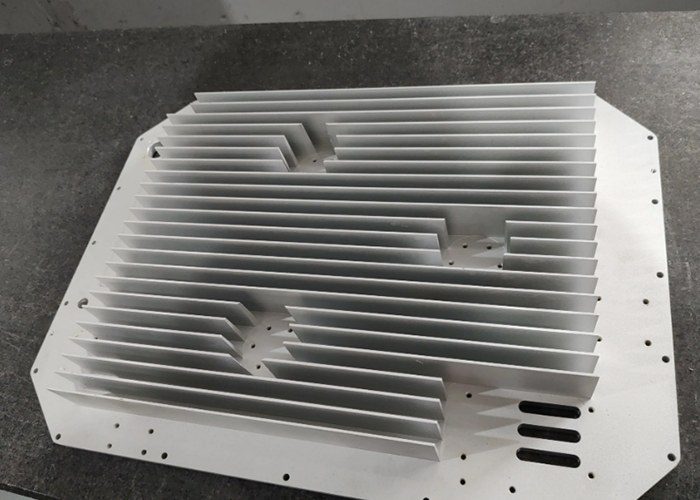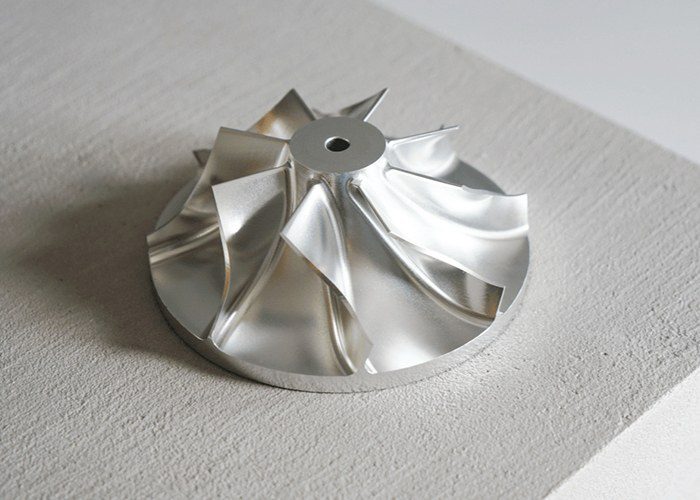
In the intricate world of modern manufacturing, where precision, durability, and reliability are non-negotiable, stainless steel CNC machining stands as a cornerstone technology. The fusion of Computer Numerical Control (CNC) with the exceptional material properties of stainless steel produces components that are vital across a breathtaking spectrum of industries—from life-saving medical implants to the relentless demands of aerospace and the corrosive environments of marine engineering. This process transforms raw stainless steel into complex, high-tolerance parts that embody both strength and sophistication.
The Unmatched Material: Why Stainless Steel?
At the heart of this technology lies the material itself. Stainless steel is an iron-based alloy renowned for its primary defense: a passive layer of chromium oxide that forms on its surface, making it highly resistant to corrosion, rust, and staining. This inherent property is further enhanced by additions of nickel, molybdenum, and other elements, creating different grades tailored for specific challenges. Austenitic grades like 304 and 316 are the most common, offering excellent corrosion resistance and formability. 316, with its molybdenum content, provides superior resistance to chlorides, making it ideal for marine and chemical applications. For extreme strength and wear resistance, martensitic grades like 410 or 440C are employed, often in cutlery or bearings. The choice of grade is a critical first step, balancing machinability, mechanical properties, and environmental resistance.
The Precision Tool: CNC Machining Adapted
CNC machining is a subtractive manufacturing process controlled by pre-programmed computer software. It can control lathes, mills, routers, and grinders with incredible accuracy. Machining stainless steel, however, presents unique challenges. Its toughness and tendency to work-harden require specialized approaches.
Successful stainless steel CNC machining hinges on several key factors. Tooling: Carbide tools, often with specialized coatings like TiAlN (Titanium Aluminum Nitride), are essential to withstand the material’s abrasiveness and high cutting forces without degrading. Speeds and Feeds: Optimal parameters must be carefully calculated. Too slow, and the material work-hardens; too fast, and excessive heat builds up, damaging both the tool and the part. A consistent, appropriate chip load is crucial for efficient cutting and heat dissipation. Coolant: High-pressure, high-volume coolant is not a luxury but a necessity. It serves to control temperature, lubricate the cutting interface, and evacuate chips efficiently, preventing re-welding and ensuring superior surface finish. Rigidity: The entire setup—machine, workpiece, and fixture—must be extremely rigid to counteract the high cutting forces and prevent vibration, which leads to poor finish and tool failure.
The Result: Parts of Exceptional Capability
The output of this meticulous process are components defined by their:
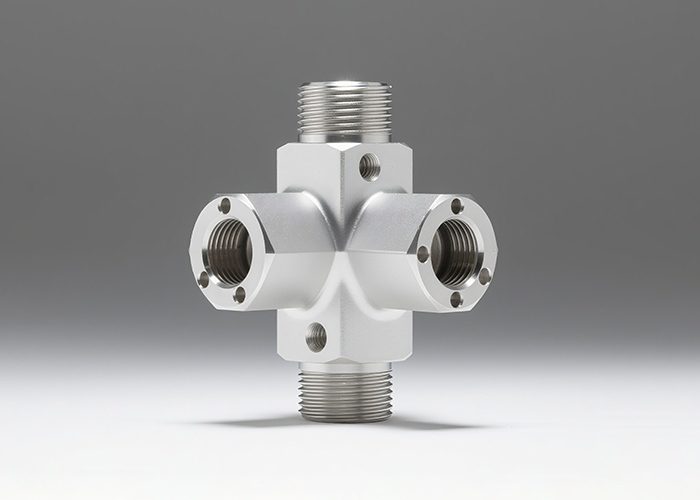
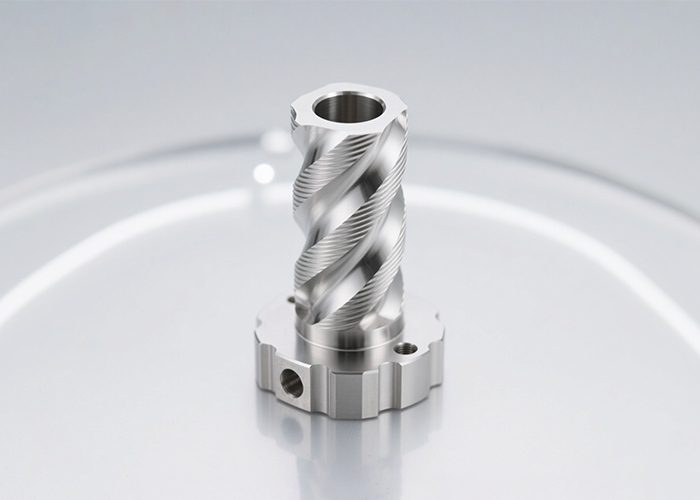
- High Precision and Complex Geometry: CNC machining can achieve tolerances within microns, producing intricate features, threads, cavities, and contoured surfaces that are impossible with conventional methods.
- Superior Surface Finish: From a machined finish to a mirror polish, the surface quality can be precisely controlled for functional (e.g., for sealing) or aesthetic purposes.
- Exceptional Strength-to-Weight Ratio: Particularly with grades like 17-4 PH, parts offer remarkable strength and hardness, often surpassing many other materials.
- Hygiene and Cleanability: The non-porous, smooth surface of polished stainless steel prevents bacterial adhesion and allows for sterilization, making it perfect for food processing, pharmaceutical, and medical devices.
- Long-Term Durability and Stability: Resistance to corrosion, heat, and wear ensures these parts perform reliably for decades, even in harsh conditions, reducing maintenance and replacement costs.
Ubiquitous Applications
The applications are a testament to their versatility:
- Aerospace & Defense: Landing gear components, engine fittings, sensor housings, and missile parts where strength, reliability, and performance under stress are critical.
- Medical & Surgical: Bone screws, surgical instruments, implantable device housings, and MRI components that require biocompatibility, sterilizability, and absolute precision.
- Food & Beverage: Valves, pump bodies, mixing nozzles, and conveyor parts must be manufactured to withstand corrosive cleaning agents and prevent product contamination.
- Marine & Chemical: Pump shafts, valve bodies, and reactor parts exposed to saltwater and aggressive chemicals.
- Automotive & Racing: Fuel injection systems, turbocharger components, and custom fittings demanding high strength and thermal resistance.
Choosing a Manufacturing Partner
Selecting a supplier for stainless steel CNC machined parts requires careful evaluation. Look for a machine shop with proven expertise in machining stainless steels, evidenced by their tooling strategies and parameter knowledge. Their quality control must be robust, utilizing Coordinate Measuring Machines (CMM) and other metrology tools to verify every dimension. Engineering support is invaluable—a good partner will collaborate on design for manufacturability (DFM), suggesting tweaks that enhance performance or reduce cost without compromising function.
In conclusion, stainless steel CNC machining parts represent the zenith of engineered durability and precision. They are not merely metal shaped by machines; they are the resilient, reliable, and intricately formed solutions that enable technological advancement across the globe. Where failure is not an option, and performance is paramount, these parts stand as silent, steadfast testaments to the power of combining advanced material science with digital manufacturing precision.