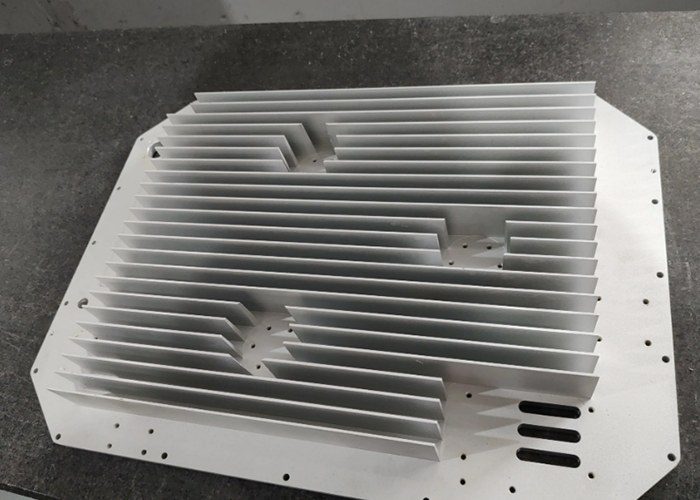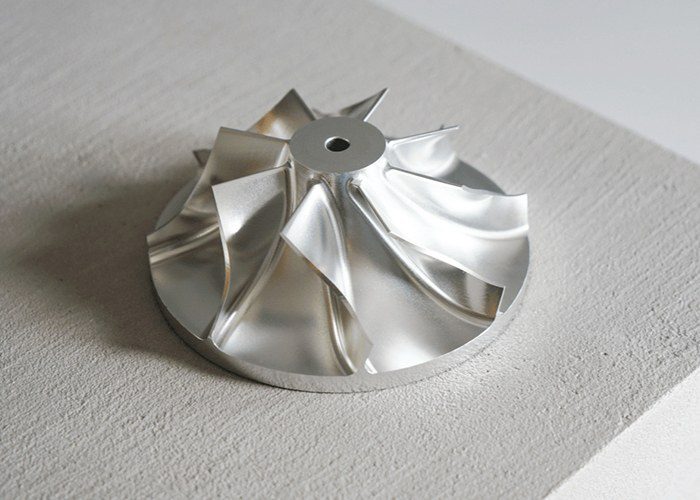
In the modern landscape of product development, speed is the ultimate currency. The ability to move from a digital concept to a physical, testable component in days rather than months can determine whether a company leads the market or plays catch-up. This is where rapid prototype metal parts have revolutionized engineering. Once the exclusive domain of plastic models and clay mock-ups, prototyping has entered a new era where metal parts with production-grade properties can be created at unprecedented speeds. This article explores the technologies, benefits, and future of rapid metal prototyping.
The Core Technologies Driving the Change
Rapid prototyping of metal parts is not a single process but a suite of advanced manufacturing techniques. The most prominent among them is Laser Powder Bed Fusion (LPBF). In this method, a high-powered laser selectively melts thin layers of metal powder—such as aluminum, titanium, stainless steel, or Inconel—based on a 3D CAD model. The build platform lowers incrementally, and a new layer of powder is spread. The result is a fully dense, near-net-shape metal part with excellent mechanical properties.
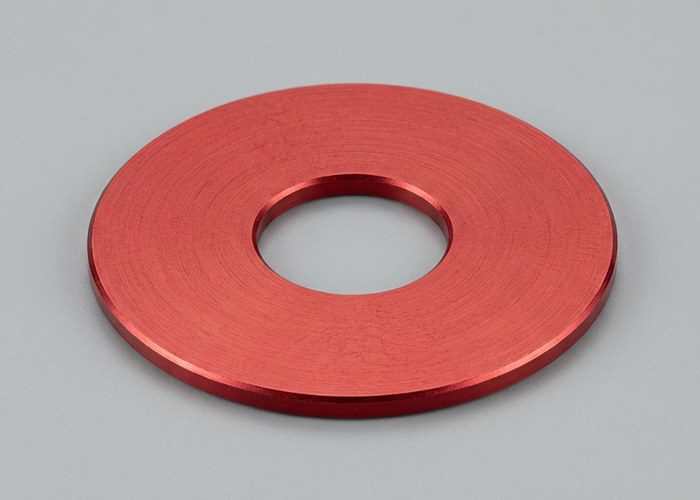
Another key technology is Directed Energy Deposition (DED). Unlike LPBF, which builds from a powder bed, DED uses a nozzle to deposit metal powder or wire while a laser or electron beam melts it. This technique is ideal for repairing existing parts or adding features to a near-complete prototype.
Beyond additive methods, rapid CNC machining plays a crucial role. While subtractive, modern high-speed mills and lathes equipped with advanced toolpaths can produce metal prototypes in days. For geometries that are difficult to print, or when a particular wrought material temper is required, CNC machining remains an indispensable rapid prototyping tool.
Finally, metal binder jetting offers a high-speed alternative. It prints a “green part” using metal powder bound by a polymer, which is then sintered in a furnace. While slower in post-processing, it can produce many small parts simultaneously, making it ideal for low-volume production runs disguised as prototypes.
Why Metal? The Advantages Over Plastic Prototypes
For decades, engineers tested form and fit with plastic prototypes, but function was another story. Metal prototypes close that gap entirely. The most significant advantage is material fidelity. A metal prototype made from 316L stainless steel or Ti-6Al-4V behaves exactly like the final production part. It will have the same thermal conductivity, tensile strength, fatigue resistance, and hardness. This allows for true functional testing—from heat exchangers subjected to high temperatures to load-bearing brackets in automotive suspensions.
Moreover, metal prototypes allow for validating the manufacturing process itself. For example, designing a metal injection molding (MIM) part or a casting requires understanding how metal flows. A 3D printed metal prototype can be analyzed for wall thickness, sharp corners, and stress concentrations, providing insights that a plastic part could never reveal.
Accelerating the Design-Build-Test Loop
The impact of rapid metal prototyping on the product development cycle is transformative. In traditional manufacturing, creating tooling for a cast or forged metal part takes weeks or months, costing tens of thousands of dollars. Making a design change after that point is financially painful. With rapid metal prototyping, engineers can iterate daily.
Consider a case study: A medical device company developing a new titanium surgical tool. Using conventional methods, the first prototype would take eight weeks. Using LPBF, they have a prototype in three days. They test it in the OR simulation, find the grip angle is slightly off, tweak the CAD file, and have a new version the next morning. In two weeks, they have completed five design iterations, each better than the last. The final design is ready for pilot production in a fraction of the original time.
This speed does not just reduce time-to-market; it also lowers development costs by catching flaws early, when changes are cheap.
Key Application Areas
Several industries have embraced rapid prototype metal parts as a competitive necessity.
- Aerospace: Lightweighting is paramount. Prototyping brackets, housings, and ducting in titanium or aluminum allows engineers to test topology-optimized designs before committing to expensive forgings.
- Automotive: From Formula 1 to electric vehicles, teams use metal prototypes for custom suspension components, heat exchangers, and even turbocharger wheels. Racetrack testing demands real metal, not plastic.
- Medical: Patient-specific implants and surgical guides are often produced as “prototypes” that become final implants. Regulatory approval cycles benefit from the ability to produce and test anatomical metal parts rapidly.
- Robotics & Automation: Gears, linkages, and end-effectors need the strength and wear resistance of metal. Rapid prototyping allows robot designers to test kinematics with actual mass and inertia.
Challenges and Practical Considerations
Despite its many advantages, rapid metal prototyping is not a magic bullet. The most obvious barrier is cost. Metal 3D printers and high-precision CNC machines are expensive to purchase and operate. Metal powder is costly, and safety precautions are necessary due to fire and inhalation risks. Post-processing is often required—support removal, heat treatment, and CNC finishing to achieve tight tolerances.
Another challenge is surface finish. As-built metal prints typically have a rough, matte texture that may require polishing for functional or aesthetic reasons. Additionally, the build envelope is limited; while large machines exist, they are not common, so very large metal parts may still need traditional prototyping methods.
Finally, design for additive manufacturing (DfAM) is a skill in itself. Engineers must learn to design self-supporting geometries, account for residual stresses, and orient parts to minimize warping.
The Future Outlook
The future of rapid prototype metal parts is bright and moving toward democratization. We are seeing the emergence of desktop metal 3D printers using bound metal deposition, bringing metal prototyping to smaller shops and universities. Machine learning is being applied to predict and correct distortions in real time during printing, improving accuracy. Hybrid machines that combine additive and subtractive capabilities in one unit will become standard, allowing a part to be printed and then precision-machined without changing setups.
Furthermore, the range of printable alloys is expanding rapidly—from high-temperature superalloys to copper and even refractory metals like tungsten. As materials science advances, we will soon be able to prototype in virtually any metal.
Conclusion
Rapid prototype metal parts have moved from a niche curiosity to a cornerstone of modern engineering. By enabling true functional testing at unprecedented speeds, they shorten development cycles, lower costs, and foster innovation. While challenges like cost and post-processing remain, the trajectory is clear: the ability to create metal parts on demand, in days, is fundamentally reshaping how we design and build the world around us. For any engineer or product developer, embracing these technologies is no longer optional—it is the fastest path to the future.