In the modern landscape of industrial manufacturing, few processes have revolutionized the way we create physical objects as profoundly as CNC machining. Standing for Computer Numerical Control, CNC machining has transformed the age-old practice of subtractive manufacturing into a discipline of extreme precision, repeatability, and complexity. At the heart of this transformation lie CNC machining fabrication parts—components that form the backbone of everything from aerospace turbines to medical implants and consumer electronics.
This article delves into the nuances of CNC machined fabrication parts, exploring their production, material considerations, quality control, and the technological trends shaping their future.
Understanding the Process: From Digital Model to Physical Part
CNC machining fabrication is fundamentally a subtractive process. Unlike 3D printing which builds layers of material, CNC machining starts with a solid block—called a workpiece—and meticulously removes material using high-speed rotating cutting tools. The entire operation is guided by a digital blueprint, typically a CAD (Computer-Aided Design) file. This file is converted into a CAM (Computer-Aided Manufacturing) program that generates G-code, a machine-readable language that dictates every movement of the cutting head, spindle speed, tool changes, and coolant flow.
The fabrication process can involve several key operations:
- Milling: Using rotary cutters to remove material from the workpiece. This creates flat surfaces, slots, pockets, and complex 3D contours.
- Turning (on a CNC lathe): Rotating the workpiece against a stationary cutting tool to produce cylindrical or conical features such as shafts, threads, and hubs.
- Drilling and Tapping: Machining precise holes and internal threads for assembly purposes.
- EDM (Electrical Discharge Machining): For extremely hard materials or intricate cavities that traditional tools cannot reach.
Modern multi-axis CNC machines (3-axis, 4-axis, and 5-axis) can combine these operations in a single setup, drastically reducing human error and production time while enabling geometries that were once impossible to fabricate.
Material Selection: The Foundation of Performance
One of CNC machining’s biggest advantages is how well it handles a wide range of materials. Unlike some additive or casting processes that impose strict limitations, CNC machining can handle an extraordinary range of engineering materials.
- Metals: Aluminum (6061, 7075) is prized for its excellent machinability, strength-to-weight ratio, and corrosion resistance—ideal for aerospace and automotive frames. Stainless steel (304, 316) offers superior hardness and resistance to oxidation, making it the go-to for medical instruments and food processing equipment. Brass, copper, titanium (Grade 5), and tool steels are also routinely machined for specialized applications like electrical connectors, high-stress aerospace fasteners, and injection molds.
- Plastics and Composites: Engineering plastics like PEEK, PTFE (Teflon), Acetal (Delrin), and Nylon are frequently machined for low-friction, high-temperature, or electrical insulation components. Carbon fiber composites and G10 (fiberglass) can also be CNC machined, though with specialized tooling to prevent delamination.
The choice of material directly influences machining parameters—cutting speed, feed rate, tool geometry, and coolant requirements—underscoring the need for experienced process planning.
Advantages Over Other Fabrication Methods
Why choose CNC machining fabrication over injection molding, casting, or 3D printing? The answer is a unique blend of benefits:
- Unmatched Precision and Tolerance: Standard CNC machining can achieve tolerances of ±0.005 inches (0.127 mm), while high-precision machines routinely hit ±0.0002 inches (0.005 mm). For comparison, a human hair is about 0.003 inches thick. Such accuracy is vital for components requiring perfect interlocking or sealing.
- No Tooling Costs for Small Batches: Injection molding requires expensive metal molds costing tens of thousands of dollars. CNC machining has no such upfront tooling—only the workpiece and cutting tools. This makes it economically ideal for prototyping and low-to-medium volume production (1 to 10,000 parts).
- Excellent Surface Finish: Post-machining surface finishes can range from 32 to 16 microinches Ra (roughness average), often eliminating the need for secondary polishing or grinding.
- Material Integrity: Because the part is carved from solid stock, its internal grain structure remains continuous. There are no voids, porosity (common in casting), or weak layer adhesion (common in FDM 3D printing). For safety-critical components like landing gear brackets or bone screws, this integrity is non-negotiable.
Quality Control: The Gatekeeper of Excellence
Fabricating a part is only half the story; verifying that it meets specifications is equally vital. Professional CNC shops employ rigorous quality control (QC) protocols:
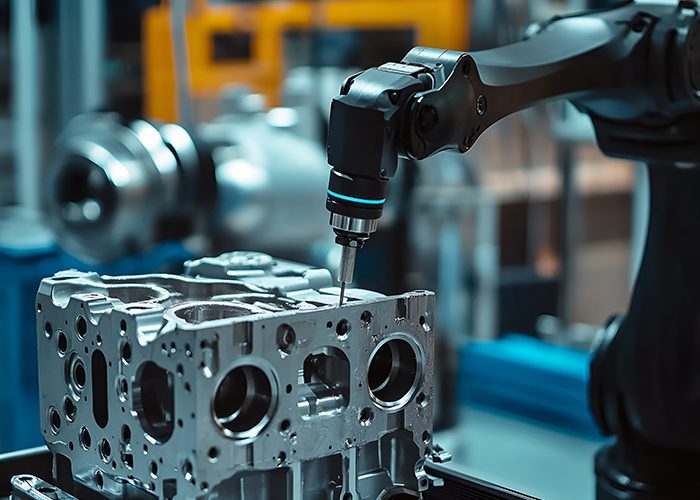
- In-Process Probing: Modern CNC machines have touch probes that measure critical features while the part is still clamped. If a dimension drifts out of spec, the machine can automatically compensate or stop production.
- CMM (Coordinate Measuring Machine): A CMM uses a highly sensitive touch probe or laser to map the part’s geometry in three dimensions, comparing it against the original CAD model.
- Surface Roughness Testers: These ensure that friction or sealing surfaces meet the required Ra value.
- Non-Destructive Testing (NDT): For critical aerospace or medical parts, techniques like dye penetrant inspection or ultrasonic testing reveal subsurface cracks or inclusions.
Every batch of CNC machined fabrication parts typically comes with a Certificate of Conformance (CoC) and full dimensional inspection reports.
Applications Across Industries
The ubiquity of CNC machined parts is a testament to their utility:
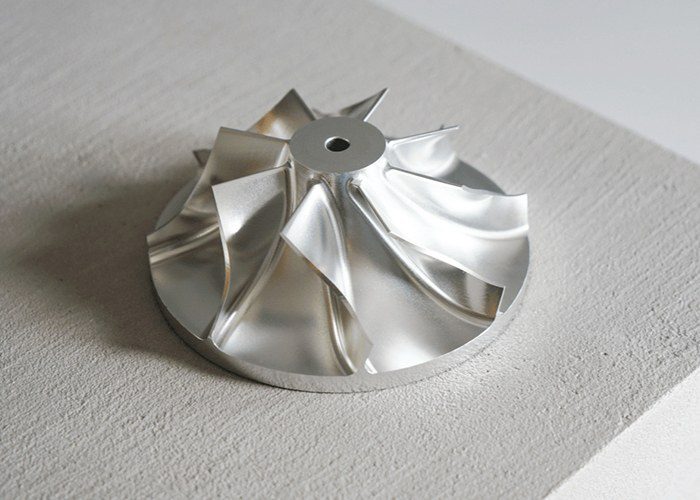
- Aerospace: Turbine blades, engine mounts, hydraulic fittings, and structural ribs. Materials: titanium and high-temp alloys.
- Medical: Orthopedic implants (hip stems, bone plates), surgical tools, and dental abutments. Biocompatibility and sterile surface finish are paramount.
- Automotive: Prototype engine blocks, custom gearbox housings, suspension components, and high-performance brake calipers.
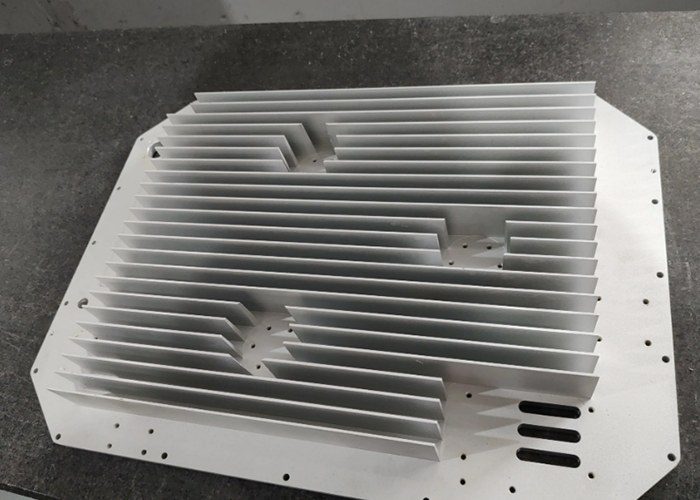
- Electronics: Heat sinks, RF shielding enclosures, connector housings, and semiconductor tooling fixtures.
- Defense: Firearm receivers, scope mounts, drone frames, and munitions components.
Future Trends: The Next Frontier
As we look ahead, CNC machining fabrication is evolving in exciting directions:
- Hybrid Manufacturing: Machines that combine 5-axis milling with laser metal deposition (a form of 3D printing). This allows adding material where needed, then machining it to final tolerance—ideal for repairing expensive dies or creating complex bimetallic parts.
- Automation and Lights-Out Machining: Robotic arms load/unload stock, automated tool changers, and AI-driven process monitoring enable “lights-out” production—factories that run unattended overnight and on weekends.
- Digital Twin Integration: Before cutting a single chip, the entire machining process is simulated in virtual reality. This detects collisions, optimizes tool paths, and predicts thermal distortion, slashing setup time and scrap rates.
Conclusion
CNC machining fabrication parts represent a perfect marriage of digital precision and physical craftsmanship. From the humble bracket inside a laptop to the titanium joint in a human hip, these components enable the technologies that define our era. As automation, materials science, and hybrid processes advance, CNC machining will remain not just relevant but indispensable—a silent, reliable engine of modern industry.
Whether you are an engineer prototyping a disruptive invention or a manufacturer scaling to thousands of units, understanding the capabilities and nuances of CNC machined parts is the first step toward turning designs into reality with confidence.