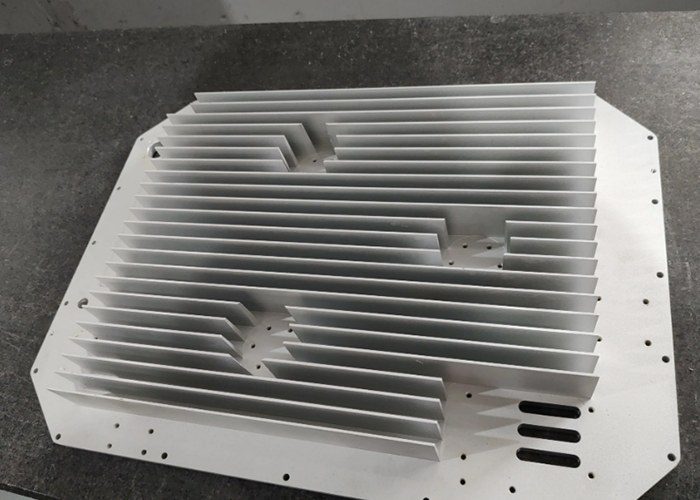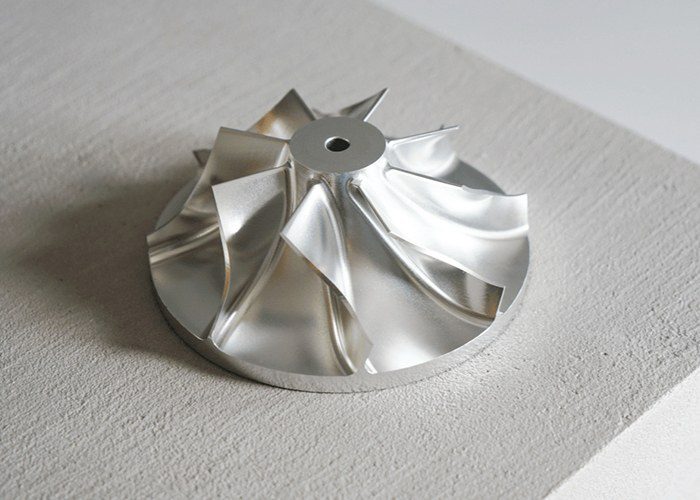
In an era defined by miniaturization, automation, and relentless efficiency, the true heroes of industry often remain hidden beneath sleek casings and polished exteriors. These are high-precision parts – components manufactured to tolerances measured in microns, where a single error thinner than a human hair can spell the difference between flawless operation and catastrophic failure. From the silent hum of an electric vehicle to the life-saving precision of a surgical robot, high precision parts are the unsung backbone of our technological civilization.
Defining the Micron Frontier
What exactly qualifies a part as “high precision”? While general machining might work within tolerances of 0.1 millimeters (100 microns), high precision manufacturing operates in the range of 1 to 10 microns. To put that in perspective, a human hair is roughly 70 microns thick. When we speak of precision at the level of 2 or 3 microns, we are talking about surfaces so smooth they feel like liquid, and geometries so exact that components from different batches can be assembled without selection or adjustment.
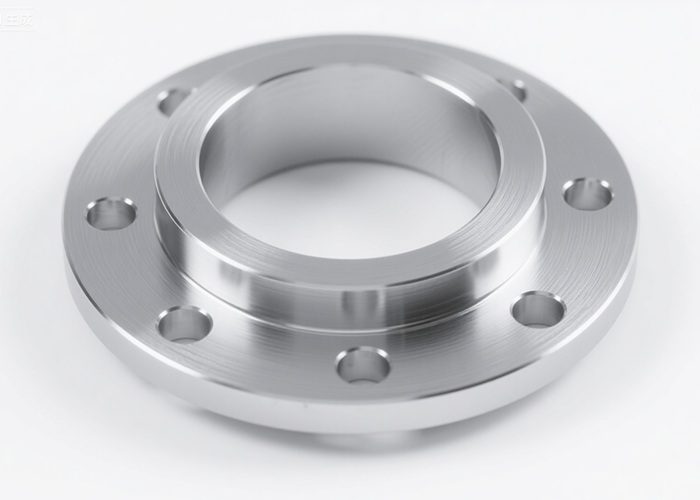
Achieving this level of precision doesn’t happen by chance. It requires a harmonious marriage of advanced machinery, exotic materials, environmental control, and human expertise. Before being deemed acceptable for use, a single high-precision component may undergo as many as ten distinct inspection stages.
The Diverse Landscape of Applications
The demand for high precision parts spans virtually every advanced industry. In aerospace, turbine blades must maintain their aerodynamic profile within micron-level deviations to withstand extreme temperatures and rotational speeds. A flaw invisible to the naked eye could lead to metal fatigue and inflight engine failure.
In the medical sector, consider orthopedic implants like hip or knee replacements. The articulation between a ball and socket joint must be nearly frictionless, requiring surface finishes measured in nanometers. Similarly, the needles used in insulin pens or the micro-components of pacemakers demand absolute repeatability – any deviation could harm the patient.
The semiconductor industry represents perhaps the most extreme frontier of precision. The manufacturing equipment that etches circuits onto silicon wafers relies on stages and guides that move with nanometer-level accuracy. A single dust particle or a thermal expansion of a few microns can destroy millions of dollars worth of chips.
Even everyday consumer products rely on high precision parts. The autofocus mechanism in a smartphone camera, the hard disk drive that spins at 7,200 RPM, and the fuel injectors in a modern car engine – all depend on components that are manufactured to exacting standards.
The Art and Science of Manufacturing
Producing high precision parts is as much an art as it is a science. Several key technologies dominate this field:
CNC Machining (Computer Numerical Control) remains the workhorse. Five-axis CNC mills and lathes can sculpt complex geometries from solid metal blocks, guided by digital models. However, standard CNC machines are not enough – high precision machining requires spindle runout below 1 micron, thermally stabilized ball screws, and feedback systems that constantly compensate for tool wear.
Electrical Discharge Machining (EDM) excels at creating intricate cavities and sharp internal corners that would be impossible with traditional cutting tools. By using precisely controlled electrical sparks to erode conductive materials, EDM can achieve tolerances of a few microns even in hardened steel.
Wire EDM cuts through thick plates like a hot knife through butter, but with a wire thinner than a human hair, leaving a surface finish that often requires no further polishing.
For the highest levels of precision, lapping, honing, and polishing processes are used. These abrasive techniques remove mere nanometers of material at a time, achieving flatness measured in fractions of a light wavelength.
The Material Challenge
Not all materials cooperate with precision manufacturing. Steel expands with heat, aluminum is prone to vibration, and titanium is notoriously difficult to machine despite its excellent strength-to-weight ratio. Engineers must choose materials that offer dimensional stability – often pre-hardened tool steels, Invar (which has near-zero thermal expansion), ceramics, or engineered polymers.
Even after machining, parts may undergo heat treatment to relieve internal stresses. A seemingly perfect component can warp days after production as residual stresses slowly relax. Therefore, precision manufacturers often use stress-relieving cycles and age the materials before final finishing.
Quality Control: The Gatekeeper
In the world of high precision, “measurement is the mother of trust.” No part leaves the factory without exhaustive inspection. The tools of metrology are as impressive as the manufacturing machines themselves.
Coordinate Measuring Machines (CMMs) use touch probes or laser scanners to map a part’s geometry in three dimensions, comparing every feature to the original CAD model. Modern CMMs can detect deviations of 0.5 microns.
Optical comparators and white light interferometers provide non-contact measurement for delicate surfaces. Surface profilometers drag a diamond-tipped stylus across a component to measure roughness down to the atomic scale.
Perhaps the most critical quality concept is statistical process control (SPC) . Instead of merely checking finished parts, SPC monitors the manufacturing process in real time, detecting trends and drift before any non-conforming parts are produced. This proactive approach is essential for industries like automotive and medical devices, where zero defects is the only acceptable standard.
Challenges and Future Trends
The future of high precision parts is both exciting and demanding. As products become smaller and more complex, the industry faces several challenges:
Cost pressure remains intense. A single high precision machining center can cost over $500,000, and skilled machinists are increasingly rare. Automation with robotics and lights-out manufacturing (running factories unattended overnight) is becoming standard to reduce costs.
The push for micro-manufacturing means that traditional cutting tools are reaching their limits. Researchers are exploring laser micromachining, electro-chemical machining, and even focused ion beams to create features measured in tens of microns.
Additive manufacturing (3D printing) is also entering the high precision realm. While traditionally known for rough surfaces, new techniques like two-photon polymerization and laser powder bed fusion with closed-loop feedback are achieving precision that rivals conventional methods, particularly for complex internal structures.
Sustainability is another emerging priority. Precision manufacturing often involves material removal – turning a solid block into a finished part, with the majority becoming waste chips. Near-net-shape processes, improved recycling, and dry machining (eliminating coolant fluids) are being adopted.
Conclusion
High precision parts may never be visible to the end user, but their presence is felt every time a device operates reliably, a vehicle handles safely, or a medical procedure succeeds. They represent the culmination of human ingenuity – the ability to control matter with near-atomic fidelity. As we push further into quantum computing, autonomous systems, and space exploration, the demand for components with ever-tighter tolerances will only grow. The craftspeople, engineers, and companies that master this micron-scale world will continue to shape the invisible foundation of our future.