In today’s rapidly evolving industrial landscape, professional Computer Numerical Control (CNC) machining services have emerged as indispensable pillars of modern production. As manufacturing demands grow increasingly sophisticated, these services deliver components with tolerances measured in microns while maintaining consistent throughput across diverse industries. From aerospace and medical devices to automotive and electronics, professional CNC machining represents the convergence of mechanical excellence and digital intelligence, enabling manufacturers to tackle complex geometries, reduce lead times, and uphold stringent quality standards.
The Technology Behind Professional CNC Machining
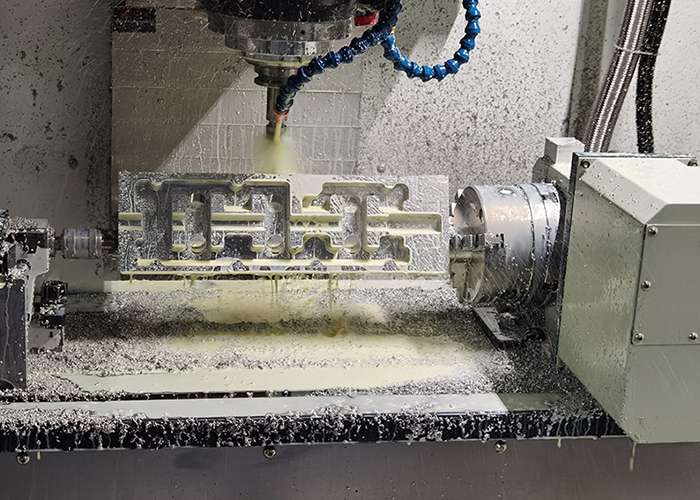
At its core, professional CNC machining utilizes computer numerical control technology to programmatically drive automated equipment such as lathes, milling machines, machining centers, and grinders. What distinguishes a professional service from standard operations is the integration of advanced multi-axis platforms, sophisticated CAM software, and rigorous quality control systems. Modern precision machining can achieve tolerances as close as 0.0001 inches (0.0025 mm), far exceeding the capabilities of conventional machining.
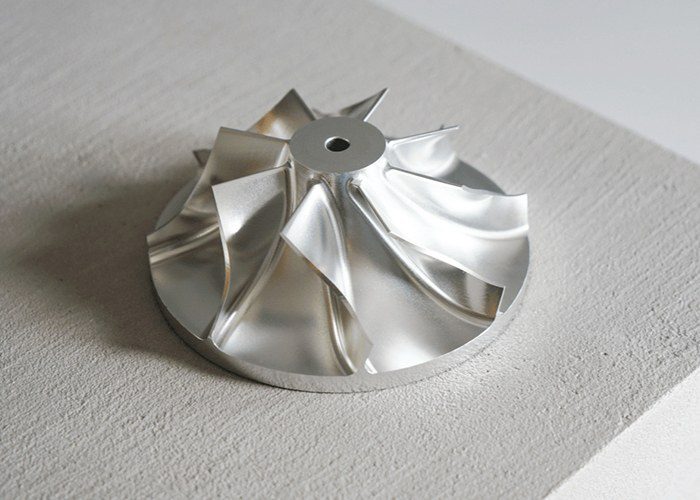
Five-axis machining represents the pinnacle of this technology, enabling simultaneous movement across three linear axes (X, Y, Z) and two rotary axes (A, B). This capability allows for the machining of complex three-dimensional surfaces that would be impossible or prohibitively difficult with traditional three-axis machines. The benefits are substantial: reduced setups, improved surface quality, and the ability to produce intricate components like turbine blades, aero-engine parts, and complex medical implants. As one industry observer noted, five-axis machining “perfectly meets the aerospace industry’s demands for processing complex structures, ultra-high precision, and special materials”.
Comprehensive Material Capabilities
A professional CNC machining service demonstrates its expertise through material versatility. Leading providers work with an extensive range of metals and engineering plastics, including aluminum, stainless steel, titanium, brass, copper, and specialized alloys such as Inconel and Hastelloy. Aluminum remains the most commonly used material due to its cost-effectiveness, good corrosion resistance, and rapid machinability. Stainless steel is favored for components exposed to wear, moisture, or hygienic requirements. Titanium, prized for its strength-to-weight ratio, is essential in aerospace and medical implant applications. This material diversity allows professional services to serve clients across virtually every manufacturing sector, from prototyping to full-scale production.
Digital Transformation and Industry 4.0
The professional CNC machining sector has undergone profound transformation driven by digitalization, automation, and the rise of Industry 4.0. Service providers increasingly integrate sensors and IoT connectivity into machine tools, enabling real-time monitoring of spindle health, tool wear, and production efficiency. This connectivity enables predictive maintenance strategies that reduce downtime and optimize asset utilization.
Artificial intelligence and machine learning algorithms have revolutionized process planning and toolpath optimization. By analyzing historical machining data, these systems recommend optimal cutting parameters, adapt to material inconsistencies, and dynamically adjust feed rates to minimize cycle times. These capabilities improve throughput, extend tool life, and enhance surface finish quality, making precision machining more reliable and cost-effective. Digital twin technology allows operators to simulate complex operations before execution on the shop floor, mitigating risks associated with intricate part geometries and enabling the realization of features once considered unmachinable.
Quality Assurance and Certification
Professional CNC machining services distinguish themselves through rigorous quality control protocols. Comprehensive dimensional inspection using precise coordinate measuring machines (CMM) ensures that workpieces meet geometric and dimensional specifications. Many providers implement in-process probing systems that automatically measure parts during the machining cycle, reducing inspection bottlenecks and ensuring real-time quality assurance.
For industries with demanding regulatory requirements, certifications are non-negotiable. Aerospace manufacturers require AS9100 certification, medical device producers need ISO13485, and certain special processes demand NADCAP compliance. Professional services maintain these certifications to serve mission-critical industries where component failure is not an option. As one industry report emphasizes, “the ability to translate engineering intent into repeatable production—whether through five-axis CNC setups, precision grinding, or additive hybrid workflows—has become a core competitive differentiator”.
Industry Applications
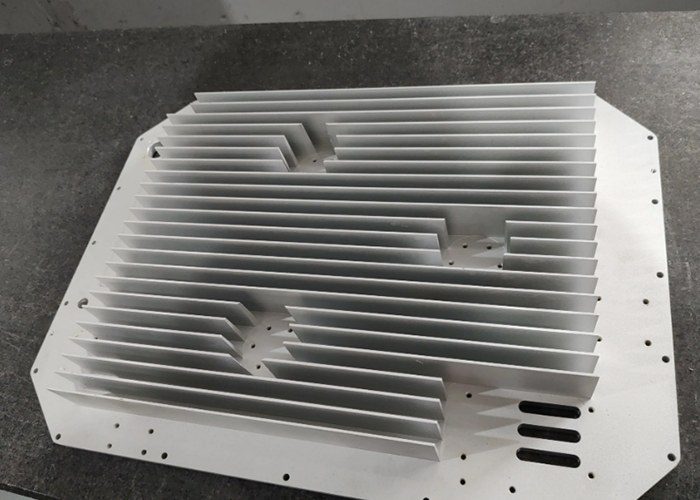
The applications of professional CNC machining span virtually every high-performance industry. In aerospace, the technology produces turbine blades, fuel system components, and landing gear parts that must withstand extreme conditions. The medical sector relies on CNC machining for surgical instruments, orthopedic implants, and dental components where precision is a necessity, not a preference. The automotive industry benefits from high-precision fuel injectors, valve components, and transmission parts that enhance vehicle performance and safety. In electronics, CNC machining produces connectors, housings, and heat sinks with exceptional accuracy. Defense and military applications demand components for firearms, ammunition, and equipment that must perform reliably under extreme conditions.
Rapid Prototyping and Production Flexibility
Modern professional CNC machining services excel in supporting the entire product lifecycle, from early-stage iterations to end-use production. With no minimum order quantity restrictions, these services accommodate both prototyping and high-mix, low-volume production needs. Parts can be shipped in as fast as five days from certified facilities, accelerating innovation and time-to-market. This flexibility is crucial for industries facing global supply uncertainty and increasing demands for shorter development cycles.
Conclusion
Professional CNC machining service represents the foundation of modern precision manufacturing. Through advanced multi-axis technology, comprehensive material capabilities, digital integration, and rigorous quality assurance, these services enable industries to produce components of unprecedented complexity and reliability. As the global custom machining services market continues to grow—projected to reach USD 39.45 billion by 2032—the demand for professional CNC machining will only intensify. For manufacturers seeking to remain competitive in an increasingly demanding industrial environment, partnering with a professional CNC machining service is not merely an option—it is an essential strategic imperative.