
In the grand narrative of human progress, the shift from artisanal craftsmanship to mass production marked a pivotal turning point. Yet, as we navigate the complexities of the 21st century, the pendulum is swinging back—not to the anvil and forge, but to a sophisticated digital renaissance where one-size-fits-all solutions are rapidly becoming obsolete. At the heart of this industrial evolution lies the world of Customized Mechanical Parts, a sector that is not merely about altering dimensions but about reimagining the fundamental architecture of machinery to achieve peak performance, efficiency, and durability.
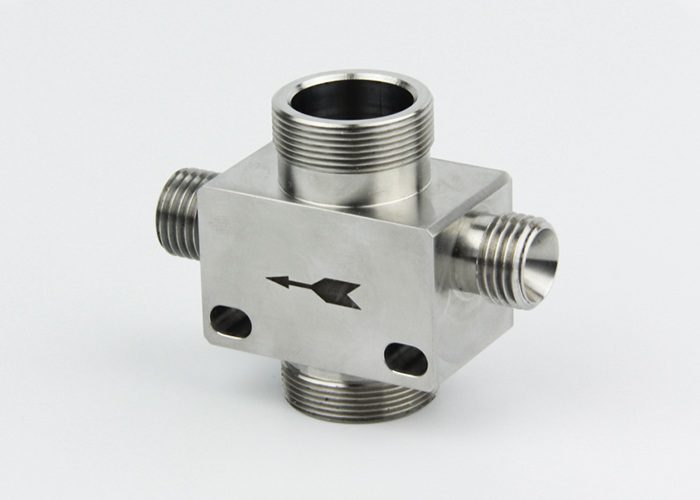
The demand for customization is fueled by an insatiable appetite for specialization across industries. From the unforgiving vacuum of space to the corrosive depths of deep-sea drilling, standard off-the-shelf components often falter under extreme conditions. Consider the aerospace sector, where a single gram of weight translates to significant fuel costs over an aircraft’s lifetime, or the medical field, where a prosthetic limb must mirror the unique biomechanics of a specific individual. In these scenarios, a “close enough” part is a liability; the Customized Mechanical Part is the solution. It allows engineers to optimize material science, geometry, and tolerances for a singular, specific function, reducing friction, minimizing energy loss, and extending the operational lifecycle of the entire system.
This revolution is underpinned by a trinity of advanced manufacturing technologies: Computer Numerical Control (CNC) machining, additive manufacturing (3D printing), and precision casting. CNC machining has evolved from a simple subtractive process into a symphony of multi-axis milling and turning. Today’s five-axis CNC machines can sculpt complex geometries from exotic alloys like Inconel or titanium with micron-level accuracy, interpreting complex CAD (Computer-Aided Design) files that define the part’s unique identity. Meanwhile, additive manufacturing has democratized complexity. Where traditional machining struggles with internal cooling channels or lattice structures designed to reduce weight without compromising strength, 3D printing excels. It builds parts layer by layer, enabling a level of design freedom that was previously constrained by the physical limits of cutting tools.
However, the true magic of Customized Mechanical Parts lies not just in the manufacturing process but in the intelligence that drives it. The digital thread—an uninterrupted flow of data from concept to finished product—ensures that every part is a perfect translation of a digital twin. Simulation software now allows engineers to test these parts under virtual stress, heat, and vibration before a single chip of metal is removed. This predictive capability drastically reduces the trial-and-error phase, slashing prototyping costs and time-to-market. In an era defined by rapid innovation, the ability to iterate quickly and refine designs based on real-world feedback is a strategic advantage that only customization can provide.
The economic implications are equally profound. While the unit cost of a customized part is often higher than a mass-produced equivalent, the total cost of ownership often tells a different story. A custom gear, designed with a specific tooth profile to minimize backlash, can prevent premature failure in a gearbox, thereby reducing downtime and maintenance costs. In industries like mining and agriculture, where equipment failure can cost thousands of dollars per hour, the durability of a tailored part provides a return on investment that far exceeds the initial procurement price.
Despite its advantages, the path to customization is not without challenges. The “last mile” problem in logistics—managing a diverse inventory of unique parts—requires sophisticated supply chain management. Furthermore, the scaling up of production, moving from a single prototype to a run of a thousand units, demands a delicate balance of process consistency. This is where the integration of AI and machine learning is proving invaluable, monitoring tool wear and material inconsistencies in real-time to maintain quality control across every unique iteration.
Looking ahead, the future of Customized Mechanical Parts is intrinsically linked to the principles of the circular economy and sustainability. We are moving towards an on-demand manufacturing model, where parts are printed or machined close to the point of use, drastically reducing the carbon footprint associated with shipping heavy components. Moreover, the ability to repair rather than replace is gaining traction. Hybrid manufacturing systems that combine additive and subtractive processes are emerging, allowing engineers to rebuild worn surfaces and re-machine them to new specifications, effectively giving a component a “second life.”
In conclusion, Customized Mechanical Parts are far more than individual components; they are the embodiment of human ingenuity applied to the physical world. They represent a shift from a reactive approach—fixing what breaks—to a proactive strategy of system optimization. As digital technologies continue to converge with manufacturing, the boundaries of what is possible will expand. The factories of tomorrow will not produce generic widgets; they will produce bespoke solutions, sculpting metal, polymers, and ceramics with the dexterity of a master craftsman and the relentless precision of a machine. In this new industrial paradigm, standardization is not the goal; perfection, defined by the specific needs of the application, is the only benchmark.


