In the vast ecosystem of modern manufacturing, few processes are as foundational—or as transformative—as precision lathe turning. While often overshadowed by flashier technologies like 3D printing, precision turning quietly underpins the mechanical systems that power aerospace, automotive, medical, and electronics industries. From the shafts that spin inside jet engines to the miniature pins that connect life-saving surgical instruments, precision lathe turning parts are the unseen backbone of industrial progress. To understand why this century-old process remains indispensable today, one must look beyond the spinning metal and examine the technology, materials, and precision that define it.
What Is Precision Lathe Turning?
At its core, precision turning is a subtractive machining process in which a bar of material—typically metal—is rotated at high speed while a stationary cutting tool shapes it to exact specifications. The workpiece is secured by a chuck on the lathe and set in motion; the cutting tool then progressively removes material to achieve the desired cylindrical or oblong form. What distinguishes precision turning from conventional turning is the level of accuracy involved. Modern CNC (Computer Numerical Control) lathes can hold dimensional tolerances as tight as ±0.0001 inches (±0.0025 mm) and achieve surface finishes as fine as Ra 0.8 μm or better. In specialized applications, tolerances can reach down to 1 micron (0.001 mm)—a level of precision that demands not only advanced machinery but also meticulously controlled environmental conditions.
The CNC Turning Process: From CAD to Finished Component
The journey of a precision turned part begins long before any metal is cut. Engineers translate a component’s 3D CAD design into a series of machine instructions using specialized CAM software. These digital commands govern every aspect of the machining cycle: spindle speed, feed rate, tool path, and cutting depth. Once the program is loaded, the CNC system takes over, coordinating the machine’s mechanical components with a level of consistency that human operators simply cannot replicate.
Modern turning centers have evolved far beyond the two-axis lathes of the past. Today’s multi-axis machines incorporate live tooling—powered rotary tools mounted on the turret—that enable drilling, milling, tapping, and engraving to be performed in the same setup. With C-axis (rotational) and Y-axis (off-center) control, these machines can produce complex geometries that were once unimaginable on a lathe: off-center holes, non-cylindrical contours, and asymmetric features, all in a single automated cycle. The result is increased part complexity, reduced cycle times, and higher precision—all while minimizing handling and setup changes.
Materials: The Foundation of Performance
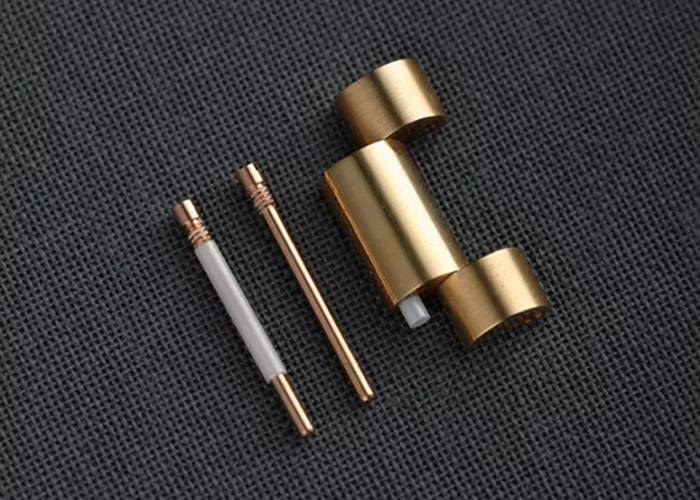
The versatility of precision turning is perhaps best demonstrated by the extraordinary range of materials it can accommodate. Ferrous metals such as steel, stainless steel, and cast iron are common choices for structural components. Non-ferrous metals like aluminum, copper, brass, bronze, and titanium offer excellent conductivity, corrosion resistance, or weight savings. For demanding applications, exotic alloys such as Inconel, Hastelloy, and Kovar are machined with equal precision. Even plastics and specialized composites can be turned to tight tolerances.
Material selection is never arbitrary. The choice depends on the part’s end-use application, required mechanical properties, and operating environment. Factors such as heat resistance, corrosion resistance, electrical conductivity, and density all influence the decision. In the medical sector, for instance, biocompatibility and sterilization compatibility are paramount. In aerospace, material traceability and consistency are non-negotiable.
Why Precision Turning Matters: Key Advantages
The enduring relevance of precision turning rests on several distinct advantages. First and foremost is accuracy and consistency. CNC turning delivers repeatable precision that ensures every component performs reliably in demanding environments—from aircraft engines to surgical instruments. Second is efficiency for high-volume production. Once a part is programmed, the CNC machine can run continuously, often unattended, producing thousands of identical components with minimal waste.
Third is versatility. Modern turning centers can handle an extensive range of materials and create intricate shapes that would be difficult or impossible using conventional machining methods. Fourth is superior surface finish. Precision turning often eliminates the need for additional grinding or polishing, reducing both time and cost. Finally, there is cost-effectiveness. While initial programming requires expertise, the efficiency of CNC machining makes it economical for both prototype development and full-scale production runs.
Industries That Depend on Precision Turned Parts
The applications of precision turned parts span virtually every industrial sector. In aerospace, critical components include hydraulic fittings, fuel system connectors, actuator pins, and sensor housings—all requiring exceptional consistency and material traceability. The automotive sector relies on turned parts for engine assemblies, braking systems, steering mechanisms, and transmission units. With the rise of electric vehicles, new demand is emerging for compact, high-conductivity turned components in power electronics, battery modules, and thermal management systems.
The medical sector demands turned components for surgical tools, diagnostic devices, orthopedic implants, and dental instruments. These parts must meet stringent surface finish, biocompatibility, and sterilization standards. In electronics, miniature housings, connectors, and custom pins are produced with micron-level accuracy. Industrial machinery, defense, hydraulics, and sensor technology all depend on precision turned components as well.
The Future of Precision Turning
The precision turning industry continues to evolve. The global market for precision turned products was valued at over USD 93 billion in 2024 and is projected to reach USD 128 billion by 2030. Automation is driving much of this growth. Today’s advanced turning centers feature bar feeders, robotic part handling, in-process measurement systems, and adaptive control algorithms that enable unattended, “lights-out” operations. Digital twins, CAD/CAM integration, and Industry 4.0 dashboards are enabling tighter process control, predictive maintenance, and full traceability. Micro-turning capabilities are opening new opportunities in microfluidics, wearable electronics, and miniaturized sensors.
Conclusion
Precision lathe turning parts may not capture the public imagination like artificial intelligence or electric vehicles. But without them, those technologies would not exist. From the smallest medical implant to the largest aerospace assembly, precision turned components enable the performance, safety, and reliability that modern industry demands. In a world that increasingly values precision, the humble lathe—now enhanced by CNC technology, multi-axis capability, and intelligent automation—remains as essential as ever.