
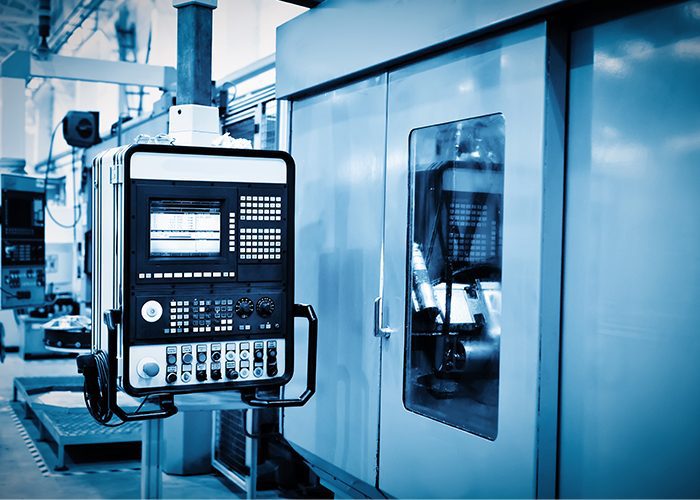
CNC (Computer Numerical Control) machining is a precision mechanical processing technology controlled by computerized digital systems. Primary equipment includes machining lathes, milling machines, and boring-milling machines, characterized by stable processing quality and high accuracy.
The technology controls machine tool movements through G-code programming, and utilizes CAM software to read CAD files and automatically generate programs. For repetitive machining tasks, subprograms are employed. The five-axis machining centers and five-axis turning-milling composite products developed by Huazhong CNC achieve machining accuracy and efficiency at an internationally advanced level. Its Huazhong 10 Series intelligent CNC system, embedded with AI chips and AI large models, improves machining efficiency by over 10%. This system has been collaboratively developed with enterprises such as Qinchuan Machine Tool to create intelligent machine tool engineering prototypes. It also supports the 3C industry with five-axis drilling and tapping centers and multi-station polishing machines, further advancing the application of AI process optimization and digital twin technology.
Determining CNC Machining Paths
In CNC lathe machining, the feed path refers to the route taken by the cutting tool from the starting point (tool setting point or machine fixed origin) until it returns to conclude the machining program. This path includes both the cutting route and non-cutting travel paths such as tool approach and retraction.
For finish machining, the feed path generally follows the part contour sequence. Therefore, the focus in determining the feed path lies in establishing the paths for rough machining and non-cutting movements.
In CNC lathe machining, determining the machining path generally adheres to the following principles:
① Ensure the required accuracy and surface roughness of the workpiece.
② Minimize the machining path length, reduce non-cutting time, and enhance processing efficiency.
③ Simplify numerical calculations as much as possible to streamline the machining program.
④ Utilize subprograms for frequently repeated operations.
Advantages and Disadvantages of CNC Machining
CNC machining offers the following advantages:
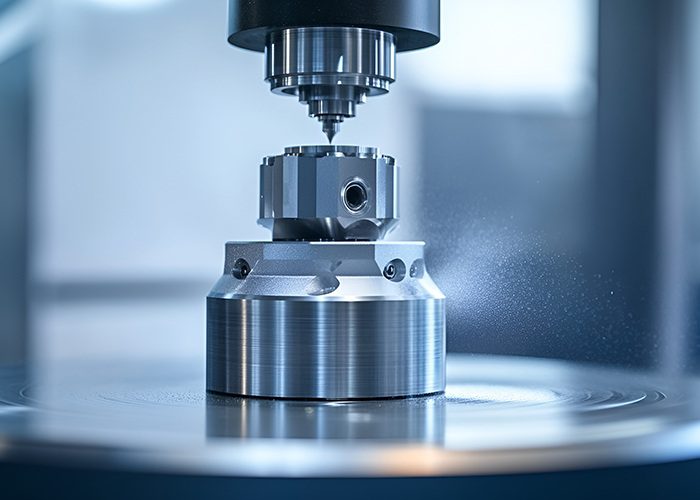
① Significantly reduces the need for tooling. Complex part shapes can be machined without elaborate fixtures. Changing part design or dimensions typically only requires modifying the machining program, making it suitable for prototyping and design modifications.
② Ensures stable machining quality, high accuracy, and excellent repeatability, meeting the stringent requirements of aerospace component manufacturing.
③ Increases productivity in small-batch, multi-variety production by reducing setup time, machine adjustment, and process inspection. The use of optimal cutting parameters also minimizes actual cutting time.
④ Enables machining of complex surfaces that are difficult or impossible to produce with conventional methods, including features that are not easily observable.
The main disadvantages of CNC machining are the high cost of machine equipment and the requirement for maintenance personnel with a higher level of expertise.


