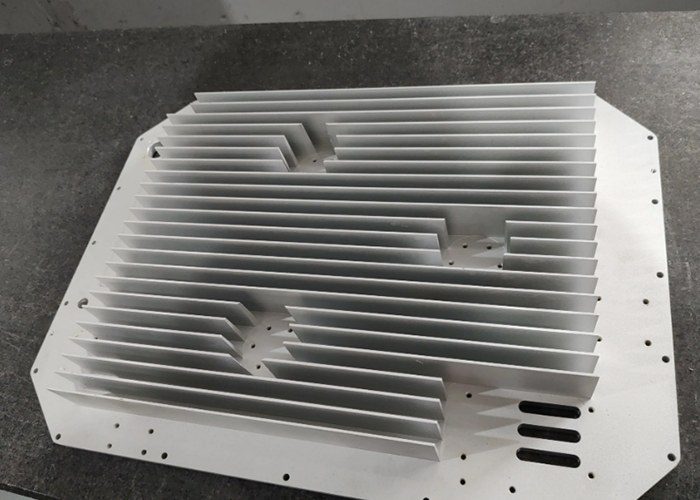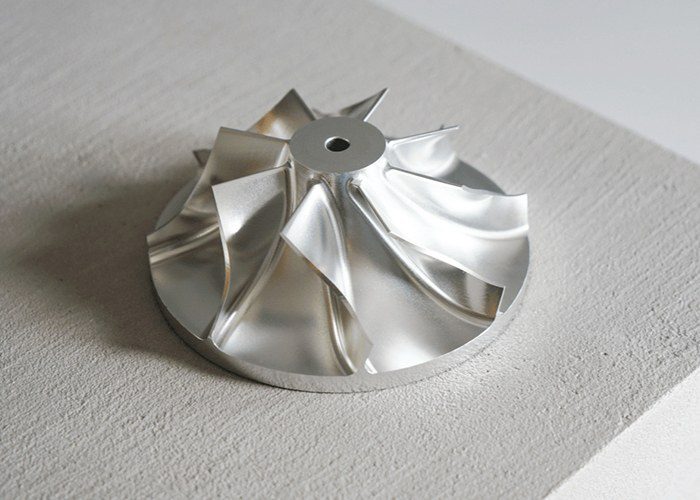
In the landscape of modern industrial production, the demand for efficiency, consistency, and complexity has never been greater. High volume CNC (Computer Numerical Control) machining stands as a cornerstone technology meeting these demands, bridging the gap between intricate design and mass production. It represents the evolution of precision machining from a craft of prototypes and small batches to a powerhouse capable of producing tens of thousands to millions of identical, high-tolerance parts. This process is the engine behind countless products we encounter daily, from automotive components and aerospace fittings to medical devices and consumer electronics.
At its core, high volume CNC machining retains the fundamental principle of its smaller-scale counterpart: a pre-programmed computer software dictates the movement of factory tools and machinery to shape a block of material—metal, plastic, or composite—into a finished part. The critical distinction lies in the orchestration of scale. This is not merely running a single CNC mill for longer periods; it is a meticulously planned manufacturing symphony involving specialized machines, advanced tooling, optimized workflows, and seamless integration with automation.
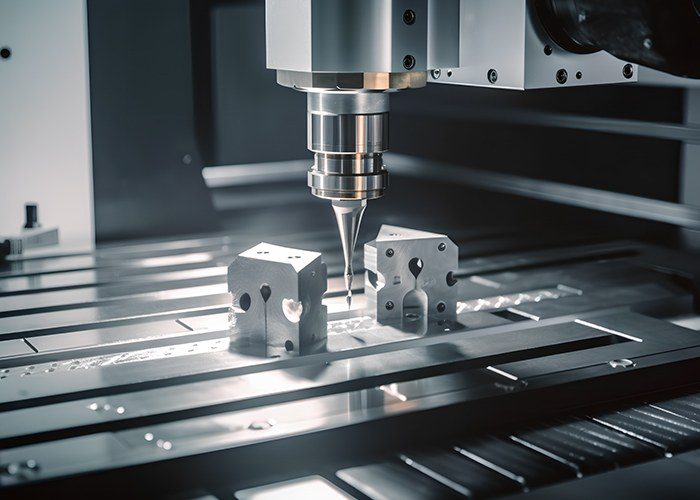
The transition to high volume necessitates a paradigm shift in approach. The initial phase, often overlooked but paramount to success, is Design for Manufacturability (DFM). Engineers work closely with machinists to refine part designs to be not only functional but also optimized for rapid, cost-effective production at scale. This may involve simplifying complex geometries, specifying tolerances that are essential rather than excessively tight, and choosing materials with favorable machining properties and availability. A design that saves five seconds of machining time per part translates to hundreds of saved production hours over a run of 100,000 units.
The hardware backbone of high-volume CNC machining frequently features machining centers and lathes built for endurance and speed. Multi-axis machines, particularly 4-axis and 5-axis CNC centers, are invaluable as they can machine multiple part facets in a single setup. This drastically reduces non-cutting time (like manual repositioning), improves accuracy by maintaining a single datum, and allows for the production of highly complex geometries in one continuous operation. For truly astronomical volumes, dedicated transfer lines or cellular manufacturing systems are employed, where a part moves sequentially through a series of synchronized CNC stations, each performing a specific operation, achieving breathtaking output rates.
Tooling strategy becomes a science of its own. Instead of standard end mills, high-volume operations leverage custom-designed, carbide-grade tools with specialized coatings (like TiAlN) to maximize tool life and cutting speeds. Sophisticated tool presetting and management systems ensure that worn tools are automatically detected and replaced with minimal downtime, maintaining consistent quality across the entire production run.
However, the true enabler of modern high-volume CNC machining is automation and digital integration. Robotic arms are ubiquitous for loading raw material blanks and unloading finished parts, operating 24/7 with unwavering consistency. Pallet changer systems allow one pallet of parts to be machined while the operator sets up the next, ensuring the machine spindle is almost always cutting. This integration is managed by Manufacturing Execution Systems (MES) that track every part, monitor tool wear in real-time, schedule maintenance, and provide a complete digital thread of the production process. This data-driven approach facilitates predictive maintenance, minimizes waste, and guarantees traceability—a critical requirement in industries like aerospace and medical.
The advantages of this methodology are compelling. It delivers unrivaled consistency and quality; every part is virtually identical, meeting precise specifications. It achieves significant economies of scale, driving down the per-unit cost dramatically after the initial investment in programming and tooling. It offers remarkable material flexibility, efficiently processing everything from aluminum and stainless steel to engineering plastics. Furthermore, it provides scalability and responsiveness; while optimized for large runs, CNC programs can be stored and re-run for future batches, allowing for efficient management of product lifecycles and updates.
High volume CNC machining finds its home in industries where precision, reliability, and scale intersect. The automotive sector uses it for engine components, transmission parts, and custom fittings. Aerospace relies on it for lightweight, high-strength structural elements. The medical industry depends on it for sterile, biocompatible surgical instruments and implantable devices. Even the consumer electronics industry utilizes it for durable, heat-dissipating enclosures and internal chassis.
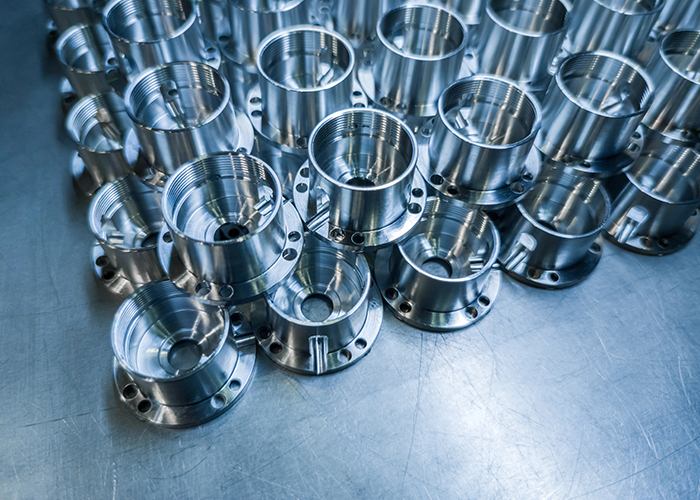
Looking forward, the convergence of high-volume CNC with Industry 4.0 technologies is set to deepen. The integration of Internet of Things (IoT) sensors, artificial intelligence for adaptive machining and predictive analytics, and lights-out manufacturing—fully automated factories running with minimal human intervention—will push the boundaries of productivity, precision, and flexibility even further.
In conclusion, high volume CNC machining is far more than just “a lot of machining.” It is a sophisticated, integrated manufacturing discipline that combines advanced engineering, state-of-the-art machinery, and intelligent automation. It is the indispensable process that translates innovative designs into the physical, high-quality products that define our industrial world, proving that in manufacturing, precision and scale are not mutually exclusive but can be masterfully synchronized.