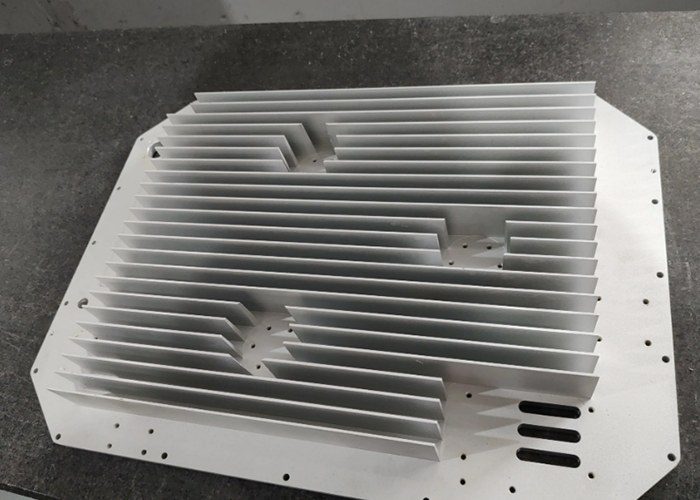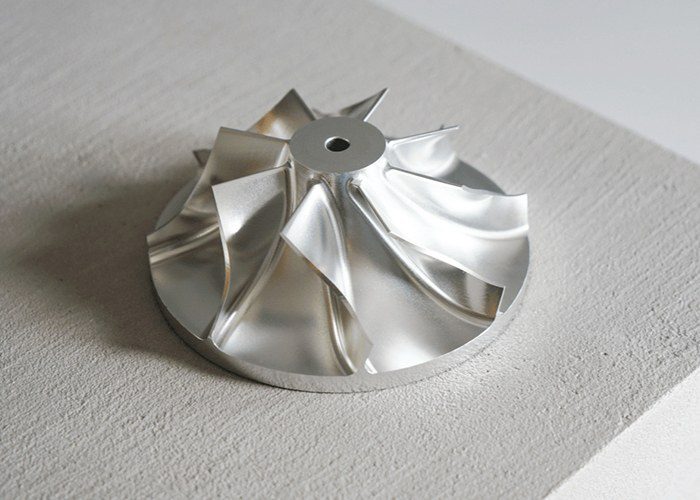
In the landscape of modern manufacturing, where the margin for error shrinks to the micrometer and the demand for flawless, complex components escalates, High Precision CNC Milling stands as a foundational and transformative technology. It represents not merely an evolution of machining but a revolution in capability, enabling the creation of parts with extraordinary accuracy, repeatability, and geometric sophistication that were once deemed impossible. This process is the backbone of industries where performance is non-negotiable, from aerospace and medical devices to optics and semiconductor tooling.
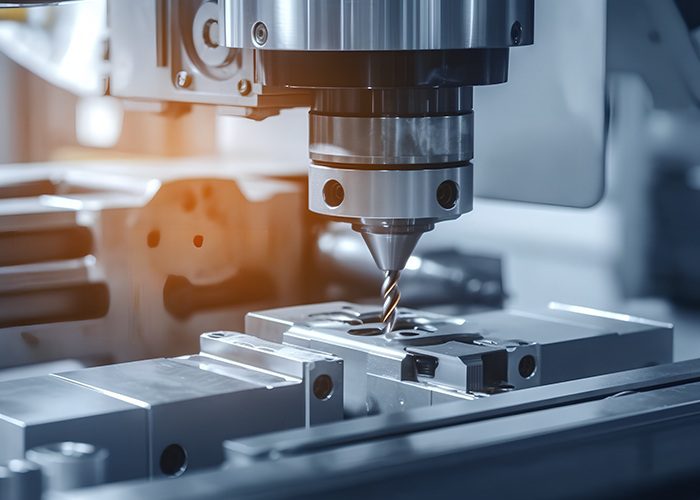
At its core, high precision CNC (Computer Numerical Control) milling is a subtractive manufacturing process where pre-programmed computer software dictates the movement of multi-point cutting tools and rotary spindles. What distinguishes it from conventional milling is the relentless pursuit of tolerances often within ±0.001 inches (0.025 mm) or tighter, surface finishes measured in micro-inches, and an unwavering focus on absolute consistency across production runs. This is achieved through a synergistic combination of advanced machine tools, cutting-edge software, meticulous engineering, and stringent environmental control.
The essence of this technology lies in its key enabling components. First, the machines themselves are marvels of rigidity and stability. Constructed from massive, vibration-damping materials like polymer concrete or reinforced cast iron, they provide an ultra-stable platform. Linear motors, precision ball screws, and high-resolution feedback encoders ensure movements are both rapid and exquisitely accurate. Secondly, the cutting tools, often crafted from ultra-fine grain carbide or coated with advanced materials like diamond-like carbon (DLC), are engineered for minimal runout and exceptional wear resistance. Finally, the digital thread—encompassing Computer-Aided Design (CAD), Computer-Aided Manufacturing (CAM), and on-machine probing—forms a closed-loop system. CAM software translates intricate 3D models into optimized toolpaths, while probes automatically measure workpiece position and tool wear, making real-time micro-corrections to compensate for any thermal drift or tool deflection.
The pursuit of high precision demands an almost scientific approach to the entire machining ecosystem. Temperature fluctuation is the nemesis of accuracy; thus, climate-controlled environments and machines with integrated thermal compensation systems are standard. Tool selection, spindle speed, feed rate, and depth of cut are no longer just parameters but variables in a complex equation optimized for each material—whether it be aluminum, titanium, Inconel, or engineering plastics. Furthermore, advanced strategies like High-Speed Machining (HSM) and trochoidal milling are employed to maintain lighter, more consistent chip loads, reducing heat and tool pressure, thereby enhancing both accuracy and surface finish.
The applications of high precision CNC milling are as critical as they are diverse. In aerospace, it produces turbine blades with internal cooling channels, lightweight structural components, and flight-critical fittings, where material integrity and dimensional perfection are essential for safety and fuel efficiency. The medical industry relies on it for surgical instruments, orthopedic implants (like knees and hips), and components for diagnostic equipment, where biocompatibility and flawless surfaces are paramount. In the realm of optics and photonics, it machines intricate lens molds, laser housings, and waveguide components with optical-grade finishes. The technology is also indispensable for creating injection molds and dies for consumer electronics, where the mirror-like finish of the mold directly translates to the quality of the final plastic or metal product.
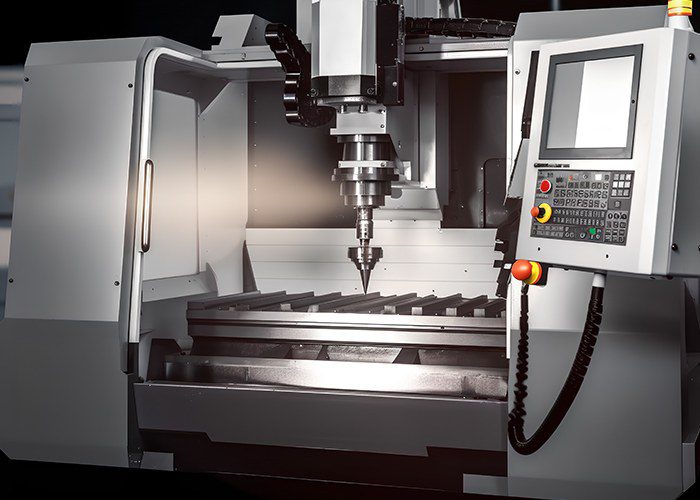
Looking forward, the trajectory of high precision CNC milling is intertwined with the rise of Industry 4.0 and smart manufacturing. The integration of Artificial Intelligence (AI) and Machine Learning (ML) algorithms promises predictive maintenance, adaptive machining that self-corrects based on sensor data, and further optimization of toolpaths for even greater efficiency and accuracy. The convergence with additive manufacturing (3D printing) is also notable, where CNC milling provides the essential finishing touch to 3D-printed near-net-shape parts, achieving the final tolerances and surface quality required.
In conclusion, high precision CNC milling is far more than a machining process; it is an enabling discipline that sits at the very heart of technological progress. It transforms digital designs into physical reality with breathtaking fidelity, pushing the boundaries of materials science, design complexity, and miniaturization. As the demand for smarter, smaller, and more reliable devices grows across all sectors, the role of high precision CNC milling will only become more central, continuing to shape the future of manufacturing one meticulously crafted micron at a time.