
In an era defined by miniaturization, automation, and extreme performance demands, the manufacturing industry relies on a singular, non-negotiable pillar: precision. From the turbine blades of a jet engine spinning at 40,000 RPM to the microscopic actuators inside a surgical robot, the reliability of complex machinery hinges on components that are accurate to within a hair’s breadth—or significantly less. Precision processing of mechanical parts is not merely a manufacturing technique; it is the foundational science that transforms raw metal, plastic, or composite materials into the silent heroes of the industrial world.
Defining Precision Processing
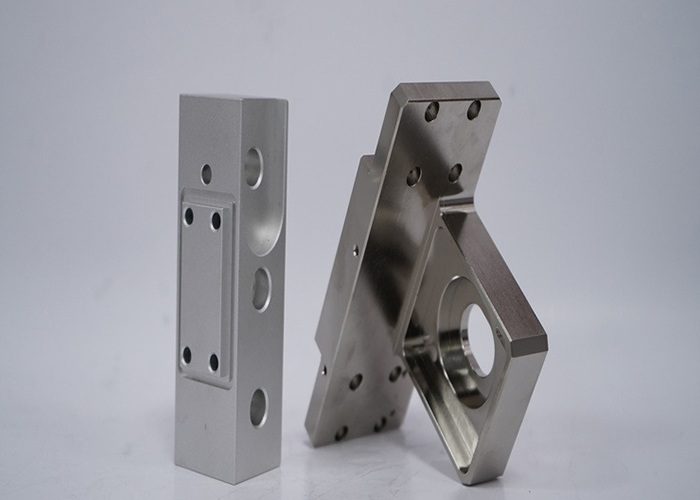
Precision processing refers to the collection of manufacturing methods designed to produce mechanical parts with extremely tight tolerances, often measured in micrometers (µm) or even nanometers. While standard machining might achieve tolerances of ±0.1mm, precision machining routinely operates at ±0.005mm—roughly one-tenth the thickness of a human hair. This level of accuracy requires a symbiotic relationship between advanced machinery, sophisticated software, and highly skilled craftsmanship.
The key technologies driving this field are CNC milling, turning, electrical discharge machining (EDM), and precision grinding.. CNC machining remains the workhorse, utilizing pre-programmed software to dictate the movement of factory tools and machinery. Modern 5-axis CNC machines can approach a workpiece from virtually any direction in a single setup, eliminating cumulative errors that arise from repositioning parts.
The Technological Arsenal
To achieve micron-level accuracy, manufacturers deploy a suite of specialized processes:
- Precision Turning and Milling: High-speed spindles combined with rigid, vibration-damped machine bases allow for the removal of material in minuscule layers. Swiss-type lathes, for instance, are capable of producing complex, tiny parts for medical devices and electronics with diameters under 5mm while maintaining tolerances of ±0.002mm.
- Electrical Discharge Machining (EDM): For parts requiring intricate cavities or composed of super-hard alloys like Inconel or titanium, EDM is indispensable. This process uses controlled electrical sparks to erode material without any physical contact, preventing tool pressure or thermal distortion. It is the standard for producing injection mold dies and aerospace fuel system components.
- Precision Grinding and Lapping: When surface finish is as critical as dimensional accuracy—such as in hydraulic valve spools or bearing races—grinding and lapping take over. These abrasive processes can achieve surface roughness measured in Ra (average roughness) values of 0.05µm, creating near-frictionless interfaces.
- CNC Swiss Machining: A specialized form of turning, Swiss machining allows for exceptionally long, slender parts to be produced without deflection. This is vital for bone screws, dental implants, and connector pins.
Industries Driven by Precision
The demand for precisely processed mechanical parts pervades every high-stakes industry.
- Aerospace: A single engine contains over 25,000 parts. A variance of 0.01mm in a fuel injection nozzle can alter combustion efficiency, reduce thrust, and increase emissions. Turbine blades must maintain exact aerodynamic profiles to withstand extreme centrifugal forces and temperatures.
- Medical Technology: In orthopedics, a hip or knee replacement implant must match a patient’s anatomy to sub-millimeter precision. Surgical robots and laparoscopic tools require gear trains and joints with zero backlash to ensure that a surgeon’s hand movements translate perfectly to the instrument tip.
- Automotive and Motorsports: The transition to electric vehicles (EVs) has intensified the need for precision. EV motor shafts and bearing journals require tighter tolerances than internal combustion engine components to reduce noise, vibration, and harshness (NVH). High-pressure common rail diesel injectors operate at over 2,000 bar, demanding perfectly mated nozzle needles and seats.
- Defense and Optics: Guidance systems for missiles, night-vision goggles, and targeting lasers depend on mechanical housings and lens mounts that maintain alignment despite extreme shock and temperature variation.
Challenges on the Shop Floor
Achieving such precision is fraught with obstacles. Temperature is the silent enemy; a 10°C rise in shop floor temperature can expand a 500mm steel part by approximately 0.06mm—enough to scrap a high-precision component. Consequently, leading precision machine shops operate in climate-controlled environments, often at 20°C ±0.5°C.
Vibration is another adversary. Passing trucks, nearby stamping presses, or even unbalanced fans can transmit micro-vibrations that appear as chatter marks on a machined surface. High-end facilities use granite bases and active vibration dampening systems.
Furthermore, metrology—the science of measurement—must keep pace with manufacturing. A part that is claimed to be precise must be verifiably precise. Coordinate Measuring Machines (CMMs), laser micrometers, and optical comparators provide the feedback loop necessary for statistical process control. In many shops, a CMM inspects critical dimensions every few parts, feeding data back to the CNC machine for automatic tool wear compensation.
The Future of Precision Processing
The trajectory of precision processing is moving toward autonomous, closed-loop manufacturing. The integration of Internet of Things (IoT) sensors directly into cutting tools and work-holding fixtures allows for real-time monitoring of cutting forces, temperature, and vibration. Machine learning algorithms can predict tool failure hundreds of cycles before it occurs, adjusting feed rates and spindle speeds dynamically to maintain accuracy.
Additive manufacturing (3D printing) is also converging with precision subtractive methods. Parts are first printed near-net-shape to conserve expensive materials, then finished with CNC machining to achieve the required tolerances. This hybrid approach is revolutionizing the production of complex cooling channels in molds and lightweight lattice structures for aerospace brackets.
Conclusion
Precision processing of mechanical parts is the uncelebrated architecture of the modern world. It allows a smartphone to fold, a drone to hover, and a pacemaker to beat in rhythm with a human heart. As industries push toward faster, smaller, and more efficient systems, the demand for parts with tolerances shrinking toward zero will only intensify. Tomorrow’s machine shop will be a symphony of AI-driven algorithms, laser metrology, and sub-micron precision. In this relentless pursuit of perfection, one truth remains: precision is not just a specification—it is the language of reliability and innovation.


