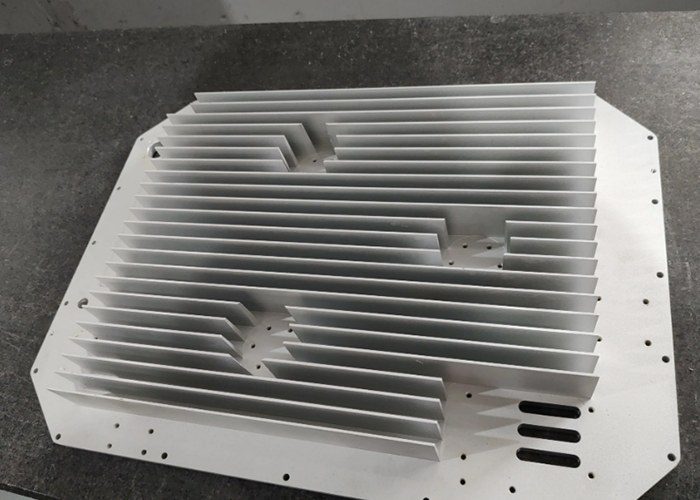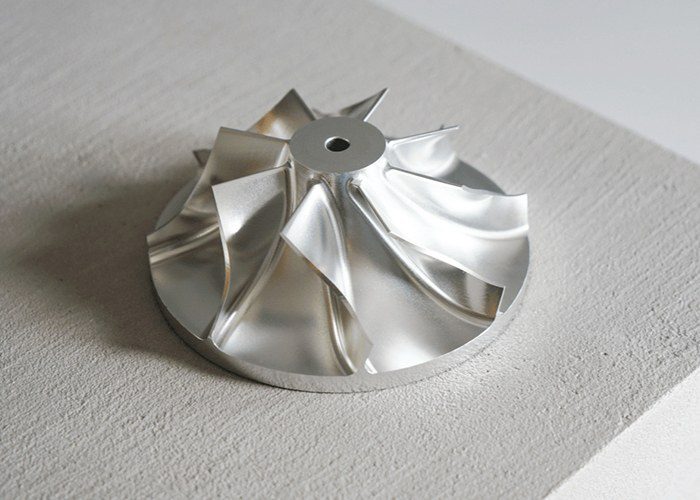
In an age where nanotechnology and atomic-scale manipulation frequently dominate engineering headlines, high-precision mechanical machining remains an indispensable pillar of modern manufacturing. Defined as the process of removing material from a workpiece to create components with tolerances measured in micrometers (µm) or even sub-micrometer ranges, this discipline marries raw physical force with subatomic-level accuracy. From the jet engines soaring above our heads to the life-saving medical implants inside patients’ bodies, high-precision machining quietly enables the devices that define contemporary life.
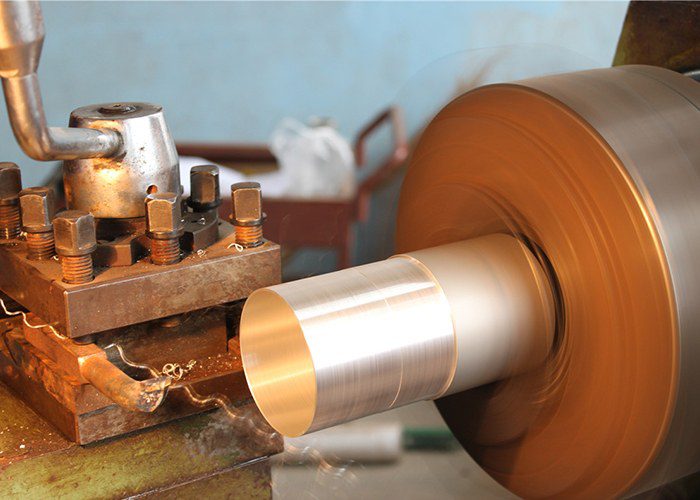
At its core, high-precision machining is a battle against variability. Every cutting tool, every spindle rotation, and every thermal expansion of a machine component introduces potential error. Achieving tolerances of, say, ±2 µm requires controlling not only the obvious parameters—feed rate, cutting speed, depth of cut—but also subtle factors like vibration from nearby traffic, temperature fluctuations of the coolant, and even the humidity of the shop floor. Modern computer numerical control (CNC) machines address these challenges through closed-loop feedback systems, where laser interferometers and linear scales constantly compare the tool’s actual position to the commanded one, making microscopic adjustments thousands of times per second. This dance between hardware and software is what separates precision machining from merely “cutting metal.”
Several key technologies define the state of the art. Ultra-precision diamond turning, for instance, uses single-crystal diamond tools on lathes equipped with hydrostatic or aerostatic bearings. These bearings eliminate metal-on-metal contact, virtually erasing friction and enabling spindle rotational accuracy within 0.02 µm. For non-rotationally symmetric parts, 5-axis CNC machining centers now incorporate direct-drive torque motors and ceramic ball screws, components so stiff and thermally stable that they can contour complex surfaces like turbine blades with surface finishes better than 0.1 µm Ra (average roughness). Complementary processes like electrical discharge machining (EDM) and laser ablation step in when traditional cutting tools cannot reach—such as drilling cooling holes in a nickel-alloy turbine vane at a 30-degree angle, with hole diameter variations under 5 µm.
The applications of high-precision machining are as diverse as they are critical. In aerospace, it produces fuel injector nozzles for next-generation lean-burn engines, where hole geometry deviations of a mere 3 µm can alter fuel spray patterns and increase NOx emissions by 15%. In the medical field, orthopedic knee and hip implants require mating surfaces polished to below 0.05 µm Ra to ensure wear rates low enough for 20-year in-body longevity. The optics industry relies on deterministic micro-grinding to produce aspheric lenses for smartphone cameras and lithography systems—freeform shapes that would be impossible by conventional lapping. Even the defense sector depends on precision-machined gyroscope housings for inertial navigation systems, where mass eccentricities of less than 1 mg·mm are mandatory for accurate missile guidance.
Yet despite technological advances, significant challenges persist. Thermally induced distortion remains the silent enemy: a 1°C temperature rise in a 300 mm steel part expands it by roughly 3.5 µm, wiping out micron-level tolerances. While some hyper-factories maintain their machining cells at 20.0°C ±0.1°C, this solution is expensive and impractical for small-to-medium enterprises. Tool wear introduces another dilemma. When cutting hardened steels or titanium alloys, a diamond tool may lose sharpness after only 500 meters of cutting distance. Tool condition monitoring systems using acoustic emission sensors or spindle power analysis attempt to predict failures, but replacing a tool mid-cycle introduces a location error that must be re-calibrated—often a process taking several minutes, costing high-value production lines dearly.
The future of high-precision machining is being shaped by three converging trends. First, hybrid manufacturing—combining additive layer deposition with subtractive finishing in the same machine envelope—promises to create near-net shapes with internal lattice structures, then precision-machined only on functional surfaces, saving material and time. Second, intelligent machining systems empowered by edge computing and real-time digital twins can now simulate the thermal and mechanical behavior of a full workpiece-tool-machine system, compensating for predicted errors before they occur. A cutting path can be modified on the fly when a thermal camera detects a 0.5°C rise in the spindle bearing housing. Third, the push toward sustainable manufacturing is driving research into minimum-quantity lubrication (MQL) and cryogenic cooling using liquid nitrogen, which not only reduce environmental impact but also can improve surface integrity by avoiding heat-affected zones.
In conclusion, high-precision mechanical machining sits at a fascinating intersection of brute force and nanometer awareness. It demands that engineers think simultaneously in millimeters and microns, balancing feed rates against vibration harmonics, thermal expansion against coolant strategies. As industries push toward longer component lifespans, higher energy efficiencies, and miniaturization, the ability to consistently machine features at single-digit micron tolerances will only grow in value. While laser-based and electrochemical processes may someday replace mechanical cutting for certain niches, the versatility, material freedom, and economic scalability of high-precision machining ensure its central role for decades to come. It is not merely a manufacturing process—it is the silent enabler of the precision world we inhabit.