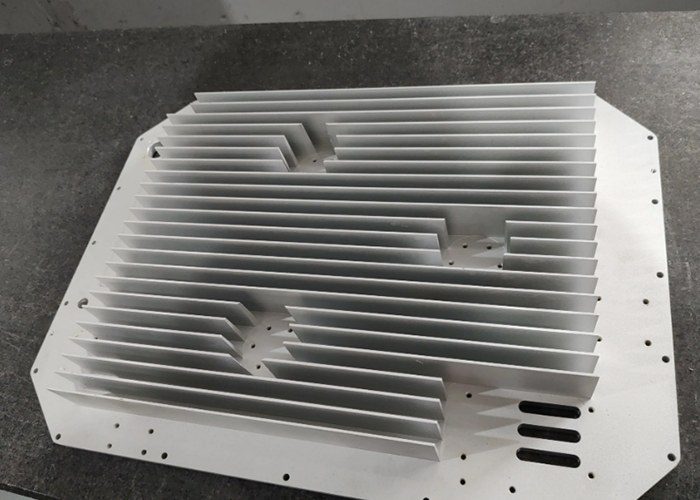
In an age dominated by digital technology and artificial intelligence, it is easy to overlook the physical backbone of modern civilization: the precisely manufactured metal component. From the turbine blades inside a jet engine to the miniature screws in a smartwatch, the world runs on parts that fit together with near-perfect harmony. At the heart of this manufacturing capability lies Precision Metal Machining — a subtractive manufacturing process that sculpts raw metal stock into finished parts with tolerances often measured in microns (thousandths of a millimeter). This discipline is not merely about cutting metal; it is about controlling matter at the edge of physical possibility.
Defining Precision: More Than Just Cutting
Precision metal machining distinguishes itself from conventional machining through its stringent tolerances and surface finish requirements. While standard machining might operate within a tolerance of ±0.1 mm, precision machining routinely achieves tolerances of ±0.005 mm or even tighter. To put that in perspective, a human hair is approximately 0.07 mm thick. Achieving such accuracy requires a symbiotic relationship between three critical elements: ultra-rigid machine tools, advanced cutting geometries, and sophisticated Computer Numerical Control (CNC) systems.
The process typically involves removing material from a solid block (often called a “workpiece” or “blank”) using rotating cutting tools. Common operations include milling (cutting flat surfaces, slots, or complex 3D shapes), turning (rotating the workpiece against a stationary cutting tool to create cylindrical features), drilling, and grinding. However, modern precision machining centers combine multiple capabilities into a single setup, allowing a part to be milled, turned, and even inspected without ever leaving the machine bed. This reduces human error and ensures that critical geometric relationships—such as perpendicularity, concentricity, and parallelism—are flawlessly maintained.
The Technological Arsenal
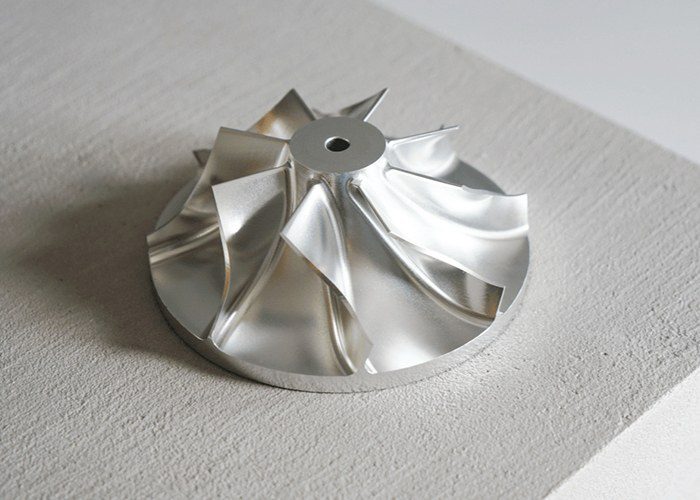
The evolution of precision metal machining has been driven by relentless innovation in machine tool technology. Older manually operated lathes and mills have been almost entirely replaced by multi-axis CNC machining centers. For example, a 5-axis CNC machine enables simultaneous movement of the cutting tool or workpiece along five different axes. This allows machinists to produce incredibly complex geometries—like an impeller with twisted vanes—in a single clamping operation.
Equally important is the advancement in cutting tool materials. Modern inserts are often made of polycrystalline diamond (PCD), cubic boron nitride (CBN), or carbide coated with nanolayer films of titanium aluminum nitride (TiAlN). These materials maintain their hardness at red-hot temperatures (over 800°C), enabling high-speed machining that removes metal rapidly while maintaining micron-level accuracy. Additionally, through-spindle coolant (high-pressure fluid delivered directly to the cutting edge) flushes away chips, lubricates the interface, and precisely controls thermal expansion—a silent enemy of precision.
Critical Materials and Their Challenges
Different metals respond differently to cutting tools. Precision machining works with everything from common aluminum alloys to exotic superalloys like Inconel and titanium. Each presents unique challenges:
- Aluminum 6061-T6: Easy to cut but requires sharp tools to avoid built-up edge (metal sticking to the cutter).
- Stainless Steel (303, 316): Prone to work hardening; if a tool rubs rather than cuts, the surface becomes harder than the tool itself.
- Titanium Grade 5 (Ti-6Al-4V): Poor thermal conductivity means the heat stays in the cutting zone, rapidly dulling tools.
- Inconel 718: Extremely tough and abrasive; machining it is an exercise in patience and tool wear management.
Mastering a material’s specific cutting parameters—speeds, feeds, depths of cut, and coolant strategies—is what separates a true precision machining shop from a mere job shop.
Applications That Touch Every Industry
The scope of precision metal machining is vast and often invisible to the end user. In the aerospace sector, it produces structural airframe components, landing gear parts, and fuel system bodies—where failure is not an option. In medical technology, it creates bone screws, spinal rods, surgical scalpels, and even the tiny mechanisms inside robotic surgery instruments. The automotive industry relies on it for fuel injector nozzles, transmission valves, and ABS sensor housings. Defense and firearms require precisely machined receivers, bolts, and barrels. Semiconductor manufacturing depends on ultra-precision machined chambers and wafer-handling components. In every case, the component’s function—whether carrying hydraulic pressure or aligning an optical lens—depends entirely on the fidelity of the machining process.
Quality Assurance: Seeing the Invisible
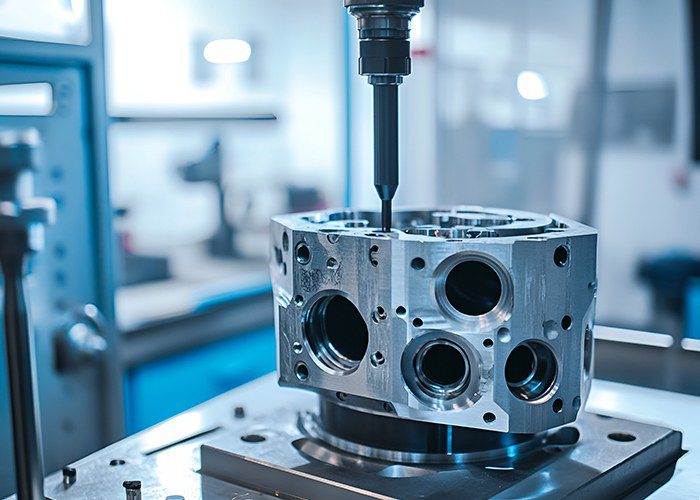
Given the tiny tolerances involved, visual inspection is insufficient. Precision machining relies on a suite of metrology tools to verify quality. Coordinate Measuring Machines (CMMs) use a touch probe to map a part’s 3D geometry against its CAD model. Optical comparators project a magnified silhouette of the part onto a screen to check contours. Laser micrometers measure diameters non-contact at thousands of readings per second. For the most demanding applications, parts may be inspected on a profilometer to measure surface roughness in nanometers. Statistical Process Control (SPC) is used during production runs to detect trends—like a tool beginning to wear—before an out-of-tolerance part is even made.
Challenges and Future Frontiers
Precision metal machining is not without significant challenges. The primary pressures are economic: high-end CNC machines cost hundreds of thousands of dollars, skilled machinists are increasingly scarce, and cycle times must be balanced against tool life. There is also the environmental consideration of cutting fluids and metal chips, driving research into dry or minimum-quantity lubrication (MQL) machining.
Looking ahead, the field is being transformed by automation and digitization. Robotic part loaders now tend machine tools overnight, running “lights-out” manufacturing for hours without human intervention. Digital twins—virtual replicas of the entire machining process—allow engineers to simulate cutting, detect collisions, and optimize toolpaths before a single chip is made. Hybrid machines that combine additive manufacturing (3D printing) with precision subtractive machining are emerging, allowing worn or complex parts to be built up layer by layer, then machined to final tolerance.
Conclusion
Precision metal machining is a quiet giant—a foundational technology that enables modern life while remaining largely behind the scenes. It is a discipline where art meets engineering, where a skilled machinist’s intuition about chip formation and tool vibration is as valuable as a metrologist’s data sheet. As products become smaller, lighter, and more complex, the demand for micron-level accuracy in metal components will only intensify. Whether it is enabling the next generation of electric vehicles, implantable medical devices, or space exploration hardware, precision machining will continue to be the process that turns raw metal into reliable reality. In a world that dreams of nanobots and fusion reactors, we must first master the humble art of cutting metal with extraordinary care.