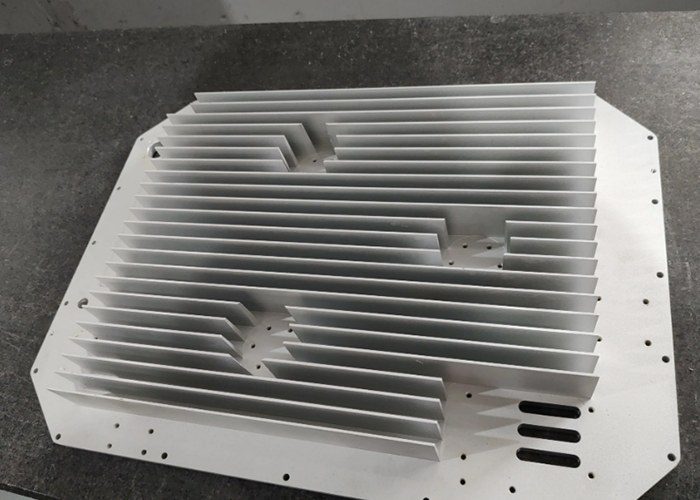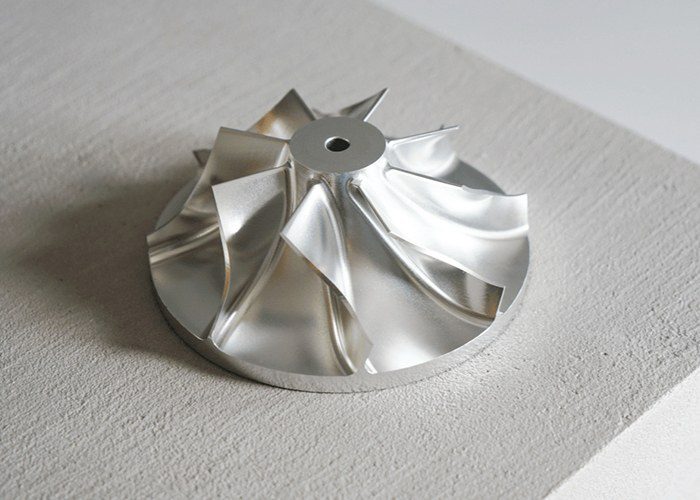
In the vast ecosystem of modern manufacturing, few processes are as essential and widely employed as CNC turning. From the smallest screws used in medical implants to large shafts in industrial turbines, CNC turning mechanical parts form the hidden skeleton of countless machines, vehicles, and devices that power our daily lives. Delving into the intricacies, advantages, materials, and applications of CNC turned components, this article highlights their enduring role as a cornerstone of precision engineering.
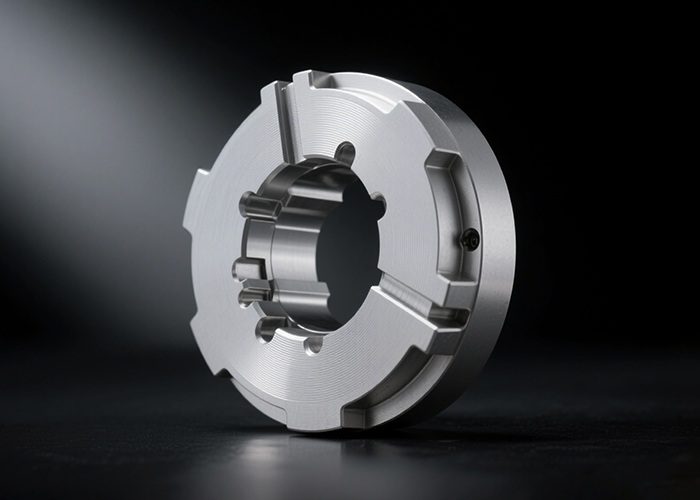
What Is CNC Turning?
CNC (Computer Numerical Control) turning is a subtractive machining process in which a rotating workpiece is fed against a stationary cutting tool to remove material and create cylindrical or contoured shapes. Unlike milling, where the tool spins and the workpiece remains stationary (or moves linearly), turning relies on the rotational motion of the part itself. A CNC lathe or turning center executes pre-programmed sequences of instructions, controlling parameters such as spindle speed, feed rate, and tool position with micron-level accuracy.
Typical parts produced by CNC turning include shafts, bushings, pulleys, threaded rods, pins, and flanges. These components are characterized by their rotational symmetry, though modern multi-axis turning centers can also produce off-center features, polygonal shapes, and complex contours thanks to live tooling and Y-axis capabilities.
The CNC Turning Process: From Raw Stock to Finished Part
The journey of a CNC turned mechanical part begins with a solid cylindrical bar of material—often metal or plastic—clamped in the lathe’s chuck. As the spindle rotates, a series of cutting tools are applied sequentially to sculpt the part. Common operations include:
- Facing: Squaring the end of the workpiece.
- Straight turning: Reducing diameter along a length.
- Taper turning: Creating angled surfaces.
- Grooving and parting: Cutting channels or severing the finished part.
- Threading: Producing internal or external screw threads.
- Boring: Enlarging an existing hole.
- Knurling: Adding a textured diamond pattern for grip.
Each operation is performed automatically, with coolant often applied to manage heat and prolong tool life. After machining, parts may undergo deburring, cleaning, heat treatment, or coating before inspection.
Why Choose CNC Turning for Mechanical Parts?
The widespread adoption of CNC turning stems from several compelling advantages:
- Unmatched Precision and Repeatability
Modern CNC lathes can maintain tolerances as tight as ±0.005 mm (0.0002 inches) or better. Once a program is proven, every part from the batch will be identical, ensuring consistent quality even over millions of pieces. - High Efficiency for Medium to Large Batches
After initial setup, CNC turning runs unattended or with minimal operator intervention. Bar feeders enable continuous production, dramatically reducing cycle times compared to manual turning. - Complex Geometries Made Simple
With live tooling (milling attachments) and sub-spindles, a single turning center can perform milling, drilling, tapping, and turning in one clamping. This eliminates multiple setups, reduces error, and speeds delivery. - Excellent Surface Finish
By optimizing cutting parameters and using precision-ground inserts, CNC turning can achieve surface roughness as low as Ra 0.4 µm, often eliminating the need for secondary polishing. - Material Versatility
Almost any machinable material can be turned: from free-cutting brass and aluminum to tough alloys like Inconel, titanium, and hardened steel, as well as engineering plastics such as PEEK, Delrin, and nylon.
Materials Commonly Used in CNC Turning
The choice of material for CNC turned mechanical parts depends on the application’s demands for strength, corrosion resistance, weight, and cost.
- Aluminum (6061, 7075): Lightweight, excellent machinability, ideal for aerospace, automotive, and consumer electronics.
- Steel (1215, 1045, 4140, 303/304 stainless): High strength and wear resistance; stainless steel adds corrosion protection for medical and food equipment.
- Brass and Copper: Excellent electrical and thermal conductivity, corrosion resistant; common in plumbing fittings, electrical connectors, and decorative parts.
- Titanium (Grade 2, 5): Extremely strong, light, and biocompatible; used in aerospace fasteners, surgical implants, and high-performance automotive components.
- Plastics (Acetal, Nylon, PEEK): Lightweight, insulating, and chemically resistant; PEEK is favored for medical implants due to its sterility and strength.
Critical Quality Considerations
Producing reliable CNC turning mechanical parts requires rigorous quality control throughout the production cycle. Key parameters inspected include:
- Dimensional accuracy – Dimensional verification conducted via micrometers, calipers, bore gauges, and coordinate measuring machines (CMMs).
- Surface finish – Measured with profilometers to ensure functional or aesthetic requirements.
- Concentricity and roundness – Critical for parts that rotate at high speeds, such as motor shafts.
- Thread quality – Checked with go/no-go gauges.
- Burr-free edges – Essential for safety and assembly.
Many manufacturers incorporate in-process probing, where the CNC machine automatically measures key features during production and adjusts offsets in real time. This closed-loop control minimizes scrap and ensures every part meets specifications.
Applications Across Industries
The ubiquity of CNC turned parts is evident across virtually every sector:
- Automotive: Engine valve stems, transmission shafts, brake pistons, fuel injector components.
- Aerospace: Hydraulic fittings, landing gear pins, actuator housings, turbine engine fasteners.
- Medical: Bone screws, surgical drill bits, implantable pins, dental abutments.
- Industrial machinery: Bearings, roller shafts, pneumatic cylinder rods, gear blanks.
- Electronics: Heat sinks, connector barrels, EMI shielding components.
- Oil & gas: These components include valve bodies, drill collars, and high-pressure couplings.
Future Trends in CNC Turning
As Industry 4.0 advances, CNC turning continues to evolve. Smart lathes equipped with IoT sensors monitor tool wear, vibration, and temperature, enabling predictive maintenance. Automation through robotic part loaders and collaborative robots (cobots) further reduces labor costs and enables lights-out manufacturing. Meanwhile, hybrid machines that combine additive manufacturing (laser cladding) with traditional turning allow repair and coating of high-value components—extending their service life.
Conclusion
CNC turning mechanical parts represent a perfect marriage of ancient rotational principles and twenty-first-century digital control. They are the unsung heroes of engineered systems, providing the roundness, precision, and reliability that complex assemblies demand. Whether in a life-saving medical device or the engine of a commercial jet, every turned part tells a story of careful programming, material science, and quality craftsmanship. For manufacturers seeking efficiency, consistency, and the ability to produce geometries from simple to sublime, CNC turning remains an indispensable technology—and one that will only grow more capable in the years ahead.