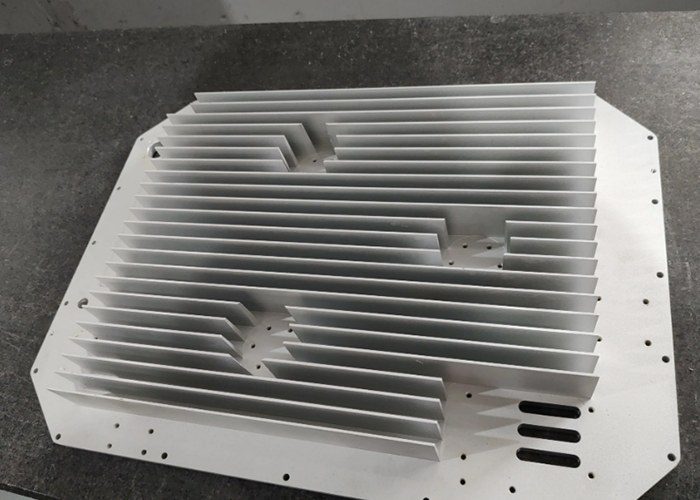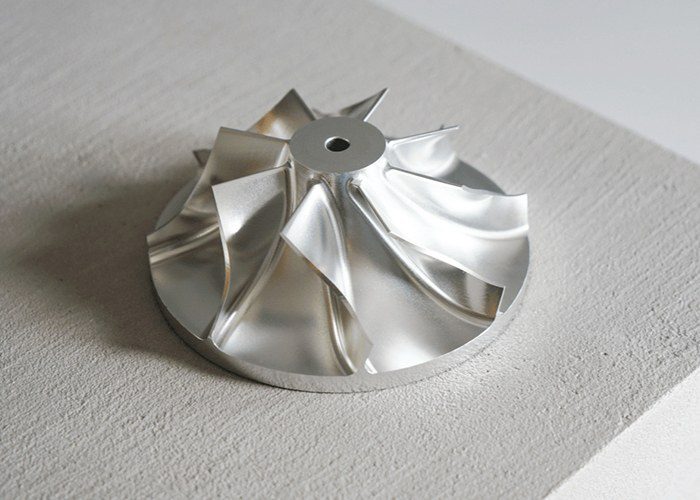
In the modern industrial landscape, precision is not just a requirement; it is the currency of reliability. At the heart of this precision-driven ecosystem lies CNC milling, a subtractive manufacturing process that has redefined how mechanical parts are designed, prototyped, and mass-produced. From the humble gearbox to complex aerospace components, CNC milled parts form the silent, sturdy backbone of virtually every machine we use today.
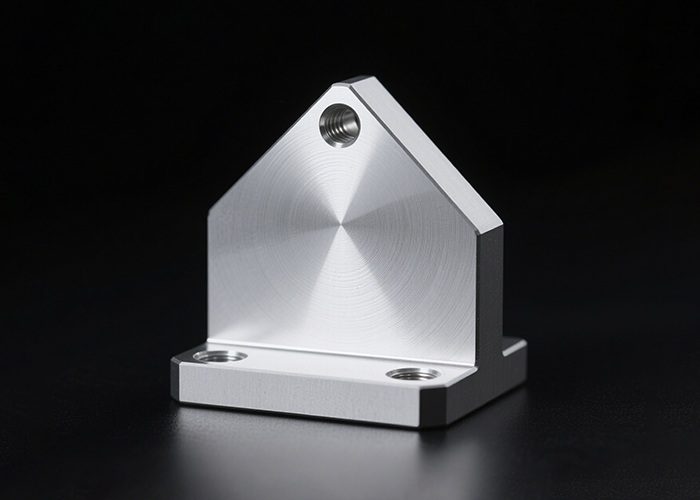
Understanding the Process
CNC (Computer Numerical Control) milling is a machining process that uses rotary cutters to remove material from a solid block—known as the workpiece—to achieve a desired shape. Unlike conventional manual milling, where a human operator controls the handwheels and levers, CNC milling relies on pre-programmed computer software (often G-code) to dictate every movement of the cutting tool. The machine follows three-dimensional coordinates to carve out complex geometries with micron-level accuracy.
The process typically begins with a CAD model. Engineers convert this digital blueprint into a CAM (Computer-Aided Manufacturing) file that translates the geometry into machine-readable instructions. The CNC mill then executes these instructions across multiple axes—most commonly three (X, Y, Z), but advanced machines offer five or even six axes for intricate undercuts and contoured surfaces. This automation eliminates human error while ensuring repeatability across thousands of identical parts.
Key Advantages Over Other Manufacturing Methods
Why choose CNC milling over 3D printing, casting, or manual machining? Several distinct advantages stand out.
First and foremost is precision and tolerance. CNC milling machines routinely achieve tolerances of ±0.001 inches (±0.025 mm) or tighter. For critical applications—such as hydraulic valve bodies or surgical instrument components—this accuracy is non-negotiable. Secondly, material versatility sets CNC milling apart. Unlike additive manufacturing, which is often limited to thermoplastics and certain metals, CNC mills handle virtually any rigid material: aluminum alloys, stainless steel, titanium, brass, engineering plastics like PEEK, composites, and even hardwood. Thirdly, surface finish is often superior. Milled parts exit the machine with smooth, ready-to-use surfaces, reducing or eliminating secondary finishing operations.
Common Types of CNC Milled Mechanical Parts
The range of parts produced through CNC milling is staggering. In the automotive sector, engine blocks, cylinder heads, transmission cases, and mounting brackets are regularly milled from cast or billet aluminum. Aerospace relies on milled components for landing gear parts, structural ribs, wing spars, and turbine housings—where every gram of weight and millimeter of dimension matters. Medical device manufacturing uses CNC milling to produce bone screws, orthopedic implants, and surgical tool handles from biocompatible materials like titanium or stainless steel 316L. Even consumer electronics benefit: the unibody aluminum chassis of many laptops and smartphones is crafted entirely through high-speed CNC milling.
Materials and Tooling Considerations
Choosing the right material for a CNC milled part involves balancing mechanical properties, machinability, and cost. Aluminum 6061 is the workhorse of the industry—lightweight, corrosion-resistant, and very easy to machine. For higher strength-to-weight ratios, 7075 aluminum (often used in aircraft fittings) is preferred. Stainless steel 304 and 316 offer excellent corrosion resistance and strength but require slower speeds, rigid setups, and durable carbide tooling. Titanium (Grade 5) is notoriously difficult to mill due to its low thermal conductivity and high chemical reactivity, but it rewards the effort with unmatched strength and biocompatibility.
Tooling itself is an art. End mills, face mills, ball-nose cutters, and drills must be selected based on the material and feature geometry. Coatings such as TiN (titanium nitride) or AlTiN (aluminum titanium nitride) extend tool life by reducing friction and heat. Even cooling strategies—flood coolant, mist, or through-spindle coolant—can drastically affect part quality and cycle time.
Quality Assurance and Metrology
A CNC milled part is only as good as its inspection process. Reputable machine shops deploy rigorous QA protocols. After machining, parts are cleaned of chips and cutting fluid, then inspected using tools ranging from simple calipers and micrometers to advanced coordinate measuring machines (CMMs). Optical comparators and laser scanners verify complex profiles and hole positions. Many modern CNC machines also include in-process probing—the machine stops mid-cycle to touch a probe against critical surfaces, automatically adjusting for any tool wear or thermal drift. This closed-loop feedback ensures that every part leaving the machine matches the CAD model.
Design for Manufacturing (DFM) Guidelines
To optimize a design for CNC milling, engineers should follow several best practices. Avoid internal sharp corners; since end mills are round, interior corners will naturally have a radius equal to the tool diameter. Designing fillets that are slightly larger than the largest available tool reduces cost and cycle time. Minimize deep, narrow pockets—they require long, slender end mills that are prone to deflection and breakage. Use through-holes instead of blind holes when possible to simplify chip evacuation. And standardize hole sizes, thread types, and radii to allow the machinist to use common tooling. Following these guidelines can reduce machining time by 30–50% while improving surface finish and dimensional stability.
Future Trends in CNC Milling
The field of CNC milling is far from static. Hybrid manufacturing—combining additive metal deposition with subtractive milling in the same machine—is gaining traction for repairing expensive dies and producing complex bimetallic parts. Automation and lights-out machining are becoming standard — robotic arms handle blank loading and unloading, tool breakage detectors pause the machine, and pallet changers operate unattended overnight. High-speed machining (HSM) with spindles exceeding 30,000 RPM, coupled with advanced toolpaths that maintain constant chip load, allows rapid material removal even in hardened steels (up to 70 HRC). Meanwhile, digital twins simulate the entire milling process before the first chip is cut, predicting deflections, vibrations, and thermal growth to perfect the first part.
Conclusion
CNC milling mechanical parts are more than just metal shapes—they are the physical manifestation of digital precision. Whether holding together a rocket engine, guiding a surgical saw, or ensuring a car shifts smoothly, these components demonstrate what modern manufacturing can achieve when computers, advanced materials, and skilled craftsmanship converge. As technology evolves, CNC milling will remain indispensable, continuously pushing the boundaries of what is possible in mechanical design. For engineers, machinists, and product developers, understanding this process is not merely academic—it is the key to turning ideas into reliable, real-world hardware.