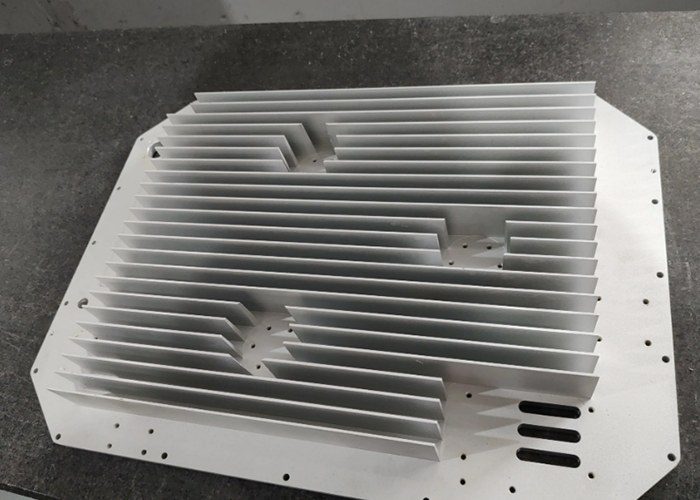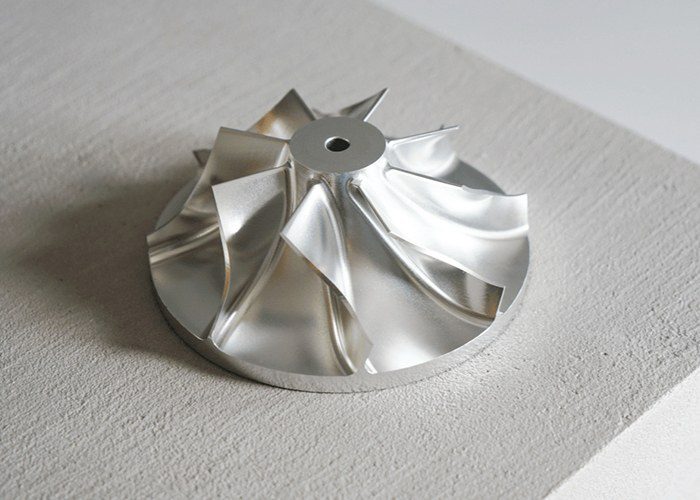
In an age where technology shrinks to nanoscale and machinery operates at the edge of physical possibility, the demand for components that are both uniquely tailored and flawlessly accurate has never been higher. Custom precision machine parts are the unsung heroes of modern engineering. They are the specialized cogs, shafts, housings, and connectors that do not come off a standard assembly line but are instead born from a meticulous dance between computer-aided design (CAD) and advanced subtractive or additive manufacturing. These components represent the intersection of artistry and arithmetic, enabling industries from aerospace to medical devices to function with reliability and efficiency.
Defining the Niche: Why “Custom” and “Precision” Matter
At first glance, a bolt is a bolt. However, in a jet engine turbine or a robotic surgical arm, standard off-the-shelf parts often fail. This is where custom precision machining steps in. “Custom” implies geometry, material, and tolerances designed for a single, specific application. “Precision” refers to the microscopic accuracy required—often measured in microns (millionths of a meter). A deviation of even 0.001 inches can mean the difference between a part that fits seamlessly and one that causes catastrophic vibration, leakage, or failure.
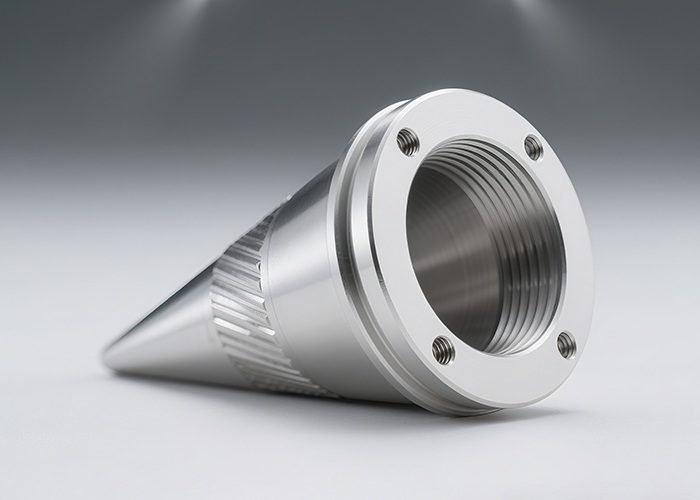
Unlike mass production, which prioritizes volume and speed, custom machining prioritizes accuracy and specificity. It is a low-volume, high-value proposition. Whether it is a one-off prototype for a Formula 1 car or a batch of 500 intricate valves for an oil rig, each part must perform exactly as simulated, under extreme conditions.
The Manufacturing Arsenal: From CNC to EDM
Creating these parts is not a simple task of cutting metal. It requires a sophisticated arsenal of machine tools, most notably Computer Numerical Control (CNC) systems. CNC mills, lathes, and routers interpret complex 3D models and translate them into precise toolpaths with repeatable accuracy down to ±0.005 mm. For parts with geometries too complex for traditional cutting, manufacturers turn to Electrical Discharge Machining (EDM), which uses controlled electrical sparks to erode material into shape without any physical contact.
Moreover, the emergence of 5-axis CNC machining has reshaped the industry landscape. Unlike standard 3-axis machines that approach a part from three directions, 5-axis technology can rotate and tilt the cutting tool or the workpiece simultaneously. This allows machinists to produce intricate undercuts, curved holes, and complex contours in a single setup, eliminating human error and dramatically improving geometric accuracy.
The Material Challenge: Matching the Part to the Environment
A custom precision part is only as good as the material from which it is carved. Engineers and machinists must select a substrate that withstands the specific stresses of the application. For aerospace, this often means high-strength aluminum alloys (like 7075-T6) or titanium (Grade 5) for its exceptional strength-to-weight ratio and corrosion resistance. For medical implants, stainless steel (316L) or cobalt-chrome alloys are preferred for their biocompatibility. In high-temperature environments such as petrochemical processing, specialty alloys like Inconel or Hastelloy are essential—yet they are notoriously difficult to machine due to their work-hardening tendency.
Selecting the wrong material can render even the most precise geometry useless. Therefore, custom machining is a science of materials just as much as it is a science of mechanics.
Industries That Depend on Custom Precision
The reach of these components is vast. In the aerospace industry, every wing flap actuator, landing gear pin, and fuel system nozzle is custom-made to meet weight and safety regulations. In medical technology, spinal screws, prosthetic knees, and surgical drill guides must match a patient’s unique anatomy or surgical plan; they cannot be mass-produced. The automotive racing sector relies on custom pistons and connecting rods that can handle extreme RPMs and boost pressures. Meanwhile, in defense and robotics, custom parts enable servos and weapon systems to operate in dust, saltwater, or extreme temperatures.
Quality Control: The Gatekeeper of Perfection
Precision is meaningless without verification. Every custom machine part undergoes rigorous inspection, often using Coordinate Measuring Machines (CMMs) that probe the part in three dimensions, comparing it to the original CAD file. Optical comparators and laser micrometers check surface finishes and edge radii. In many high-stakes industries, a “First Article Inspection” (FAI) report is required, documenting that every dimension of the first part off the line meets the blueprint before production proceeds.
The Future: Hybrid Manufacturing and AI
The horizon for custom precision machine parts is bright and rapidly evolving. We are witnessing the rise of hybrid manufacturing—machines that combine 3D printing (additive manufacturing) with CNC finishing. This allows engineers to print a near-net-shape part in a complex lattice structure (which is impossible to mill) and then use precision cutting to finish the mating surfaces and threaded holes.
Additionally, artificial intelligence is beginning to optimize machining parameters in real-time. AI algorithms monitor spindle load, vibration, and tool wear, automatically adjusting feed rates to prevent breakage and maintain sub-micron tolerances. This reduces waste and allows for “lights-out manufacturing,” where CNC cells run unattended overnight, producing intricate custom parts with minimal human oversight.
Conclusion
Custom precision machine parts are the silent enablers of progress. They allow dreamers to design the impossible and engineers to build the reliable. From the drill bit saving lives in an operating room to the gear driving a wind turbine through a storm, these components prove that true quality never happens by chance. It is measured, verified, and manufactured with an unwavering commitment to the micron. As technology continues to push the boundaries of what machines can do, the demand for custom, precisely crafted parts will only grow, cementing their role as the true backbone of modern industry.