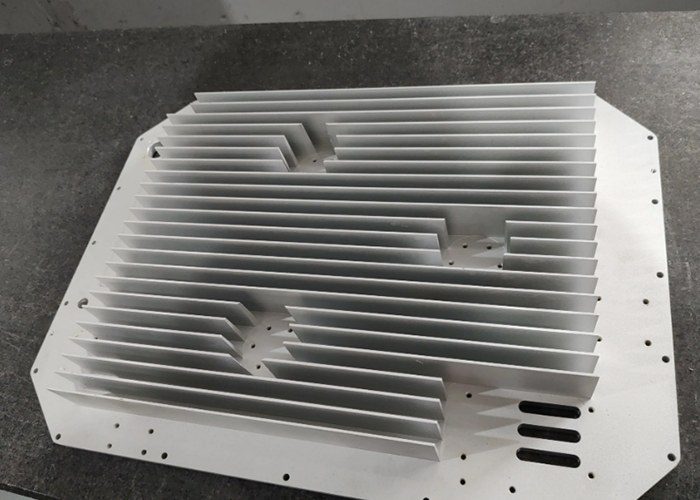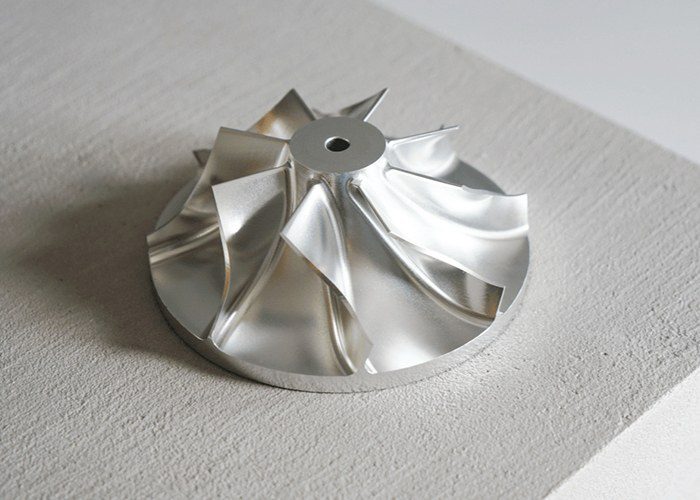
In the vast landscape of manufacturing, few processes are as quietly transformative as precision mechanical machining. Often hidden behind the sleek casings of smartphones, the robust housings of aerospace turbines, and the intricate mechanisms of medical implants, this discipline represents the very backbone of industrial civilization. At its core, precision mechanical machining is the controlled removal of material from a workpiece to create components with extremely tight tolerances—often measured in micrometers or even nanometers. It is where brute force meets microscopic accuracy, and where engineering blueprints become tangible reality.
The Core Processes: More Than Just Cutting
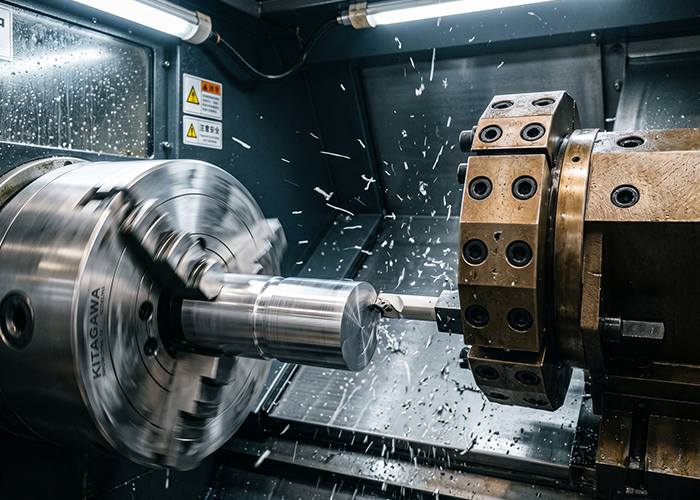
The world of precision machining encompasses several fundamental techniques, each with its own unique physics and applications. Turning, for instance, rotates the workpiece against a stationary cutting tool to produce cylindrical geometries. Modern CNC (Computer Numerical Control) lathes can generate diameters accurate to within ±0.0001 inches, creating everything from hydraulic pistons to surgical bone screws. Milling, conversely, uses rotating multi-point cutters to shape stationary workpieces, enabling complex features like slots, pockets, and contoured surfaces. A 5-axis CNC milling machine can approach a part from virtually any direction in a single setup, producing intricate components like turbine blades or dental prosthetics with minimal human intervention.
Drilling, boring, grinding, and EDM (Electrical Discharge Machining) further expand the toolkit. Grinding, in particular, deserves special mention: using abrasive wheels, it can achieve surface finishes measured in Ra (roughness average) below 0.1 micrometers, essential for hydraulic valves and bearing races where friction is the enemy. Together, these processes form a versatile arsenal for shaping metals like stainless steel, titanium, Inconel, and aluminum, as well as advanced polymers and ceramics.
The CNC Revolution: From Manual Skill to Digital Mastery
The transformation from manual machining to CNC technology in the 1970s and 80s marked a seismic shift. Where a skilled machinist once turned handwheels and relied on tactile feedback to hold tolerances, today’s CNC operator writes code, selects tools, and monitors automated processes. G-code and M-code—the languages of CNC—direct spindle speeds, feed rates, coolant flow, and tool changes with robotic consistency. However, the human element remains irreplaceable. Programmers must understand tool geometry, material properties, and cutting dynamics to optimize toolpaths. A poorly planned roughing pass can generate excessive heat, causing thermal expansion and ruining dimensional accuracy. Conversely, a skilled machinist can reduce cycle times by 30% simply by adjusting entry angles and stepover distances.
Materials and Challenges: The Unseen Battles
Precision machining is a constant battle against physical limitations. Heat is perhaps the most insidious adversary. Friction between tool and workpiece raises temperatures, causing both to expand. A 100 mm steel shaft can grow by several micrometers when heated just 10°C—enough to push it out of spec. Machinists combat this with high-pressure coolant systems, cryogenic cooling, or strategic toolpaths that manage chip loads. Vibration, or chatter, is another nemesis, leaving telltale scalloped patterns on surfaces and accelerating tool wear. Advanced strategies like variable flute spacing or active damping holders help suppress these oscillations.
Material selection imposes its own challenges. Aluminum 6061 is forgiving, machining easily at high speeds. But Inconel 718—a nickel superalloy used in jet engines—work-hardens instantly, dulling carbide tools within minutes. Machining it requires rigid setups, low speeds, high feed rates, and exceptionally tough coated tools, often cubic boron nitride or ceramic. Similarly, titanium alloys demand sharp edges and high coolant pressures to prevent heat from concentrating at the cutting zone. Every material tells its own story, and the precision machinist must listen carefully.
Industries That Depend on Precision Machining
Without this discipline, modern technology would collapse. Aerospace relies on it for landing gear components, engine mounts, and fuel system fittings—parts where a microscopic crack could lead to catastrophic failure. The medical field depends on machined implants: hip stems, bone plates, and spinal cages must match patient anatomy within 50 micrometers, often using biocompatible titanium or PEEK polymer. Automotive performance engines use machined cylinder heads, connecting rods, and camshafts to extract every watt of power. Even the semiconductor industry, despite its focus on lithography, uses precision-machined chucks, stages, and wafer handlers made from dimensionally stable materials like granite or silicon carbide.
The Future: Automation, AI, and Hybrid Manufacturing
Looking ahead, precision mechanical machining is evolving rapidly. Collaborative robots (cobots) now load and unload CNC machines, enabling lights-out manufacturing—unstaffed night shifts that increase productivity by 40% or more. Artificial intelligence algorithms analyze spindle loads and acoustic signatures in real time, predicting tool wear before a breakage ruins a part. Closed-loop metrology, where on-machine probes measure features mid-process and automatically adjust tool offsets, is pushing tolerances toward the sub-micrometer realm.
Perhaps most exciting is hybrid manufacturing, combining additive processes (3D printing) with subtractive machining. A component can be laser-welded layer by layer from powder, then immediately turned or milled to achieve superior surface finish and dimensional accuracy. This approach builds near-net shapes with complex internal geometries—cooling channels in mold inserts, for example—then machines only the critical mating surfaces. It is the best of both worlds.
Conclusion
Precision mechanical machining is far more than a factory process. It is the silent enabler of human progress, transforming raw ingots into life-saving implants, high-speed trains, and Mars rovers. Every precisely turned shaft, every smoothly milled housing, every accurately drilled hole represents a victory over chaos, heat, and vibration. As CNC technology, artificial intelligence, and hybrid methods continue to advance, the field will only grow more capable. Yet at its heart remains an enduring principle: the patient, disciplined removal of material until only the perfect form remains. That is the essence of precision—and the soul of modern manufacturing.