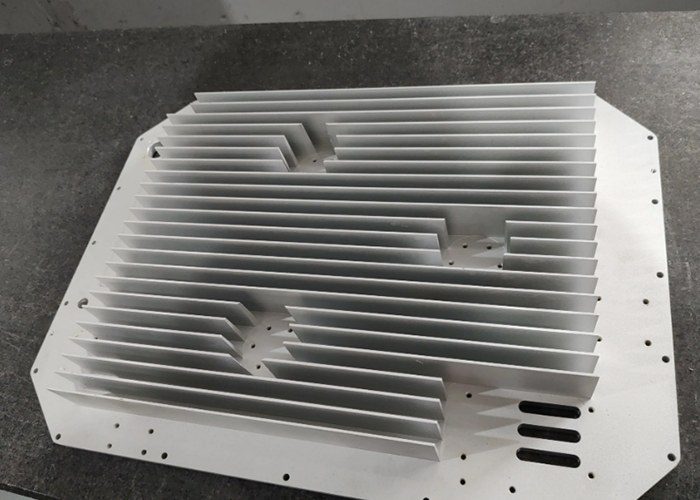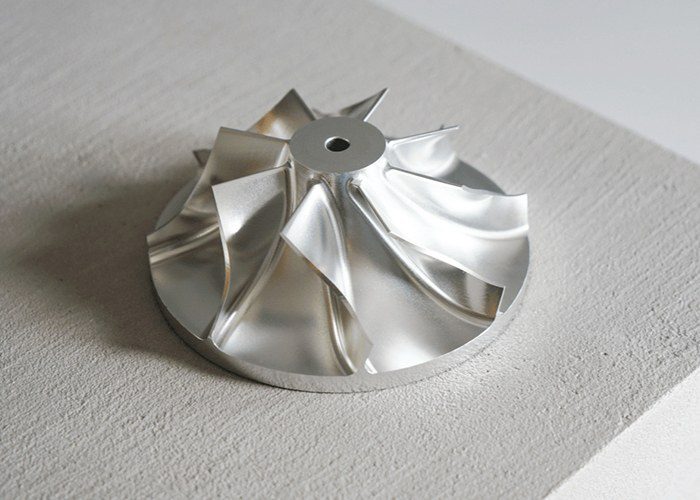
In the modern industrial landscape, the demand for high-precision, complex, and application-specific components has never been greater. Custom CNC machining parts have emerged as the backbone of countless industries, from aerospace and automotive to medical devices and consumer electronics. Unlike mass-produced components that force designers to compromise, custom CNC machining offers the freedom to create parts that meet exact specifications, tolerances, and material requirements. This article explores the core advantages, processes, materials, and future potential of custom CNC machined parts.
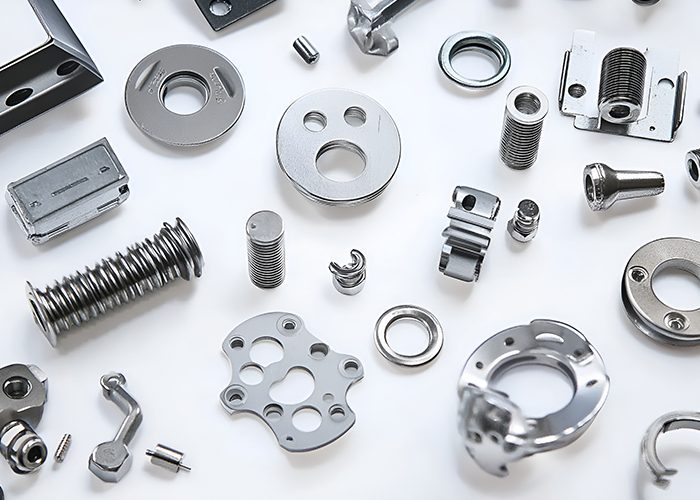
What Is Custom CNC Machining?
CNC (Computer Numerical Control) machining is a subtractive manufacturing process where pre-programmed computer software dictates the movement of factory tools and machinery. When we talk about custom CNC machining parts, we refer to components that are designed and produced uniquely for a specific application, rather than off-the-shelf or standardized items. Customization can involve geometry, size, thread patterns, surface finish, material grade, and even secondary operations like heat treatment or coating.
The process typically begins with a CAD (Computer-Aided Design) file. Engineers or designers create a 3D model of the desired part. This file is then converted into a CNC program (G-code) that controls lathes, mills, routers, or grinders. With multi-axis capabilities (3-axis, 4-axis, and even 5-axis machines), complex shapes such as undercuts, curved surfaces, and deep cavities can be machined with micron-level accuracy.
Advantages of Custom CNC Machining Parts
1. Unmatched Precision and Repeatability
Standard parts often come with broad tolerances. In critical applications — such as a turbine blade in a jet engine or a bone screw in spinal surgery — even 0.01 mm deviation can cause failure. Custom CNC machining routinely achieves tolerances of ±0.005 mm or better. Moreover, once a program is proven, the machine can produce thousands of identical parts with no variation.
2. Material Flexibility
Whereas injection molding or casting limits you to thermoplastics or specific alloys, CNC machining works with almost any solid material: aluminum (6061, 7075), stainless steel (304, 316, 17-4 PH), brass, copper, titanium, Inconel, tool steels, engineering plastics (PEEK, Delrin, PTFE, nylon), composites, and even wood or foam. Custom parts can thus be optimized for strength, weight, corrosion resistance, or thermal performance.
3. Complex Geometries Without Tooling Costs
Injection molding requires expensive dies that cost tens of thousands of dollars and take weeks to produce. CNC machining is tooling-free — only cutting tools and fixtures are needed. This makes it ideal for low-to-medium volume production (from one-off prototypes to 10,000+ parts) and for designs that are revised frequently. Internal features like threads, keyways, o-ring grooves, and cross-drilled holes are standard.
4. Superior Surface Finishes
Custom machined parts can be used as-is with surface roughness down to Ra 0.4 µm. Or they can be post-processed with anodizing (for aluminum), passivation (for stainless steel), powder coating, plating, or bead blasting — giving both aesthetic and functional benefits.
5. Lead Time and Responsiveness
With digital files and modern toolpath optimization, a custom CNC part can be shipped in as little as 24–72 hours (rush services). This agility is critical across R&D, repairs, and just-in-time manufacturing.
Common Applications Across Industries
- Aerospace: Bracket fittings, manifold housings, landing gear components, and structural ribs — where weight reduction and material certification (e.g., AMS, ASTM) are paramount.
- Medical: Surgical instruments, orthopedic implants (titanium), custom drill guides, and prosthetic housings. Biocompatibility and sterilization compatibility drive material choices.
- Automotive: Prototype engine blocks, transmission components, turbocharger housings, custom suspension mounts, and racing car parts. Low-volume racing teams rely entirely on CNC shops.
- Electronics: Heat sinks (often from aluminum with complex fins), RF shielding enclosures, connector bodies, and jigs for PCB assembly.
- Industrial Machinery: Gears, pulleys, hydraulic valve bodies, fixture plates, and replacement parts for legacy equipment no longer in production.
How to Design Effective Custom CNC Machined Parts
To minimize cost and maximize machinability, designers should follow DFM (Design for Manufacturing) guidelines:
- Use standard drill sizes and thread forms when possible.
- Avoid deep, narrow cavities that require long, fragile tools.
- Ensure inside corner radii are at least 1/3 of the cutter diameter (sharp internal corners are impossible; they require EDM).
- Specify tolerances only where needed — tightening the entire drawing drives cost up.
- Consider workholding: flat, parallel surfaces make clamping easy.
- For very large or very small parts, consult the shop’s machine envelope.
The Role of CNC Setup and Automation
Custom does not mean slow. Modern CNC shops use automatic tool changers, pallet changers, and robotic part loading. With conversational programming and CAM integration, a skilled machinist can go from raw stock to finished custom part in minutes. Real-time probing and in-process inspection ensure that every part meets its custom blueprint.
Future Trends in Custom CNC Machining
Hybrid Manufacturing: Combining CNC machining with additive manufacturing (3D printing). Near-net shape printed blanks are finish-machined to precise tolerances, reducing waste and allowing impossible internal lattices.
AI-Optimized Toolpaths: Machine learning algorithms now analyze tool wear, vibration, and material behavior to adjust feeds and speeds on the fly — resulting in faster cycles and better surface finishes.
Distributed Micro-Factories: Cloud-based CNC platforms allow customers to upload a design and have it machined at the nearest available shop, cutting shipping costs and carbon footprint.
Sustainability: Dry machining (minimal coolant), high-efficiency spindle motors, and recycling of metal chips are making custom CNC parts greener than ever.
Conclusion
Custom CNC machining parts represent the perfect intersection of digital design and physical reality. For engineers, inventors, and maintenance professionals, the ability to create exactly the part you need — in the right material, at the right tolerance, and on the right timeline — is not just convenient; it is transformative. Whether it is a single prototype that validates a breakthrough idea or a thousand identical components for a medical device, CNC machining delivers unparalleled quality and flexibility. As technology advances, custom parts will become even faster, smarter, and more accessible, cementing CNC machining as a cornerstone of 21st-century manufacturing.