In the landscape of modern manufacturing, few processes have proven as transformative as precision CNC milling. Standing for Computer Numerical Control, CNC milling has evolved from simple automated machining into a sophisticated technology capable of producing complex components with tolerances measured in microns. This article explores the principles, advantages, applications, and future directions of precision CNC milling, shedding light on why it remains indispensable across industries ranging from aerospace to medical devices.
What Is Precision CNC Milling?
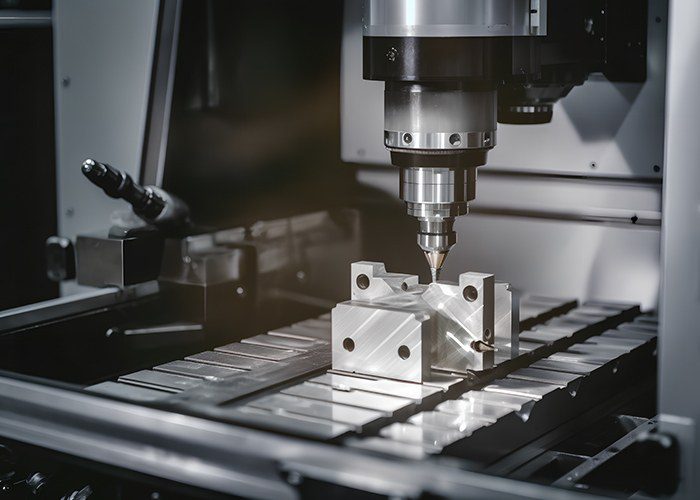
At its core, precision CNC milling is a subtractive manufacturing process that uses rotating multi-point cutting tools to remove material from a workpiece. The “precision” aspect refers to the ability to consistently achieve tight tolerances—often within ±0.001 inches (±0.0254 mm) or even finer. Unlike manual milling, CNC milling relies on pre-programmed computer code (typically G-code) that dictates every movement of the cutting tool and workpiece. A typical 3-axis milling machine positions the workpiece on a moving table while the spindle rotates the tool along X, Y, and Z axes. Advanced machines add rotational axes (4-axis and 5-axis), enabling the creation of undercuts, complex curves, and contoured surfaces without repositioning the part.
Key Components and Their Roles
Several elements work in harmony to achieve high precision. The machine frame, often made of cast iron or polymer concrete, dampens vibrations that could degrade surface finish. Linear guides and ball screws—preloaded to eliminate backlash—ensure positional accuracy. The spindle, capable of speeds from 8,000 to over 40,000 RPM, holds the cutting tool; high-speed spindles allow for finer cuts and reduced cycle times. Tool holders like shrink-fit or hydraulic chucks provide runout below 0.0002 inches, critical for micro-milling. Finally, the CNC controller interprets code and executes motion commands, while feedback devices such as linear encoders and glass scales constantly verify position, correcting any deviation in real time.
Why Precision Matters
In applications like jet engine turbine blades or orthopedic implants, a deviation of a few microns can lead to catastrophic failure or improper fit. Precision CNC milling ensures:
- Interchangeability: Parts from different batches or machines fit together flawlessly.
- Surface Integrity: High-precision cuts reduce surface roughness (Ra values as low as 0.2 µm), minimizing stress risers and improving fatigue life.
- Reduced Secondary Operations: Achieving near-net shape means less hand finishing, deburring, or grinding—saving time and cost.
- Material Utilization: Precise stock removal reduces waste, crucial when machining expensive alloys like Inconel or titanium.
Materials and Tooling Considerations
Precision CNC milling handles a vast array of materials: aluminum, stainless steel, tool steels, brass, copper, plastics (PEEK, Delrin), composites, and exotic alloys. Each material demands specific tool geometries and cutting parameters. For hard materials (above 45 HRC), carbide or polycrystalline diamond (PCD) tools with specialized coatings (AlTiN, TiSiN) resist wear. For aluminum, polished uncoated carbide or diamond-like carbon (DLC) coatings prevent built-up edge. Tool path strategies also evolve: high-efficiency milling (HEM) uses light radial engagement but high axial depth to maintain consistent chip load, reducing tool deflection and heat.
Advanced Capabilities: 5-Axis and High-Speed Machining
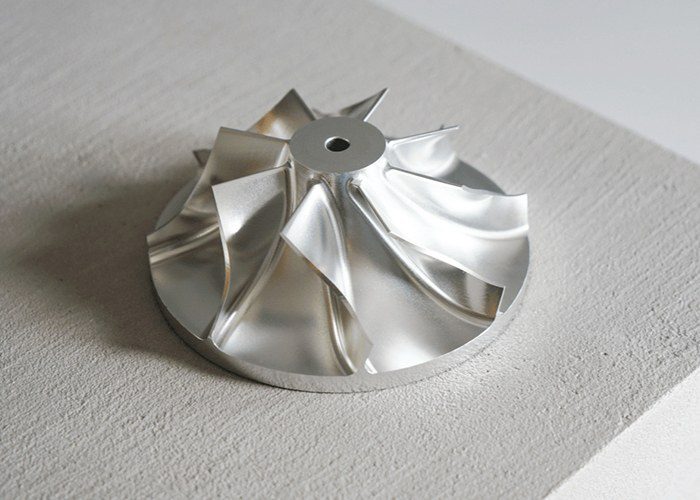
Traditional 3-axis milling can only access a part from one side at a time. 5-axis CNC milling adds two rotational axes (A and B or C), allowing the tool to approach from any direction. This eliminates multiple setups, improves accuracy by maintaining a single datum, and enables complex geometries like impellers, blisks, and medical prosthetics. Meanwhile, high-speed machining (HSM) combines high spindle speeds, fast feed rates, and light cuts; the strategy keeps heat in the chip rather than the workpiece, preventing thermal distortion and enabling machining of thin walls (as thin as 0.1 mm).
Quality Control and Metrology
Precision without verification is guesswork. Modern CNC milling integrates in-process probing: a touch-trigger or laser probe measures critical features while the part remains fixtured. If a dimension drifts, the controller can automatically offset tool wear. Post-process inspection often uses coordinate measuring machines (CMMs), optical comparators, or laser scanners to validate dimensions against CAD models. Statistical process control (SPC) charts track machine performance over time, flagging trends like spindle growth or thermal expansion.
Real-World Applications
- Aerospace: Milling of landing gear components from 300M steel, turbine discs from René 88, and wing ribs from aluminum-lithium alloys. Precision eliminates stress concentrations, preventing in-flight fractures.
- Medical: Spinal implants, bone screws, and surgical guides from titanium or PEEK. Surface finish must promote osseointegration while avoiding bacterial adhesion sites.
- Automotive: Prototype engine blocks, transmission housings, and suspension components for Formula 1 and high-performance vehicles. Even a 0.01 mm error in a bearing bore can cause premature failure.
- Mold & Die: Injection mold cavities with mirror finishes (Ra < 0.05 µm) for making lenses, cell phone cases, or automotive light lenses.
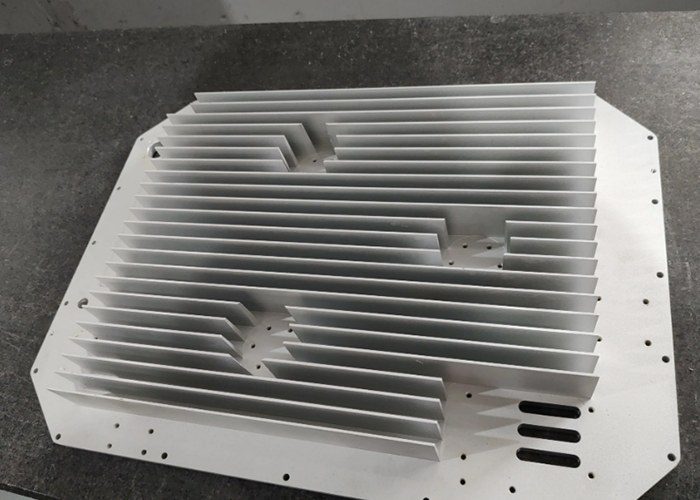
- Electronics: Heat sinks, RF housings, and connectors from copper or aluminum, requiring flatness within 0.005 mm to ensure thermal/electrical performance.
Challenges and Limitations
Despite its capabilities, precision CNC milling has constraints. Tool deflection—especially with small-diameter end mills (0.5 mm or less)—can induce chatter and poor surface finish. Workpiece clamping must resist cutting forces without distorting thin sections; vacuum chucks or adhesive mounting may be needed. Thermal stability is another concern: a 10°C rise can expand a 500 mm aluminum part by 0.12 mm. Some shops use coolant chillers or enclose machines in temperature-controlled rooms. Finally, economic factors: precision machines cost 50,000–50,000–500,000+, and high-quality tooling adds ongoing expense. However, for low-to-medium volumes and parts demanding superior accuracy, milling remains more cost-effective than additive or EDM.
The Future of Precision CNC Milling
The technology continues to evolve. Automation is rising: robotic arms load/unload parts, and pallet changers run lights-out manufacturing. Digital twins simulate the entire milling process virtually, predicting deflection, vibration, and surface finish before cutting metal. Hybrid machines combine milling with laser cladding or additive deposition, enabling repair of high-value components. Machine learning algorithms analyze vibration and spindle load to optimize feeds/speeds in real time. Micro-milling now produces features below 50 µm for micro-fluidics and medical diagnostics. And with Industry 4.0 integration, CNC mills communicate directly with CAD/CAM systems, automatically adjusting tool paths based on in-process measurements.
Conclusion
Precision CNC milling is far from a mature, static technology. It remains a dynamic field where improvements in control systems, cutting tools, and metrology continually push the boundaries of what is achievable. From the tiny pins in a watch movement to the massive ribs of an aircraft wing, milling delivers the accuracy, reliability, and surface quality that modern engineering demands. As materials become harder and designs more complex, precision CNC milling will adapt, solidifying its role as the go-to solution when “close enough” is not an option. For manufacturers, investing in milling capabilities—and the expertise to run them—is not just about making parts; it is about making parts right, the first time, every time.