In the world of precision manufacturing, few processes have revolutionized production as profoundly as Computer Numerical Control (CNC) machining. Among its many applications, the creation of CNC machined metal parts stands out as a cornerstone of modern engineering. Invisible yet essential, these parts form the skeleton of countless industries—from aerospace to medical implants. This article explores the intricacies, advantages, and future potential of CNC machined metal parts.
What Are CNC Machined Metal Parts?
CNC machining is a subtractive manufacturing process in which pre-programmed computer software controls the movement of tools and machinery. When applied to metals, this process can produce complex three-dimensional shapes with tolerances as tight as ±0.001 inches. Aluminum, stainless steel, brass, titanium, and specialized alloys (e.g., Inconel, Monel) are among the common metals used. Unlike manual machining, where operators control levers and wheels, CNC systems automate the entire process, ensuring repeatability and consistency.
The Precision Advantage
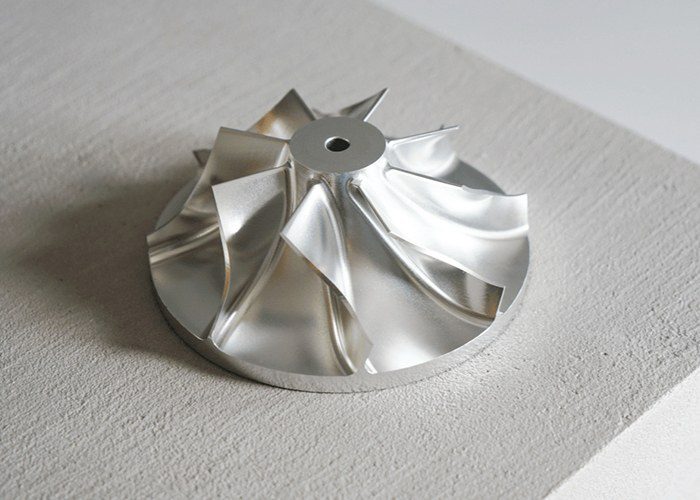
The most critical characteristic of CNC machined metal parts is their precision. For industries like aerospace and defense, where a microscopic deviation could lead to catastrophic failure, the accuracy of CNC machining is non-negotiable. For instance, turbine blades in jet engines require complex aerodynamic surfaces and cooling channels. CNC machining achieves these geometries with micron-level accuracy, ensuring optimal performance under extreme temperatures and pressures. Similarly, in medical technology, bone screws, surgical tools, and implantable devices must meet strict regulatory standards. CNC machining allows manufacturers to produce patient-specific implants with matching precision to the patient’s anatomy.
Material Versatility and Strength
One of the reasons CNC machining remains irreplaceable is its ability to work with virtually any metal. While additive manufacturing (3D printing) often struggles with high-strength alloys due to thermal stress, CNC machining excels at shaping hard metals without compromising their internal structure. For example, machining hardened steel for automotive transmission components maintains the material’s wear resistance. In oil and gas applications, CNC machined parts from corrosion-resistant superalloys endure harsh chemical environments. This versatility ensures that engineers can select the ideal material for the task, not the material that is merely easy to machine.
Complexity Without Compromise
Modern CNC machines, especially 5-axis milling centers, can produce parts that were once considered impossible. A 5-axis machine moves a cutting tool or part along five different axes simultaneously, allowing undercuts, angled holes, and freeform surfaces in a single setup. This capability reduces errors from repositioning and dramatically speeds production. Consider a manifold block for hydraulic systems—a single CNC machined aluminum block can incorporate dozens of internal fluid channels, threaded ports, and mounting interfaces, replacing what would have been a welded assembly of several parts. This simplification reduces weight, eliminates leak points, and improves reliability.
Economic and Environmental Efficiency
Though CNC machining has higher initial setup costs than manual machining, it offers superior economies of scale. Once a program is verified, the machine can run unattended overnight, producing hundreds or thousands of identical parts. This lights-out manufacturing lowers per-unit costs for medium to large production runs. Moreover, as a subtractive process, CNC machining generates metal chips that are nearly 100% recyclable. Many modern machine shops collect these chips and return them to smelters, creating a closed-loop material cycle. For expensive metals like titanium, this scrap recovery significantly reduces environmental impact and material cost.
Common Applications
- Automotive: Engine blocks, transmission housings, brake calipers, and suspension components.
- Aerospace: Landing gear parts, wing ribs, engine mounts, and fuel system components.
- Medical: Orthopedic joint replacements, dental abutments, surgical guides, and casing for pacemakers.
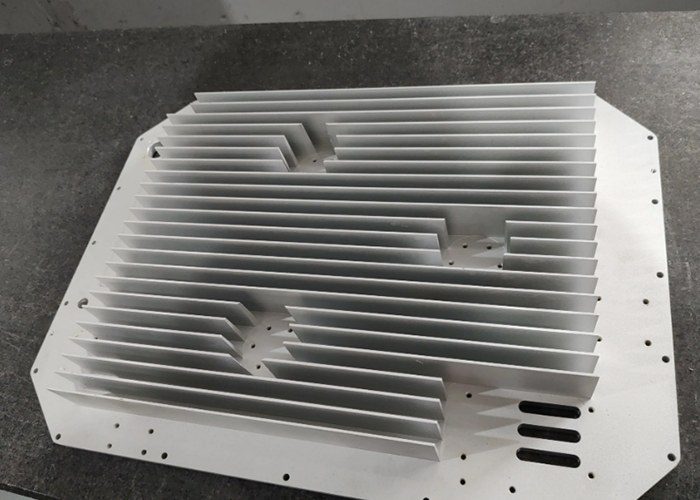
- Electronics: Heat sinks, connectors, EMI shielding enclosures, and smartphone chassis.
- Defense: Weapon receivers, optics mounts, military vehicle drivetrain parts, and guidance system housings.
Challenges and Innovations
Despite its strengths, CNC machining has limitations. Very thin walls or delicate features can distort under cutting forces. Long, slender holes (high depth-to-diameter ratio) require specialized tooling and strategies. However, innovations continue to push boundaries. High-speed machining (HSM) uses lighter cuts at higher spindle speeds to reduce heat and distortion. Cryogenic machining employs liquid nitrogen as coolant, dramatically increasing tool life when cutting titanium or hardened steel. Furthermore, hybrid machines that combine additive manufacturing with CNC machining are emerging. These can 3D print a near-net shape of a complex part, then finish it to precise tolerances, minimizing waste for expensive alloys.
The Human Element
While CNC machines are automated, skilled machinists remain essential. They select cutting tools, determine feeds and speeds, write or optimize G-code, and inspect finished parts. A machinist’s experience prevents crashes, extends tool life, and interprets subtle audible or visual cues during cutting. As the industry moves toward Industry 4.0, machinists are becoming data analysts, using sensors and analytics to predict tool wear or optimize cycles. The human-machine collaboration is what ultimately delivers the quality demanded by customers.
Looking Ahead
The future of CNC machined metal parts lies in integration. Cloud-connected CNC machines will enable seamless sharing of toolpath data across factories. Artificial intelligence will leverage historical machining data to recommend optimal parameters. For clients, this means shorter lead times, lower costs, and real-time production tracking. Meanwhile, advances in micro-machining will enable parts smaller than a grain of rice for medical and electronics applications.
Conclusion
CNC machined metal parts are more than just components; they are the physical realization of digital designs. Their combination of precision, material strength, and geometric complexity makes them indispensable for any application where failure is not an option. As technology evolves, CNC machining adapts to ensure that whether it’s a satellite in orbit or a scalpel in an operating room, behind every critical function lies a metal part—perfectly shaped by computer and cutting tool.
For engineers, purchasing managers, or hobbyists, understanding the capability and nuance of CNC machining unlocks better design decisions and more reliable products. In a world increasingly focused on ones and zeros, CNC machined metal parts remain a tangible, essential link between the digital and physical realms.