
In the relentless pursuit of precision and efficiency, modern manufacturing has long moved past the era of manual machining. At the heart of this industrial evolution lies Computer Numerical Control (CNC) milling—a subtractive manufacturing process that has become the gold standard for producing complex, high-tolerance parts. However, for many businesses, from aerospace giants to medical device startups, owning an in-house fleet of CNC mills is neither practical nor economical. This is where professional CNC Milling Services step in, bridging the gap between a digital design and a physical, functional component.
But what exactly transforms a simple milling machine into a value-adding service? It is not merely about cutting metal; it is about providing a comprehensive solution that includes material expertise, process optimization, quality assurance, and supply chain reliability.
The Technical Superiority of CNC Milling
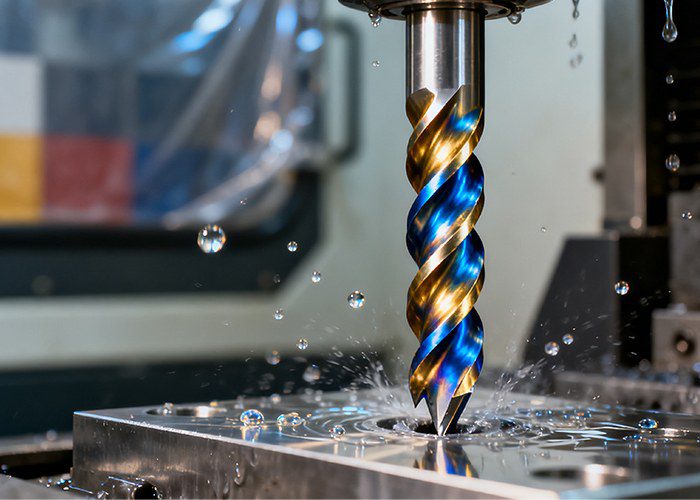
To appreciate the service, one must first understand the process. CNC milling utilizes rotating multi-point cutting tools to remove material from a workpiece. Unlike manual milling, which relies on a machinist’s steady hand and constant supervision, CNC milling follows precise G-code instructions generated from 3D CAD models (typically STEP or IGES files). This digital thread ensures that the thousandth part is identical to the first, with tolerances often reaching ±0.005 mm or tighter.
The geometry capabilities are staggering. Modern 3-axis to 5-axis CNC milling centers can produce undercuts, complex curves, deep cavities, and micro-features that would be impossible with conventional methods. A 5-axis machine, for instance, can approach a part from virtually any direction in a single setup, eliminating multiple fixturing steps and drastically improving accuracy.
Why Outsource CNC Milling? The Service Advantage
For an original equipment manufacturer (OEM), investing in a Haas, DMG Mori, or Mazak machining center is only the tip of the iceberg. The true costs lie in tooling libraries, coolant systems, skilled operator salaries, maintenance contracts, and quality control labs. CNC Milling Services eliminate these capital expenditures. Instead, clients pay only for the machine time and material used, converting a fixed cost into a variable one.
Moreover, professional service providers offer a “technology ladder” that most single companies cannot afford. They maintain a fleet of machines—from high-speed spindles for aluminum to heavy-duty cutters for Inconel—as well as complementary equipment like CMM (Coordinate Measuring Machine) inspection and EDM (Electrical Discharge Machining). This ecosystem enables them to manage one-off prototypes and high-volume production runs of 10,000 units with the same ease and agility.
Critical Capabilities of a Top-Tier CNC Milling Service
Not all milling services are created equal. When evaluating a partner, focus on the key capabilities that distinguish true manufacturing solutions from commodity machining:
- Material Versatility: A competent service stocks more than just 6061 aluminum and 304 stainless. They must handle engineering plastics (PEEK, Acetal), tool steels (D2, A2), titanium grades (Ti-6Al-4V), and superalloys (Inconel 718, Hastelloy). The ability to machine materials with varying hardness and thermal properties is a litmus test of expertise.
- Advanced Workholding & Fixturing: Complex parts require creative clamping solutions. Leading services use vacuum chucks, dovetail fixtures, and custom soft jaws to minimize vibration and allow five-sided machining in a single operation.
- In-Process Inspection: High mix, low volume work demands rigorous quality checks. Look for services that integrate Renishaw probe systems for on-machine verification and post-process inspection with automated CMM reporting.
- Surface Finish Options: From as-milled (typically 3.2 µm Ra) to mirror finishes (0.4 µm Ra) achieved through secondary operations like bead blasting, anodizing, or electropolishing. A full-service provider offers these finishes in-house to reduce lead times.
Real-World Applications
The breadth of industries relying on CNC milling services is a testament to its versatility:
- Medical & Orthopedics: Surgical guides, spinal implants, and titanium bone plates require sterile, biocompatible surfaces and micron-level accuracy. 5-axis milling produces patient-specific implants directly from CT scan data.
- Aerospace & Defense: Turbine engine components, wing ribs, and radar housings demand stress-resistant geometries and exotic alloys. The service must comply with AS9100D aerospace standards and ITAR regulations for defense parts.
- Automotive & Motorsports: Intake manifolds, transmission cases, and custom suspension knuckles benefit from the high strength-to-weight ratio of machined billet aluminum.
- Consumer Electronics & Robotics: Smartphone housings, drone arms, and robotic gearboxes require high-volume, low-cost production with cosmetic surface finishes.
Navigating Cost and Lead Time
A professional CNC milling service must balance three key constraints: price, speed, and quality. For rapid prototyping, services offering “first article in 5 days” command a premium but save months of development time. For production, the economy of scale kicks in once setup costs are amortized over larger quantities. A typical pricing breakdown includes material cost (often with a markup), machine time (75–75–200 per hour depending on spindle size and axis count), tooling wear, and labor for programming and deburring.
Clients can reduce costs by designing for manufacturability (DFM)—avoiding deep narrow slots, maintaining uniform wall thickness, and minimizing setup changes. Many service providers now offer free DFM feedback before quoting, turning them into collaborative engineering partners rather than mere order-takers.
The Future of CNC Milling Services
As Industry 4.0 advances, CNC milling is becoming smarter and more connected. Live machine monitoring, automated tool changers with RFID tracking, and adaptive machining (where the software compensates for material inconsistencies in real-time) are becoming standard. Moreover, the rise of “digital inventories” allows services to keep frequently ordered parts as G-code files, ready to mill on demand, eliminating the need for physical safety stock.
In conclusion, a professional CNC Milling Service is far more than a shop floor with spinning cutters. It is a strategic enabler of innovation, allowing businesses to launch complex hardware without the burden of capital equipment or specialized hires. Whether you need a single prototype to secure investor funding or 10,000 production parts for a global launch, the right milling service transforms a block of raw material into the very foundation of your product’s success. In the precision-driven world of modern manufacturing, trusting your parts to experts isn’t just convenient—it’s essential.


