In the vast ecosystem of modern manufacturing, few processes are as essential yet as misunderstood as CNC turning. While 3D printing captures the imagination with its additive magic, and CNC milling dominates the conversation about complex geometry, CNC Turning Precision Parts operate quietly as the unsung heroes of industry. From the bolts in a bridge to the housings in a pacemaker, turned parts are everywhere. Understanding this process is not merely about metal cutting; it is about understanding the backbone of global engineering.
What is CNC Turning?
At its core, CNC (Computer Numerical Control) turning is a subtractive manufacturing process. A cylindrical bar of material—metal, plastic, or composite—is rotated at high speeds while a stationary cutting tool moves linearly along the axis of the rotating part. The “lathe,” the machine that performs this operation, shaves away excess material to create the desired shape.
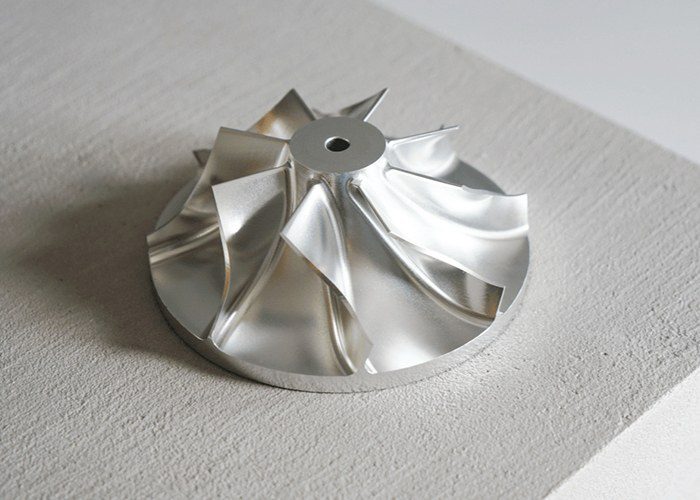
Picture a potter molding clay on a spinning wheel. The wheel spins, and the potter’s hands apply pressure to create symmetry. CNC turning is the high-tech, micro-millimeter version of that action. However, instead of human hands, computer-controlled carbide tools do the cutting at tolerances measured in microns (thousandths of a millimeter).
The Anatomy of a “Precision Part”
What qualifies a part as “precision” in this context? Precision in CNC turning is determined by three critical elements: tolerance, surface finish, and concentricity.
- Tolerance: Standard machining might hold a dimension to +/- 0.005 inches. Precision turning often requires tolerances of +/- 0.0002 inches or tighter. This is the difference between a piston that seals perfectly and one that leaks oil.
- Surface Finish: Measured in Ra (Roughness Average), precision parts often require finishes below 16 Ra, creating surfaces that look like mirrors. This reduces friction and wear.
- Concentricity: For rotating parts, every diameter must share the exact same centerline. If the center is off by even a hair, the part will wobble, leading to catastrophic failure at high RPMs.
Materials and Complexity
CNC turning is not limited to steel or aluminum. Swiss-type lathes (a specialized form of turning center) can process medical-grade stainless steel (316L), titanium alloys (Grade 5), brass, copper, peek (plastic), and even ceramics.
Modern CNC turning centers have evolved beyond simple cylindrical cuts. Today’s machines are “Live Tooling” lathes. This means that the machine can stop the main spindle, engage a rotating milling tool, and drill holes or cut hex flats into the side of the part without removing it from the machine. This hybrid capability allows manufacturers to produce complex parts in a single “setup,” dramatically increasing accuracy.
Why Choose Turning Over Milling?
A frequent question in engineering is: Should I mill this or turn it? The answer lies in the geometry. If a part is rotationally symmetrical—like a shaft, bushing, connector, or cylinder—turning is superior. Turning generates parts faster than milling because the cutting action is continuous rather than interrupted.
For high-volume production (thousands or millions of parts), CNC turning is often combined with automatic bar feeders. A 12-foot metal bar is fed automatically into the lathe, parts are produced every 30 seconds, and a parts catcher collects the finished product. This lights-out manufacturing capability drives down the cost per part significantly.
Critical Applications
Precision turned parts are the lifeblood of several key industries:
- Aerospace: Landing gear components, hydraulic fittings, and engine shafts require turning to handle extreme G-forces and temperature changes.
- Medical: Bone screws, surgical shavers, and implantable pins must have perfect surface finishes to prevent bacterial growth and ensure biocompatibility.
- Automotive: Transmission shafts, spark plug bodies, and ABS sensor rings rely on the concentricity that turning provides.
- Defense: Munitions casings and firearm suppressors are almost exclusively produced via CNC turning.
The Challenge of Quality Control
Producing a turned part is only half the battle; verifying its precision is the other half. After machining, precision parts undergo rigorous inspection. Standard tools include micrometers for outer diameter, bore gauges for inner holes, and optical comparators for contour.
For high-stakes industries, CMM (Coordinate Measuring Machines) scan the part in 3D to ensure it matches the CAD drawing exactly. Statistical Process Control (SPC) software tracks every batch to ensure that if a tool wears down by 0.0001 inches, the machine stops before a bad part is produced.
The Future of Turning
The industry is currently shifting toward “smart manufacturing.” IoT sensors on lathes now predict tool wear before a part goes out of spec. Additionally, Hard Turning is replacing grinding in many applications. Using advanced cubic boron nitride (CBN) inserts, a CNC lathe can cut hardened steel (60+ Rockwell C) to a finish that requires no secondary grinding, saving time and energy.
Conclusion
CNC Turning Precision Parts represent the intersection of physics, computer science, and materials engineering. They are the silent workhorses that enable cars to drive safely, planes to fly reliably, and medical devices to save lives. As manufacturing moves toward greater automation and tighter tolerances, the art of the lathe remains as relevant as ever. Whether it is a simple washer or a complex turbine shaft, if it spins, it was likely turned. And in the world of industry, precision turning is what keeps the world running true.