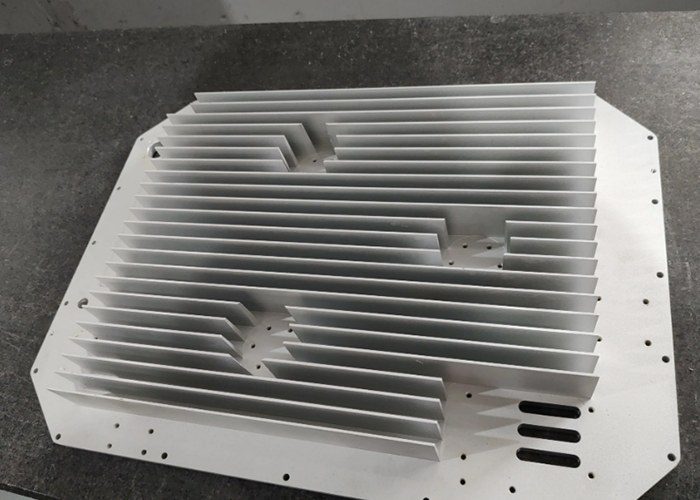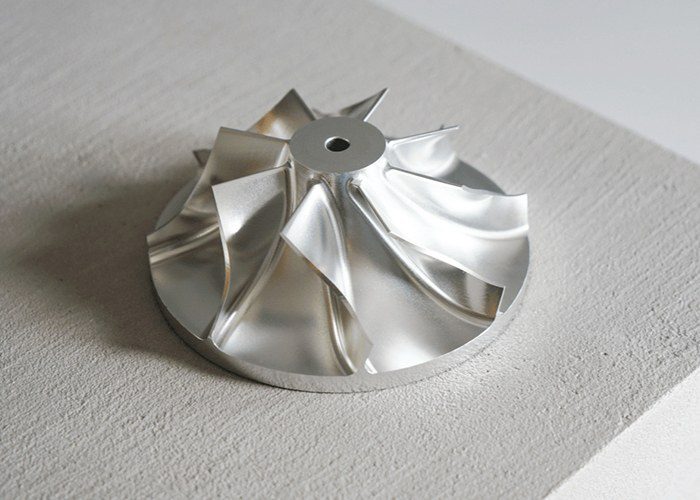
In the relentless pursuit of precision, efficiency, and repeatability, modern manufacturing has found a steadfast ally in Computer Numerical Control (CNC) machining. From the intricate gears inside a luxury watch to the robust flanges in an oil refinery, CNC machined mechanical parts are the unsung heroes that keep the wheels of industry turning. These components, produced by subtracting material from a solid block under automated control, represent the pinnacle of modern mechanical engineering.
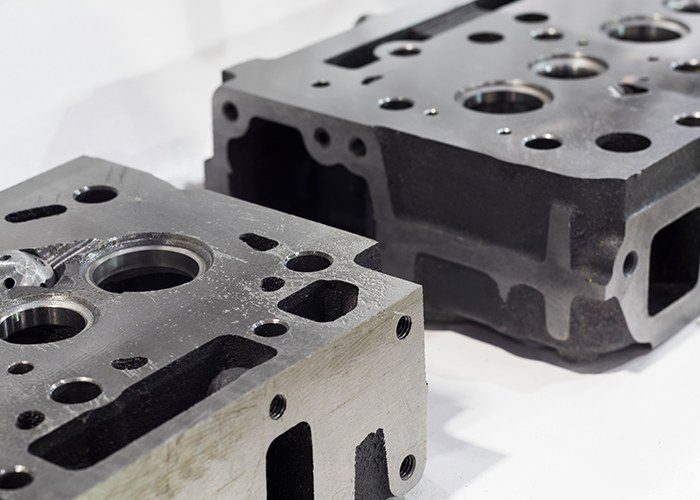
The Essence of CNC Machining
At its core, CNC machining is a subtractive manufacturing process. Unlike 3D printing which builds objects layer by layer, CNC machining starts with a solid workpiece—often a metal or plastic billet—and uses high-speed cutting tools to carve away excess material until the desired shape remains. The “numerical control” aspect means every movement of the cutting tool, the worktable, and the spindle is dictated by a computer program coded in G-code. This digital precision eliminates the variability inherent in manual machining, where human error can lead to tolerances measured in fractions of a millimeter. With CNC, tolerances are routinely held to within ±0.005 inches (0.127 mm), and high-precision machines can achieve tolerances as tight as ±0.0001 inches (0.00254 mm).
Key Advantages Over Traditional Methods
Why has CNC machining become the default choice for producing critical mechanical parts? The answer lies in four core advantages:
- Unwavering Precision and Repeatability: Once a CNC program is verified, the machine can produce thousands of identical parts, day or night, without deviation. For industries like aerospace or medical devices, where a single flawed part can have catastrophic consequences, this repeatability is non-negotiable.
- Complex Geometries Made Simple: CNC machines—especially multi-axis mills and lathes—can create complex curves, deep cavities, and intricate internal features that would be impossible or prohibitively expensive using conventional manual methods. Five-axis CNC machines can approach a part from virtually any direction, allowing for undercuts and complex organic shapes.
- Material Versatility: From soft plastics like nylon and PTFE to hardened tool steels, titanium alloys, and Inconel (a superalloy used in jet engines), CNC machining handles an enormous range of materials. Unlike some additive or casting processes, CNC machining is not limited by material melting points or chemical reactivity.
- Efficiency and Automation: Modern CNC machining centers run lights-out manufacturing—unattended operation overnight or on weekends. With automated tool changers and pallet systems, one machine can produce a family of related parts with minimal human intervention, drastically lowering per-unit labor costs.
Common Types of CNC Machined Mechanical Parts
The versatility of CNC machining means it touches nearly every mechanical sector. Some of the most common parts include:
- Shafts and Axles: Precision-ground and turned on CNC lathes, these components transmit rotational power and torque in motors, gearboxes, and conveyors.
- Flanges and Couplings: Used to connect pipes or shafts, these parts demand exact bolt-hole patterns and mating surfaces to prevent leaks and misalignment.
- Housings and Enclosures: Complex milled parts that protect sensitive electronics or bearings, often requiring tight internal pockets and threaded holes.
- Gears (Milled or Hobbed): While hobbing is specialized, CNC milling can produce custom spur, helical, and even bevel gears for low-to-medium volume runs.
- Manifolds and Valve Bodies: Hydraulic and pneumatic systems rely on intricately drilled and milled manifolds that direct fluid flow; any internal burr or mismatch can cause system failure.
- Brackets and Mounting Plates: From automotive engine mounts to robotics arms, these structural parts combine strength with precise hole locations for assembly.
Material Selection and Surface Finishes
Choosing the right material for a CNC machined mechanical part is a balance of strength, weight, corrosion resistance, and machinability. For high-stress applications, 4140 or 4340 alloy steel is common. For aerospace, 6061-T6 aluminum offers an excellent strength-to-weight ratio. For medical implants, surgical-grade stainless steel (316L) or titanium (Grade 5) is preferred.
Surface finish is equally critical. While a rough machined surface (125 microinches or rougher) is acceptable for concealed structural components, bearing surfaces and seal interfaces generally demand a finish of 32 microinches or finer. This is achieved through secondary processes like grinding, lapping, or using high-feed milling strategies with fine-pitch tools. Many CNC machined parts also receive anodizing (for aluminum), passivation (for stainless steel), or zinc plating (for steel) to enhance corrosion resistance.
Quality Control: The Silent Guarantee
No discussion of CNC machined mechanical parts is complete without addressing quality assurance. Reputable shops employ a battery of inspection tools:
- Coordinate Measuring Machines (CMM): Touch-probe or laser-based systems that verify critical dimensions against CAD models.
- Optical Comparators and Vision Systems: For rapid inspection of small parts or complex contours.
- Surface Roughness Testers: Ensuring seals and bearings function correctly.
- In-Process Probing: Modern CNC machines can stop mid-cycle, measure a feature, and automatically adjust tool offsets—reducing scrap to nearly zero.
Future Trends
The field is evolving. Hybrid manufacturing (combining CNC machining with metal 3D printing) allows parts to be additively built near-net-shape and then finish-machined to exact tolerances. Artificial intelligence is being used to optimize toolpaths, predict tool wear, and schedule preventive maintenance. And the rise of “digital twins”—virtual replicas of the machining process—allows engineers to simulate and debug the entire production run before a single chip is cut.
Conclusion
CNC machined mechanical parts are far more than metal or plastic shapes; they are the physical manifestation of digital precision. Every bolt tightened, every gear meshed, every piston sliding within a cylinder relies on the exacting standards made possible by CNC technology. As industries demand lighter, stronger, and more complex machinery, the role of CNC machining will only grow—quietly, accurately, and indispensably. Whether it’s a Mars rover or a medical ventilator, behind every great machine lies a symphony of perfectly machined mechanical parts.