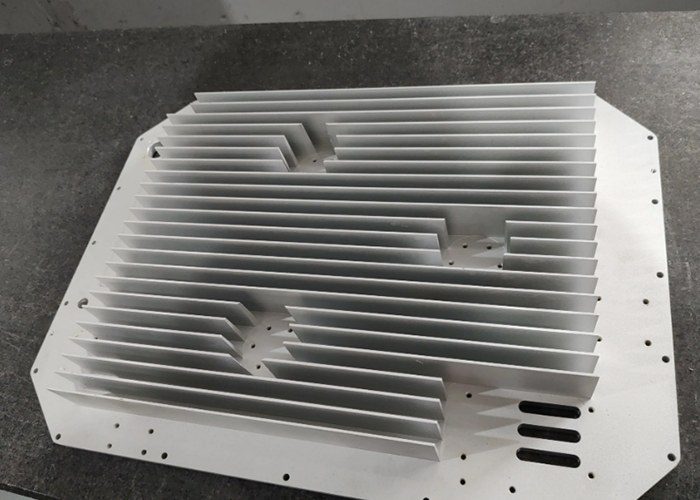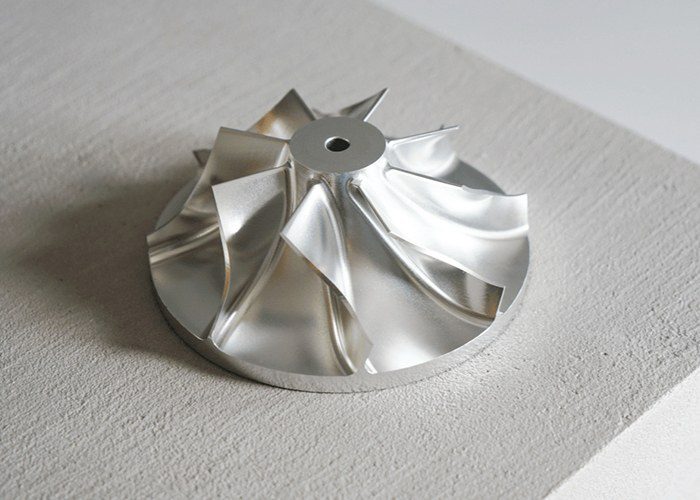
In an era defined by miniaturization, high performance, and extreme reliability, the components that make up our machines, devices, and vehicles are under more scrutiny than ever before. At the heart of this industrial evolution lies a subtractive manufacturing process that has become synonymous with accuracy itself: CNC machining. CNC machined precision parts are not merely pieces of metal or plastic; they are the fundamental building blocks that enable everything from aerospace turbines to surgical robots to function with flawless consistency. Understanding what sets these parts apart—and how they are created—reveals why they are indispensable to modern engineering.
What Defines a “Precision” CNC Part?
The term “precision” in the context of CNC (Computer Numerical Control) machining is not subjective; it is a quantifiable standard. While general machining might hold tolerances of ±0.005 inches, true precision machining operates in the realm of micrometers (millionths of a meter). A high-quality CNC machined precision part is typically defined by tolerances as tight as ±0.0001 inches, or even tighter in specialized applications like medical implants or aerospace fuel systems.
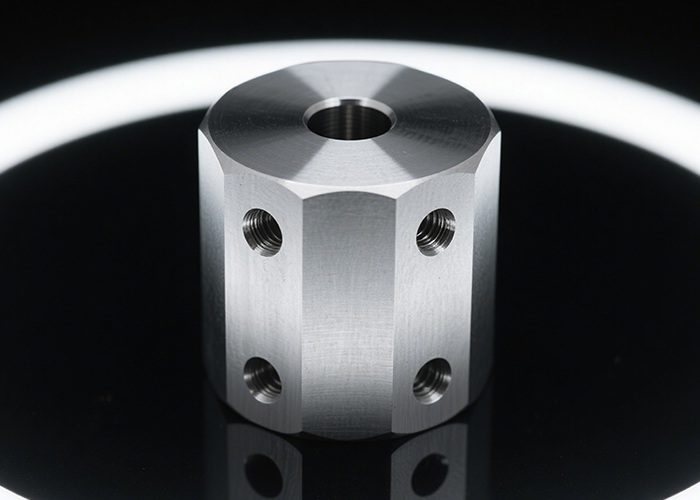
This level of precision is achieved through a symbiotic relationship between advanced software, rigid machinery, and skilled craftsmanship. The process begins with a Computer-Aided Design (CAD) model, which is translated into G-code—a numerical control programming language. The CNC machine, whether a mill, lathe, router, or multi-axis machining center, then follows these instructions to remove material from a solid block (or billet) with exacting accuracy.
The Key Advantages Over Traditional Methods
Why specify CNC machining over casting, 3D printing, or manual machining? The answer lies in three critical advantages: repeatability, material versatility, and structural integrity.
- Repeatability (Statistical Process Control): Once a CNC program is verified, the machine can produce thousands, or even millions, of identical parts with no deviation in quality. For industries like automotive manufacturing, where every piston or gear must be a perfect clone of the last, this reliability is non-negotiable.
- Material Versatility: Unlike additive manufacturing, which is limited to specific polymers or metals, CNC machining can work with almost any solid, machinable material. From hardened tool steels (e.g., D2, A2), titanium alloys (Grade 5), and corrosion-resistant superalloys (Inconel, Monel) to engineering plastics like PEEK, Delrin, and Teflon, CNC processes handle the spectrum of modern materials.
- Superior Mechanical Properties: Because precision parts are cut from solid stock rather than powdered or melted material, they retain the original grain structure and mechanical strength of the metal. This results in parts with higher fatigue resistance, tensile strength, and durability—critical for load-bearing applications.
Industries That Rely on Precision CNC Components
The demand for CNC machined precision parts spans virtually every high-tech sector:
- Aerospace: In aircraft engines, a single micron of variance in a turbine blade can lead to catastrophic vibration or failure. Precision CNC parts for hydraulic systems, landing gear components, and avionics housings must meet AS9100 standards, often with 100% inspection.
- Medical & Dental: From bone screws with thread pitches measured in millimeters to surgical guide templates and orthopedic implants (knees, hips, spinal rods), biocompatible precision parts save lives. The ability to produce patient-specific implants is a growing frontier.
- Electronics & Semiconductor: The miniaturization of electronics demands micro-machined parts. Heat sinks for high-power LEDs, connectors for fiber optics, and chambers for semiconductor wafer handling require tolerances in the single-digit micron range.
- Defense & Firearms: Bolts, firing pins, and receiver components demand exact geometry to ensure safe, reliable operation under extreme conditions.
The Manufacturing Process: From Billet to Finished Part
The journey of a raw material to a finished precision part typically follows this sequence:
- Design for Manufacturability (DFM): Engineers analyze the CAD model to optimize features for machining, adding necessary radii in internal corners or adjusting tolerances to balance cost and function.
- Workholding & Setup: The material (billet) is clamped onto the machine bed using vises, fixtures, or chucks. For complex parts, multi-axis machines (5-axis) rotate the part to reach otherwise inaccessible angles in one setup, reducing error accumulation.
- Machining Operations: Using end mills, drills, reamers, and boring bars, the machine removes material layer by layer. High-speed machining strategies with coolant flooding the cutting zone prevent thermal distortion.
- Finishing & Deburring: After roughing out the shape, a finishing pass removes minimal material to hit precise dimensions. Parts are then deburred (removing sharp edges), sometimes via vibratory tumbling or manual inspection.
- Quality Assurance (QA): A precision part is only as good as its inspection report. Coordinate Measuring Machines (CMMs), optical comparators, and surface roughness testers verify every critical dimension against the blueprint. Statistical reports are often required for ISO 9001 or IATF 16949 certification.
Challenges and Future Trends
Despite its strengths, CNC precision machining faces challenges. Material waste (chips) can be significant compared to additive manufacturing, and tooling costs for hard metals are high. Skilled machinists who understand both G-code and metrology are in short supply.
Looking ahead, the industry is embracing automation and digital integration. Robotic arms now load and unload parts, enabling “lights-out” manufacturing (running 24/7 without human intervention). Artificial intelligence is being deployed to monitor tool wear in real-time, automatically adjusting feed rates to maintain tolerances. Furthermore, hybrid machines that combine additive metal 3D printing with CNC finishing are emerging, allowing for complex geometries with precision-machined surfaces.
Conclusion
CNC machined precision parts are the silent heroes of the mechanical world. They are the difference between a car engine that lasts 100,000 miles and one that lasts 300,000 miles; between a surgical tool that slips and one that saves a life. As technologies like electric vehicles, renewable energy turbines, and space exploration continue to push the boundaries of what is physically possible, the demand for ever-smaller, ever-stricter, and ever-stronger precision parts will only accelerate. Mastery of CNC machining is, therefore, not just a manufacturing capability—it is a foundational competency for the industries of tomorrow.