
Driven by the imperatives of miniaturization, power density, and flawless reliability, precision turned parts are the silent workhorses powering today’s industrial evolution. From the fuel injectors in jet engines to the titanium screws that stabilize spinal fusions, these cylindrical components are everywhere—yet their creation demands a level of scientific rigor, mechanical mastery, and digital intelligence that rivals any high-tech endeavor. This article explores the art, science, and strategic importance of precision turned parts, delving into their manufacturing processes, material nuances, quality paradigms, and the transformative trends reshaping their future.
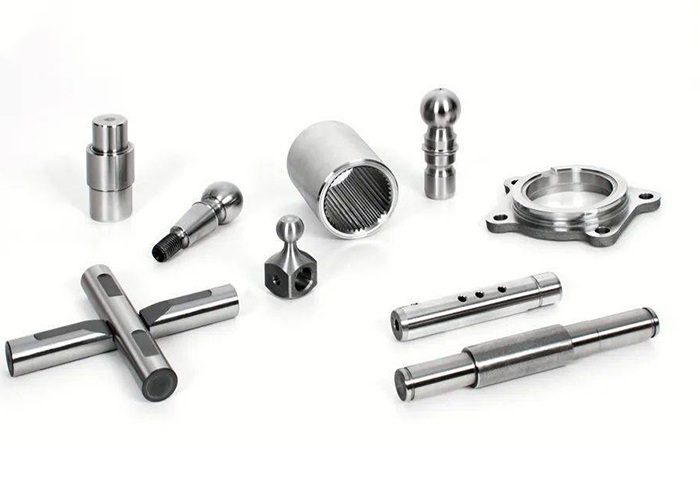
The Anatomy of Turning: Beyond the Lathe
At its core, turning is a subtractive manufacturing process where a rotating workpiece is shaped by a stationary cutting tool. But precision turning elevates this ancient principle to atomic-scale fidelity. Modern CNC (Computer Numerical Control) lathes and Swiss-type automatic screw machines operate with spindle runouts measured in microns, thermal compensation algorithms that adjust for ambient temperature shifts, and toolpath interpolation that creates contours with surface finishes below 0.4 µm Ra. The distinction lies in the “precision” qualifier: while standard turning holds tolerances of ±0.005 inches, precision turning routinely achieves ±0.0002 inches (5 microns) or better, with some ultra-precision applications reaching sub-micron concentricity.
Swiss-style machining deserves special mention. Originally developed for Swiss watchmaking, these sliding-headstock lathes guide bar stock through a guide bushing, eliminating deflection and enabling the production of slender, complex parts with length-to-diameter ratios exceeding 20:1. Simultaneous operation of multiple turrets and back-working spindles allows complete machining in a single cycle—turning, drilling, threading, knurling, and even milling flats—reducing handling errors and ensuring geometric consistency across millions of units.
Materials: The Palette of Performance
The choice of raw material is not merely functional but strategic. Precision turned parts serve industries where failure is not an option, so metallurgical integrity is paramount. Common alloys include:
- Stainless steels (303, 304, 17-4 PH) for corrosion resistance in medical and marine environments.
- Aluminum (6061-T6, 7075) for lightweight aerospace and automotive components.
- Brass and copper for electrical conductivity and antimicrobial properties in plumbing and electronics.
- Titanium (Grade 5, Ti-6Al-4V) for biocompatible implants and high-strength, low-weight structural parts.
- Engineering plastics (PEEK, Delrin, Torlon) for non-conductive, self-lubricating applications in semiconductor and food-processing equipment.
Each material imposes distinct cutting conditions—chip formation, tool wear, and heat generation—demanding tailored carbide, CBN, or diamond-coated inserts. The rise of “difficult-to-machine” superalloys like Inconel 718 and Hastelloy has pushed tooling developers to invent new geometries and coatings (e.g., AlTiN + Si-based nano-layers) that extend tool life while maintaining surface integrity.
The Quality Labyrinth: Metrology as a Mindset
Precision is meaningless without verification. Modern turned-part production integrates in-process gauging with laser micrometers, touch probes, and vision systems that provide real-time feedback to the CNC controller, enabling adaptive compensation for tool wear or thermal drift. Post-process inspection relies on a arsenal of instruments: CMM (Coordinate Measuring Machines) for 3D geometry, optical comparators for profile contours, roughness testers for surface finish, and air gauges for internal bores with tolerances in the single-digit micron range.
Statistical process control (SPC) is not an afterthought but a continuous discipline. Capability indices (Cpk ≥ 1.67 are standard in automotive and medical sectors) drive sampling plans and machine maintenance schedules. Furthermore, traceability—from heat lot of raw material to final inspection report—has become a regulatory mandate in aerospace (AS9100) and medical (ISO 13485) supply chains. This data-rich environment transforms quality from a gatekeeping function into a predictive intelligence that anticipates deviations before they occur.
Applications: Where Precision Meets Purpose
The ubiquity of precision turned parts is staggering:
- Aerospace: Hydraulic fittings, sensor housings, fuel meter valves, and structural fasteners—each requiring batch-to-batch consistency under extreme temperature and vibration.
- Medical: Biocompatibility and absolute cleanliness are non-negotiable standards, whether we are talking about bone screws, dental implant abutments, surgical shavers, or insulin pump needles.
- Automotive: ABS modulator pistons, injector nozzles, transmission pins, and electric motor shafts—now increasingly complex due to hybrid/electric architectures.
- Electronics: RF connectors, battery terminals, heat-sink inserts, and miniature switch components—demanding high-conductivity materials and ultra-tight concentricity for signal integrity.
- Defense & Oil/Gas: Detonator housings, downhole tool components, and valve stems—where corrosion resistance and impact toughness are life-critical.
In each case, the turned part is rarely a standalone element; it interfaces with mating components, seals, bearings, or circuits. Hence, dimensional accuracy directly influences assembly yield, product lifetime, and system efficiency—a single out-of-tolerance pin can cause a gearbox failure or a false sensor reading.
The Competitive Edge: Cost, Speed, and Agility
While precision machining is often perceived as high-cost, its total value proposition tells a different story. Advanced Swiss lathes with 12-axis capability can produce complex parts in under 30 seconds cycle time, rivaling or exceeding the productivity of multi-station transfer lines. Setup reduction via quick-change tooling and offline simulation software minimizes downtime for batch changes. Moreover, near-net-shape turning reduces secondary operations (grinding, honing, polishing) that would otherwise inflate lead times and scrap rates.
For low-to-mid volume production (100–50,000 pieces), precision turning offers unequaled flexibility—engineering changes can be accommodated by reprogramming rather than retooling. In an age of just-in-time and localized manufacturing, suppliers that combine rapid prototyping (within days) with scalable production capacity gain a decisive market advantage.
Future Frontiers: Digital Twins, AI, and Sustainability
The next decade will witness profound evolution. Digital twins—virtual replicas of the machining process—allow process engineers to simulate cutting forces, thermal deformation, and chip evacuation before a single bar is fed. Machine learning algorithms analyze vibration signatures (via accelerometers on spindles and turrets) to predict tool failure with >95% accuracy, enabling condition-based maintenance rather than conservative tool-change intervals that waste carbide.
Additive-hybrid machines, which combine laser metal deposition with turning, are emerging to repair or coat turned parts in situ, extending service life and reducing raw material consumption. Sustainability is also driving coolant-free or minimum-quantity lubrication (MQL) strategies, along with dry-cutting technologies using high-pressure air and cryogenic cooling, slashing waste disposal costs and operator health risks.
Automation extends beyond robotics for loading/unloading; automated storage and retrieval systems (AS/RS) for bar stock, integrated cleaning and deburring stations, and AI-driven optical sorting create lights-out manufacturing cells that run 24/7 with minimal human intervention. However, this does not diminish the role of skilled machinists—instead, it elevates them to process architects who interpret data, optimize parameters, and solve anomalies that algorithms cannot yet conceptualize.
Conclusion: A Precision Legacy
Precision machining turned parts are more than metal donuts and threaded cylinders; they are the physical manifestation of engineering discipline. Each part carries the cumulative knowledge of material science, thermodynamics, control theory, and metrology. As industries push toward electrification, sustainability, and extreme miniaturization, the demands on turned parts will only intensify—smaller, lighter, stronger, and smarter. Yet the fundamental challenge remains unchanged: to transform a rotating bar of raw material into a component that fits, functions, and endures, all while maintaining economic viability. In that balance lies the true art of precision turning—a craft that continues to shape our world, one micron at a time.


