
In an era where tolerances are measured in microns and reliability is non-negotiable, precision machining parts have become the silent enablers of nearly every advanced industry. From the turbine blades in a jet engine to the miniature components of a pacemaker, these meticulously crafted parts ensure that complex systems function safely, efficiently, and consistently. Precision machining is not merely a manufacturing process—it is a discipline that bridges the gap between digital design and physical reality, transforming raw materials into mission-critical components.
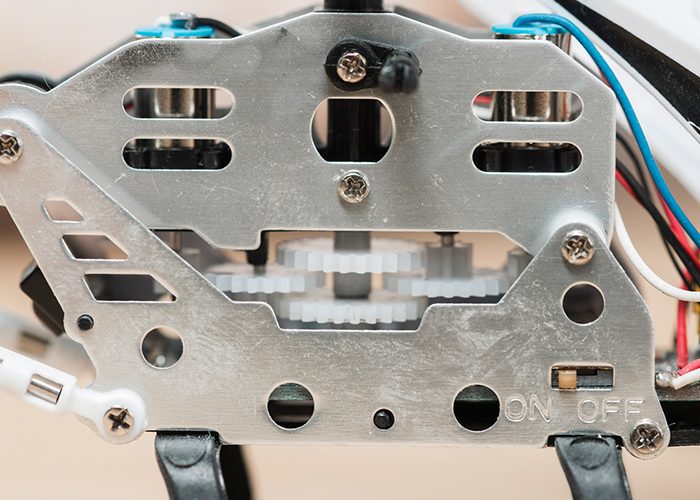
The Art and Science of Precision Machining
At its core, precision machining involves removing material from a workpiece to achieve exceptionally tight tolerances, often within ±0.0001 inches (±2.54 microns) or even finer. This is accomplished using computer numerically controlled (CNC) equipment such as milling machines, lathes, grinders, and electrical discharge machines (EDM). Unlike conventional machining, which prioritizes speed or material removal rates, precision machining demands unwavering accuracy, repeatability, and surface finish quality. Every spindle rotation, every tool path, and every coolant flow is optimized to eliminate vibrations, thermal expansion, and tool wear that could compromise the final part.
Modern CNC systems operate on five or more axes simultaneously, allowing complex geometries to be carved from solid blocks of metal, plastic, or ceramic without manual intervention. With advanced tooling like PCD and CBN inserts, you can machine hardened steels, titanium alloys, and superalloys such as Inconel. Micro-machining with end mills as small as 0.1 mm in diameter enables parts with microscopic features, stretching the boundaries of what can be manufactured.
Material Selection: The Foundation of Performance
No precision machining discussion is complete without addressing materials. The choice of stock determines not only machinability but also the finished part’s strength, weight, corrosion resistance, and thermal behavior. Common metals include aluminum 6061-T6 (lightweight and easy to cut), stainless steels 303 and 316L (good corrosion resistance), brass (excellent for electrical connectors), and tool steels like D2 or A2 for wear-resistant applications. For aerospace and medical implants, titanium Ti-6Al-4V is prized for its high strength-to-weight ratio and biocompatibility, though it is notoriously difficult to machine due to its low thermal conductivity and work-hardening tendency.
Engineers also rely on engineering plastics such as PEEK, Acetal, and PTFE for parts that must be electrically insulating, chemically inert, or low-friction. PEEK, in particular, replaces metal in many medical and semiconductor applications because it is radiolucent and can withstand repeated steam sterilization. Regardless of material, precision machining demands thorough knowledge of cutting speeds, feeds, and tool geometries to avoid built-up edges, chatter, or surface tearing.
Critical Applications Across Industries
Precision machining parts are ubiquitous, yet they remain invisible to the end user. In aerospace, components like fuel injector nozzles, hydraulic valve spools, and landing gear bushings require absolute reliability under extreme temperatures and pressures. A single flawed part can compromise flight safety. Similarly, in the medical field, orthopedic bone screws, spinal rods, and surgical drill bits must meet FDA-mandated tolerances and surface finishes to promote osseointegration and prevent bacterial adhesion.
The automotive industry relies on precision machined parts for fuel injection systems, turbocharger rotors, and transmission components. As internal combustion engines give way to electric vehicles, demand has shifted toward lightweight structural parts, battery terminal connectors, and high-precision cooling plates. Even consumer electronics depend on micro-machined housings, camera lens barrels, and connector pins—where a deviation of 0.01 mm can mean the difference between a snug fit and a defective device.
Quality Assurance: Measuring What Matters
Producing a precision machined part is only half the battle; verifying its dimensions is equally critical. Metrology laboratories employ coordinate measuring machines (CMMs), optical comparators, laser scanners, and surface roughness testers to inspect every critical feature. For high-volume production, in-process gauging and statistical process control (SPC) provide real-time feedback to the CNC machine, automatically compensating for tool wear or thermal drift. Advanced shops also use air gauging and non-contact vision systems to measure features inaccessible to physical probes.
Beyond dimensional inspection, certifying material integrity may involve hardness testing, X-ray fluorescence (XRF) for alloy verification, or dye penetrant inspection for surface cracks. ISO 9001:2015 and AS9100D (aerospace) certifications are standard benchmarks that demonstrate a shop’s commitment to traceability, documented procedures, and continuous improvement.
Future Trends: Automation and Digital Integration
The precision machining industry is undergoing a profound transformation driven by Industry 4.0 technologies. Smart CNC machines equipped with vibration sensors, thermal compensation algorithms, and predictive maintenance modules reduce scrap rates and unplanned downtime. Collaborative robots (cobots) now load and unload parts, deburr edges, and even change worn tools, allowing human machinists to focus on programming and optimization.
Additive manufacturing (3D printing) is not replacing precision machining but complementing it. Near-net-shape printed blanks can be finish-machined to critical tolerances, saving time and material for complex geometries. Meanwhile, digital twins—virtual replicas of the machining process—allow engineers to simulate toolpaths, predict deflection, and optimize cycle times before cutting the first chip.
Conclusion
Precision machining parts are the unsung heroes of modern civilization. They enable engines to run cleaner, medical implants to heal faster, and electronics to shrink without sacrificing performance. As manufacturing tolerances continue to tighten and materials become more exotic, the demand for skilled machinists, advanced metrology, and intelligent CNC systems will only grow. Whether you are designing a satellite, a surgical robot, or a high-performance electric vehicle, remember that the reliability of your final product ultimately rests on the precision of each tiny, machined component. In a world that increasingly measures excellence in microns, precision machining is not just a capability—it is a competitive imperative.


