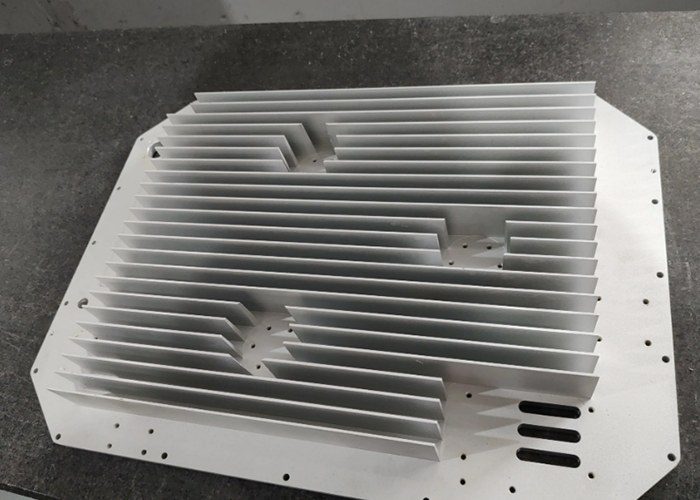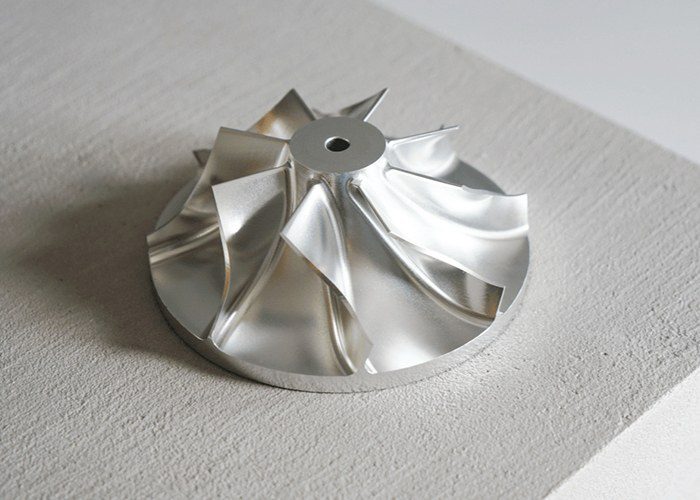
In an era defined by mass production and assembly-line uniformity, the ability to create something unique often feels like a lost art. However, in the world of engineering and manufacturing, uniqueness is not just an art—it is a necessity. Off-the-shelf components rarely fit the precise geometry, tolerances, or material requirements of advanced designs. This is where Custom Machining Metal Parts emerges not just as a service, but as a critical enabler of modern innovation.
Custom machining refers to the subtractive manufacturing process where raw metal stock is precisely cut, drilled, milled, or turned into a specific final shape using automated tools like CNC (Computer Numerical Control) machines. Unlike 3D printing (additive manufacturing), which builds objects layer by layer, machining starts with a solid block and carves away the excess. This fundamental process offers a level of precision, surface finish, and material integrity that remains the gold standard for industries ranging from aerospace to medical devices.
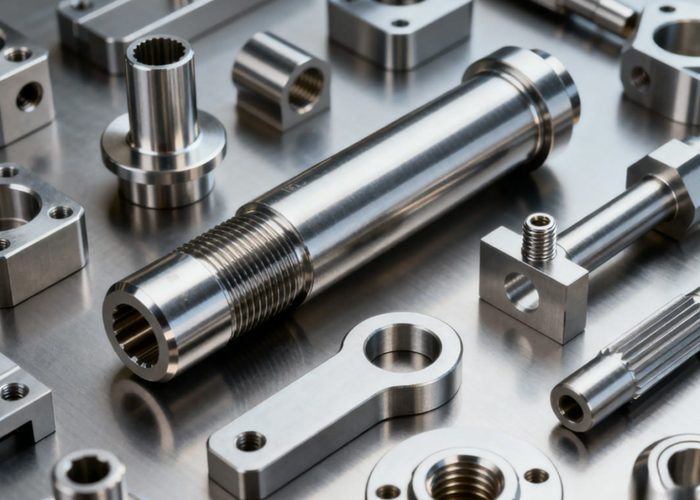
The Technical Arsenal: How It Works
The creation of a custom metal part begins long before metal meets cutter. It starts with a digital blueprint, typically a CAD (Computer-Aided Design) file. This file is converted into G-code, a language that tells the CNC machine exactly how to move, at what speed, and at what depth.
Modern machining centers utilize several key processes:
- CNC Milling: Removes material with rotating multi-point cutting tools. It is ideal for creating complex 3D shapes, slots, and flat surfaces.
- CNC Turning (Lathes): The workpiece rotates while a stationary cutting tool shapes it. This is the go-to method for cylindrical or conical parts like shafts and bushings.
- EDM (Electrical Discharge Machining): For extremely hard metals or complex internal cavities, EDM uses controlled electrical sparks to erode the material without physical contact.
The “Why”: Advantages of Going Custom
Why would a company choose custom machining over buying a standard part? The advantages are compelling:
- Impossible Tolerances: Standard parts often have wide tolerances (e.g., ± 0.005 inches). Custom machining routinely achieves tolerances of ± 0.0002 inches. For a valve in an oil rig or a bone screw in a spinal implant, that microscopic difference means the difference between success and catastrophic failure.
- Material Versatility: While plastic injection molding is limited to polymers, custom machining works with almost any metal. From aircraft-grade Aluminum 7075 and corrosion-resistant Stainless Steel 316 to exotic alloys like Inconel (for jet engines) or Titanium Grade 5 (for biomedical implants), machining can handle materials that other processes cannot.
- Structural Integrity: Because a machined part is cut from a single billet of metal, it maintains a homogenous grain structure. There are no layer lines (as in 3D printing) or weld seams. This results in superior fatigue resistance and strength, critical for load-bearing components.
- Low Volume Viability: Injection molding requires expensive molds costing 20,000to20,000to100,000, making it only viable for runs of 10,000+ units. Custom machining has little to no tooling cost. If you need 10 units or 1,000, machining is economically superior.
Industry Applications in Action
The demand for custom machined parts is surging across sectors:
- Aerospace: Safety is non-negotiable. Machined parts are used for landing gear components, engine mounts, and hydraulic manifolds where failure is not an option.
- Medical: Surgical instruments, orthopedic implants (knees, hips), and dental tools are often machined from stainless steel or titanium. These parts require perfect surface finishes to be biocompatible.
- Automotive (Motorsports): Performance vehicles rely on custom one-off parts—turbocharger housings, custom intake manifolds, and suspension uprights—to shave off milliseconds and reduce weight.
- Robotics & Automation: As factories become automated, engineers need custom brackets, end effectors (robot hands), and custom gears to fit specific production lines.
Overcoming the Challenges
Despite its advantages, custom machining is not without challenges. The “subtractive” nature means waste; a complex part might generate 80% scrap chips. However, modern facilities address this through metal recycling programs. Additionally, the “speed of design” can be slower than casting, though advancements in high-speed machining (HSM) and multi-axis live tooling are rapidly closing this gap.
The Future: Smart Machining and AI
The industry is currently undergoing a quiet revolution. IoT (Internet of Things) sensors on cutting tools now predict wear before a part goes out of tolerance. AI algorithms automatically adjust feed rates to prevent chatter or tool breakage. Furthermore, “hybrid manufacturing” machines that combine metal 3D printing (for near-net shape) with CNC machining (for final precision) are allowing engineers to create geometries that were impossible five years ago.
Conclusion
In a world pushing toward digitalization, the physical integrity of a metal part still holds ultimate value. Custom machining bridges the gap between the virtual design and the tangible product. Whether you are a startup engineer prototyping a new drone propeller or a defense contractor manufacturing a missile guidance housing, custom machining metal parts offers the repeatability, strength, and precision required to turn a “blue sky” idea into a working reality.
As technology pushes toward tighter tolerances and faster turnaround times, one fact remains clear: If you can draw it, a machinist can cut it. And in the high-stakes game of modern engineering, that capability is worth its weight in gold.