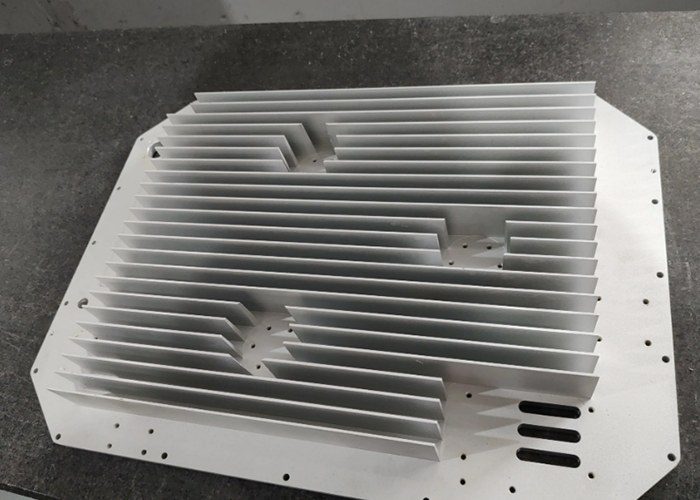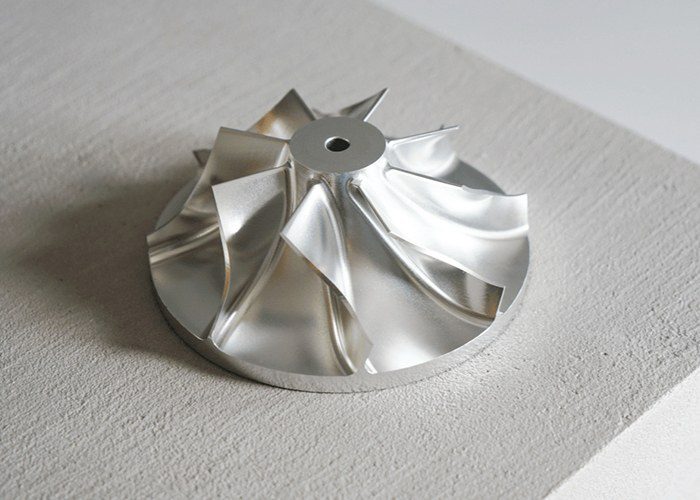
In the landscape of contemporary manufacturing, few technologies have revolutionized production as profoundly as Computer Numerical Control (CNC) machining. CNC machined parts are ubiquitous—they are found in everything from aircraft turbines and surgical implants to smartphone enclosures and automotive engine blocks. But what makes these components so indispensable? This article explores the process, advantages, materials, applications, and future trends of CNC machined parts, highlighting why they represent the gold standard for precision engineering.
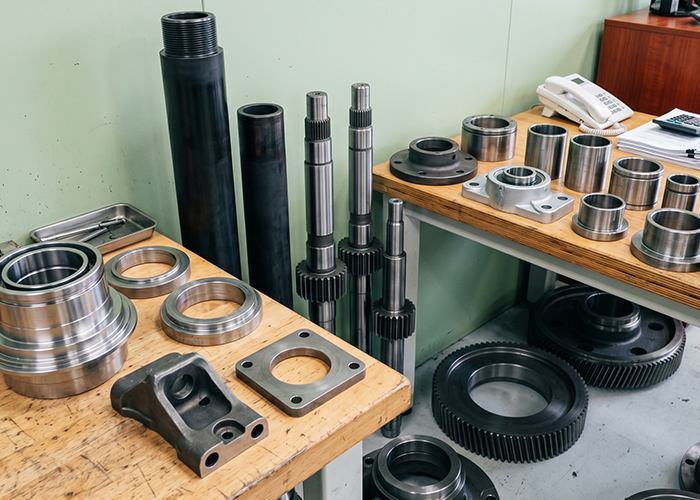
What Are CNC Machined Parts?
CNC machined parts are components produced by subtractive manufacturing processes controlled by computerized systems. Unlike 3D printing (additive manufacturing), which builds parts layer by layer, CNC machining starts with a solid block of material—metal, plastic, or composite—and removes material through cutting, drilling, milling, turning, or grinding. The entire process is guided by pre-programmed software and G-code, which dictates every movement of the cutting tools with micron-level accuracy.
Common CNC processes include milling (rotating cutting tools to shape flat or complex surfaces), turning (rotating the workpiece against a stationary tool to create cylindrical features), and grinding (achieving ultra-fine surface finishes). Multi-axis CNC machines, such as 5-axis machining centers, can produce intricate geometries in a single setup, reducing errors and lead times.
Key Advantages of CNC Machined Parts
Why have CNC machined parts become the default choice for mission-critical applications? Several advantages stand out:
- Unmatched Precision and Repeatability
CNC machines consistently achieve tolerances as tight as ±0.0001 inches (±2.54 microns). Once a program is validated, the machine can produce thousands of identical parts with minimal variation—essential for interchangeable components in aerospace or medical devices. - Complex Geometries Without Fixture Overload
Multi-axis CNC allows for undercuts, angled holes, contoured surfaces, and intricate internal features. Parts that once required multiple setups and custom jigs can now be machined in one operation, dramatically reducing human error. - Material Versatility
CNC works with virtually any rigid material: aluminum, stainless steel, titanium, brass, copper, engineering plastics (PEEK, Delrin, PTFE), composites, and even ceramics. This flexibility makes CNC ideal for prototypes and production runs across industries. - Scalability from One to Millions
Unlike injection molding, which requires expensive molds, CNC machining has low upfront tooling costs. It is equally efficient for single prototypes and batches of hundreds or thousands—perfect for iterative design and bridge production. - Superior Mechanical Properties
Machined from solid stock, CNC parts retain the original grain structure and integrity of the material. This results in higher strength, fatigue resistance, and reliability compared to cast or sintered parts.
Common Materials for CNC Machining
Material selection depends on the part’s function, environment, and budget. Popular choices include:
- Aluminum 6061/7075: Lightweight, corrosion-resistant, and easy to machine; used in aerospace frames, automotive brackets, and consumer electronics.
- Stainless Steel 304/316: Strong and rust-resistant; ideal for medical instruments, food processing equipment, and marine hardware.
- Titanium Grade 5: High strength-to-weight ratio and biocompatibility; essential for aircraft landing gear and orthopedic implants.
- Brass/C360: Excellent machinability; common in electrical terminals, valves, and decorative hardware.
- PEEK: A high-performance polymer that replaces metal in chemically aggressive or high-temperature environments.
Applications Across Industries
CNC machined parts serve as critical components in virtually every sector:
- Aerospace: Turbine blades, structural ribs, landing gear fittings, and fuel system components. Failures here are catastrophic, so CNC’s reliability is non-negotiable.
- Medical: Surgical tools, bone screws, spinal cages, and prosthetic connectors. Biocompatible metals and plastics require sterile, burr-free finishes achievable only through precision CNC.
- Automotive: Engine blocks, transmission housings, brake calipers, and custom turbocharger wheels. High-performance racing teams rely on CNC for one-off prototype parts.
- Electronics: Heat sinks, enclosures, connector housings, and waveguide components. The miniaturization trend demands micro-machining with spindles exceeding 60,000 RPM.
- Oil & Gas: Valve bodies, downhole drilling tools, and pump shafts. These parts must withstand extreme pressures and corrosive muds.
Quality Control and Surface Finishing
Delivering a reliable CNC machined part does not stop at cutting. Quality assurance involves in-process probing, coordinate measuring machine (CMM) inspection, and surface roughness testing. Many shops also apply secondary finishes to enhance performance:
- Anodizing: Increases corrosion and wear resistance on aluminum.
- Passivation: Removes free iron from stainless steel.
- Electropolishing: Creates a mirror-like, ultra-clean surface for pharmaceutical applications.
- Powder coating: Adds durable color and protection against chemicals.
The Future: Automation and Smart Machining
The evolution of CNC machined parts is tied to Industry 4.0. Modern CNC cells incorporate robotic arms for pallet changing, tool breakage detection, and closed-loop adaptive control that compensates for thermal expansion. Digital twins allow engineers to simulate machining before cutting real metal. Moreover, hybrid machines that combine additive and subtractive processes are emerging, enabling repair of damaged parts or creation of complex internal lattices.
Conclusion
CNC machined parts are far more than metal shavings and cutting fluid. They represent the convergence of software, mechanics, and materials science—a manufacturing method that delivers precision at scale. Whether you are designing a rocket nozzle or a dental implant, CNC machining remains the most trusted route from digital model to physical reality. As automation and artificial intelligence continue to refine the process, one thing is certain: the era of CNC is far from over; it is only becoming smarter, faster, and more essential.