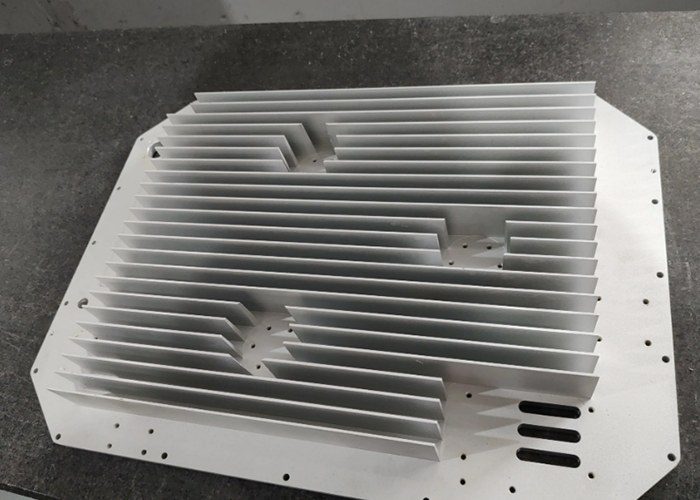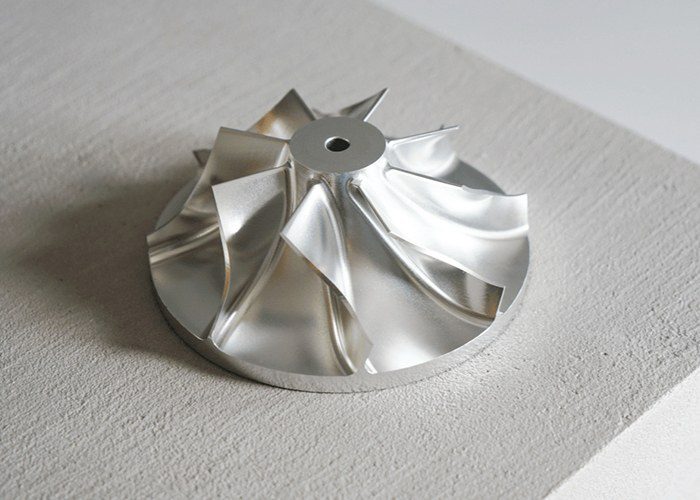
In an era defined by mass production and interchangeable components, the unsung hero of advanced manufacturing remains the precision-machined non-standard part. While off-the-shelf fasteners, shafts, and housings dominate catalogues, it is the bespoke, one-off, or low-volume components that enable breakthrough innovations in aerospace, medical devices, robotics, and energy systems. Precision machining of non-standard parts is not merely a subtractive process—it is a confluence of material science, metrology, tooling intelligence, and digital craftsmanship that transforms abstract designs into physical realities with micron-level fidelity.
Defining the Non-Standard Landscape
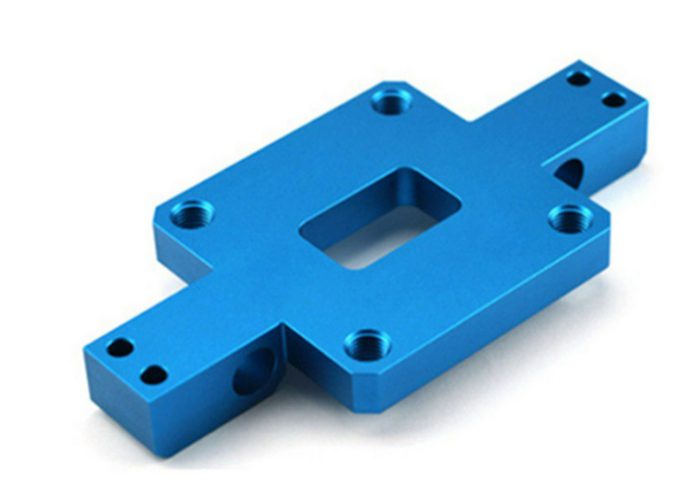
A non-standard part is any component that deviates from industry norms—be it dimensional, geometric, or functional. Unlike standard bolts with ISO threads or bearings with ABEC ratings, these parts are engineered for unique interfaces, extreme environments, or hybrid functions. They may feature asymmetrical contours, blind internal splines, thin walls with tight runout, or exotic alloys like Inconel 718, titanium Grade 5, or tungsten carbide. Their geometries often defy conventional turning or milling operations, demanding multi-axis simultaneous machining, electrical discharge machining (EDM), or even laser ablation. The common thread is that no inventory exists; each piece is born from a specific customer drawing, and its success hinges on the machinist’s ability to interpret, plan, and execute with zero ambiguity.
The Technological Arsenal
Modern precision machining for non-standard parts rests on three pillars: CNC kinematics, cutting-tool innovation, and in-process gauging. Five-axis machining centers have become the workhorses, allowing tools to approach a part from virtually any angle, reducing setups and accumulating errors. For example, a medical trocar tip with helical flutes and a tapered bore can be finished in a single clamping, preserving concentricity within 5 micrometres. Simultaneously, advanced coated carbides—such as AlTiN or diamond-like carbon—enable stable cutting at elevated speeds, even in hardened steels up to 60 HRC. Meanwhile, adaptive feed controls driven by spindle load sensors prevent chatter on thin ribs, while high-pressure coolant (up to 1000 psi) evacuates chips from deep pockets, preventing work-hardening.
Critically, non-standard parts demand a closed-loop quality regime. On-machine probing with touch-trigger or laser scanners verifies critical dimensions before the part is unclamped, allowing real-time offset corrections. For features inaccessible to physical probes, optical comparators or white-light interferometers provide non-contact validation. Critical attributes undergo 100% inspection in lieu of statistical process control; the resulting measurement reports are issued with each shipment and constitute the official legal certificate of conformance.
Material Challenges and Solutions
Non-standard parts frequently use materials chosen for performance rather than machinability. Superalloys like Hastelloy X exhibit high thermal strength but poor thermal conductivity, concentrating heat at the cutting edge—a recipe for rapid tool wear. To counter this, machinists employ trochoidal milling paths that minimize radial engagement, allowing heat to dissipate with the chip. For brittle ceramics or glass-filled polymers, ultrasonic-assisted machining reduces subsurface cracking. In each case, the machinist must balance feed rate, depth of cut, and tool geometry empirically, often running test coupons to validate parameters before committing to the final blank.
The Human Factor in a Digital Age
Despite the proliferation of simulation software—which can model tool deflection, vibration modes, and residual stresses—the human expert remains irreplaceable. Programming a non-standard part is an interpretive art: the machinist must decide which surfaces are truly functional versus merely aesthetic, where to apply stock allowance for heat-treat distortion, and how to sequence roughing and finishing operations to maintain stress equilibrium. A skilled set-up technician might use a custom vacuum fixture or a piezoelectric clamp to hold a fragile ring without distortion, while another might design a sacrificial bridge that is later wire-EDM cut away. These tacit skills, accumulated over decades, are the differentiator between a part that fits and one that fails at assembly.
Applications That Define Industries
Consider the role of non-standard precision parts in next-generation jet engines. Turbine blades with film-cooling holes—each hole angled to create a boundary layer of cool air—are machined by femtosecond laser drilling, with hole-position tolerances of ±10 microns. In neuromodulation implants, electrode arrays are machined from platinum-iridium with radii under 50 microns, requiring micro-EDM with wire diameters thinner than a human hair. Even in automotive motorsport, custom piston pins with DLC coatings and ovality profiles are turned on Swiss-type lathes to reduce friction at 15,000 RPM. These are not catalogue items; they are the fruits of dedicated machining partnerships.
Economic Realities and Lead-Time Pressures
The cost structure for non-standard parts is dominated by setup and programming, not per-piece cycle time. A single complex part might absorb 20 hours of CAM programming, tool selection, and fixture design, followed by 2 hours of actual machining. Consequently, buyers are shifting toward “design-for-manufacturing” collaborations, where the machinist advises on fillet radii, draft angles, and datum schemes early in the CAD phase. This concurrent engineering reduces iterations and scrap. Meanwhile, additive manufacturing has encroached on some niches, but for high-strength, fatigue-critical applications, subtractive machining still offers superior surface integrity and dimensional stability.
Future Trajectories
Looking ahead, non-standard precision machining is converging with digital twins and artificial intelligence. Machine-learning algorithms now analyze historical cutting data to recommend feeds and speeds for new alloy combinations, cutting experimental time by 40%. In-line metrology with chromatic confocal sensors creates a digital twin of each finished part, enabling predictive assembly with mating components. Hybrid machines that combine milling with laser cladding or friction stir welding are opening pathways to functionally graded parts—e.g., a steel shaft with a cobalt-chromium wear-resistant tip, all machined in one setup.
Conclusion
Precision machining of non-standard parts is far more than a tactical manufacturing service; it is a strategic enabler of differentiation. Every custom bracket, manifold, rotor, or housing carries the fingerprint of a machinist’s judgment and a programmer’s logic. As products grow more complex and performance thresholds rise, the demand for these bespoke components will only intensify. The industry’s challenge—and its glory—lies in continuously pushing the boundaries of what can be made, measured, and repeated, all while respecting the immutable physics of cutting. In that relentless pursuit, non-standard parts become the standard-bearers of human ingenuity.