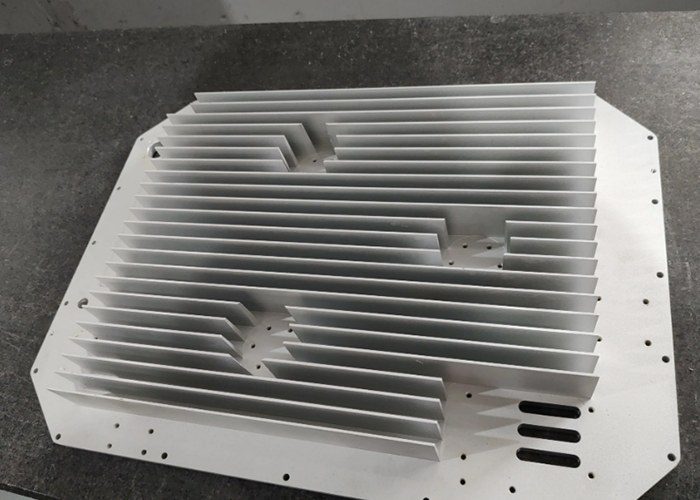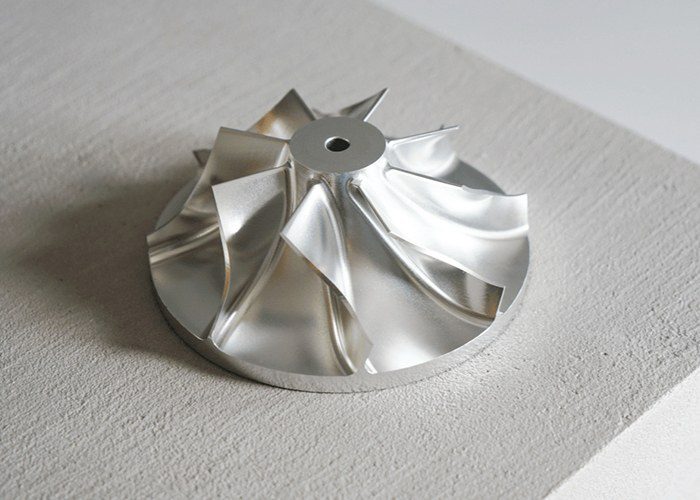
In the rapidly evolving landscape of precision manufacturing, the ability to produce complex components with exceptional accuracy and efficiency is paramount. Among the various CNC machining technologies available today, 4-axis milling has emerged as a powerful and versatile solution that bridges the gap between conventional 3-axis machining and the advanced capabilities of 5-axis systems. By adding a rotational axis to the standard linear movements, 4-axis milling services enable manufacturers to machine intricate geometries, reduce production time, and achieve tighter tolerances — all while maintaining cost-effectiveness.
Understanding 4-Axis CNC Milling
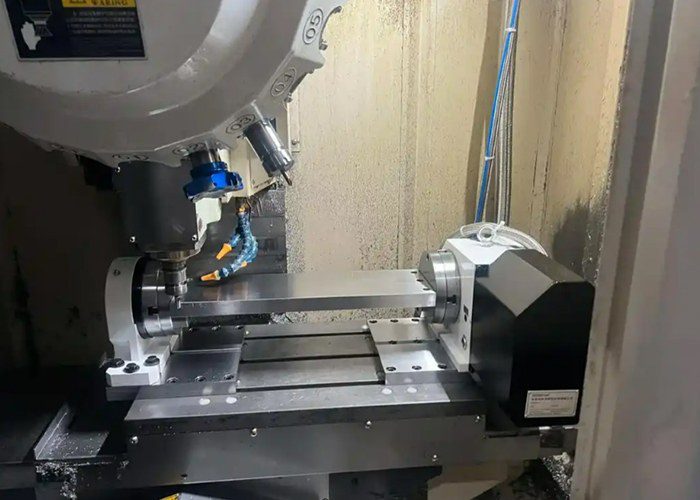
At its core, 4-axis CNC milling is a subtractive manufacturing process that moves a cutting tool and workpiece along four axes of motion. In addition to the standard X, Y, and Z linear axes, the system incorporates a fourth rotational axis—typically the A-axis—which rotates the workpiece about the X-axis. This additional degree of freedom is what sets 4-axis machining apart from conventional 3-axis setups. The workpiece is clamped in a rotary table or trunnion mounted on the machine bed, and the CNC controller can rotate this table to programmed angular positions, either locking it in place before cutting or keeping it in continuous motion while the spindle cuts.
This seemingly simple addition unlocks a new realm of manufacturing possibilities. With the ability to access multiple faces of a part in a single setup, 4-axis milling can produce helical and wrapped features, radial bolt patterns, off-axis cross-drilled fluid ports, and keyway flats on shafts — all without manual repositioning.
Two Modes of Operation: Indexed and Continuous
4-axis milling operates in two primary modes, each suited to different applications. The first is indexed 4-axis machining, commonly referred to as 3+1 milling. In this mode, the rotational axis serves as an indexer rather than a continuous cutting path. The machine rotates the workpiece to a predetermined angular position, locks it rigidly in place, and then executes standard 3-axis linear toolpaths. This approach is the most cost-effective configuration for complex, prismatic components with features distributed across multiple orthogonal or angular faces. By locking the rotational axis during heavy material removal, indexed machining maximizes setup rigidity, allowing for greater depths of cut and higher feed rates.
The second mode is continuous 4-axis machining, which keeps the A-axis interpolating in real time during the cut, coordinated with the X, Y, and Z axes simultaneously. This is essential for geometry that wraps around the part, such as cam lobes, helical flutes, spiral grooves, and similar features where the tool must follow a path that continuously changes in both angle and position. Continuous machining delivers superior surface finishes and is particularly valuable for cylindrical and rotationally symmetric components.
The Advantages Over 3-Axis Machining
The transition from 3-axis to 4-axis milling represents a significant leap in manufacturing capability. The primary advantage lies in the ability to produce intricate parts with greater accuracy and fewer setups, which is particularly beneficial for high-volume production and complex designs.
Fewer setups are perhaps the most immediate benefit. A 4-axis machine can machine multiple sides of a workpiece in a single clamping operation, eliminating the need for manual repositioning between operations. This not only saves significant time but also reduces labor costs and minimizes the risk of human error. Every setup consumes operator time, fixture preparation time, probing time, and inspection confirmation time — costs that accumulate rapidly in production environments.
Enhanced precision and accuracy follow naturally from reduced setups. By holding the part in a single fixture throughout the machining process, 4-axis milling maintains perfect alignment between features on multiple sides of the component. This eliminates cumulative re-fixturing errors and enables tighter inter-feature tolerances. Modern 4-axis systems can maintain positional accuracy within ±0.005 mm and achieve indexing precision of ±5 arc-seconds.
Superior surface finishes are another notable advantage. With the ability to rotate the workpiece and maintain optimal tool proximity, 4-axis milling produces smoother transitions and finer detailing. The consistent spindle speed and feed rate adjustments, combined with the rotational capability, result in surface quality that meets the demanding requirements of aerospace, automotive, and medical device manufacturing.
Greater efficiency and productivity translate directly into bottom-line savings. Reports indicate that 4-axis machining can improve processing efficiency by 30% or more compared to traditional 3-axis methods. Setup reductions of 60-70% are common, and while 4-axis machines may cost 30-40% more than their 3-axis counterparts, they increase productivity by 50-70% — with most shops recovering the investment within 18 months through reduced labor costs.
Materials and Applications Across Industries
4-axis milling services are remarkably versatile in terms of material compatibility. 4-axis machining delivers exceptional versatility, effortlessly cutting everything from soft plastics and engineering polymers to tough alloys like titanium, Inconel, and stainless steel to meet a broad spectrum of engineering demands. Common materials include aluminum alloys, carbon and alloy steels, copper, brass, nickel alloys, and various high-performance alloys used in demanding applications.
The applications of 4-axis milling span virtually every sector of advanced manufacturing. In aerospace, 4-axis machines produce turbine blades, engine housings, aircraft structural parts, and other components requiring high precision and intricate geometries. The automotive industry relies on 4-axis milling for engine blocks, cylinder heads, transmission components, camshafts, and valve bodies. In the medical device sector, 4-axis machining produces bone screws, surgical instruments, implants, and other cylindrical components with demanding tolerances. Additional applications extend to oil and gas components, marine equipment, defense systems, robotics, and industrial machinery.
The 4-Axis Milling Workflow
The journey from design to finished part follows a well-established workflow. A component is first designed using computer-aided design (CAD) software, which describes the part’s geometry, dimensions, tolerances, and features. Upon finalization of the CAD model, CAM software translates the digital geometry into a precise toolpath for execution by the 4-axis milling machine. CAM systems such as Mastercam, Fusion 360, or Siemens NX translate the 3D CAD model into coordinated axis movements, feed rates, spindle speeds, and tool changes. The workpiece is then securely mounted to the machine’s cutting table, appropriate cutting tools are set up, and the machining process commences.
Conclusion
4-axis milling services represent a strategic investment for manufacturers seeking to enhance their production capabilities. By combining the simplicity of 3-axis machining with the expanded capabilities of a rotational axis, 4-axis milling delivers the perfect balance of precision, efficiency, and cost-effectiveness for a wide range of applications. Whether producing prototypes or high-volume production runs, components for aerospace or medical devices, parts from aluminum or titanium, 4-axis CNC milling offers the flexibility and accuracy that modern manufacturing demands. As industrial products continue to grow in complexity, the fourth axis will remain an indispensable tool in the precision machining arsenal.