
In the vast ecosystem of modern manufacturing, few processes command as much respect and deliver as much value as precision CNC milling. The creation of precision CNC milling metal parts is not merely a production method; it is a discipline that marries cutting-edge software engineering with the physical laws of metallurgy and mechanics. As industries from aerospace to medical devices push the boundaries of what is possible, the demand for complex, high-tolerance, and reliable metal components has never been greater. Grasping the nuances of this process is critical for durable goods supply chain professionals, underscoring why CNC milling endures as the gold standard for both prototyping and mass production.
The Core of the Process: From Digital to Physical
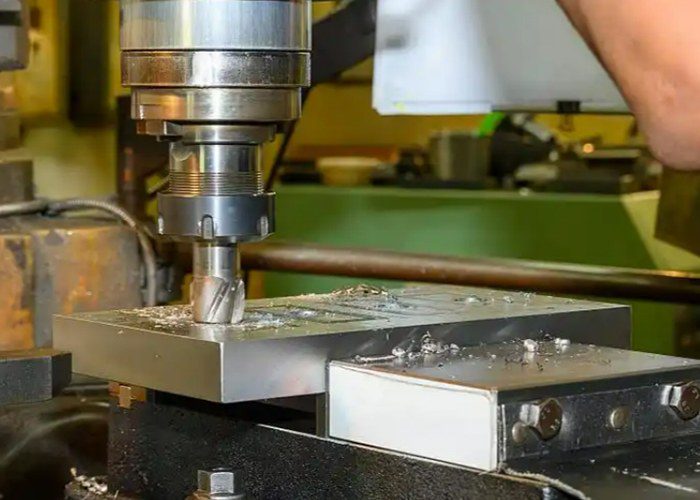
At its heart, CNC—or Computer Numerical Control—milling is a subtractive manufacturing process. Unlike 3D printing, which builds parts layer by layer, CNC milling begins with a solid block of material and removes metal to achieve the final geometry. This distinction is critical. The process is driven by highly sophisticated CAD (Computer-Aided Design) and CAM (Computer-Aided Manufacturing) software. Engineers translate their designs into a language known as G-code, which directs the machine’s spindles, axes, and cutting tools with microscopic precision.
Modern CNC milling centers often operate with five or more axes. While standard 3-axis machining moves the tool along the X, Y, and Z planes, 5-axis machining adds rotational movement, allowing the tool to approach the workpiece from almost any direction. This capability enables the production of intricate geometries, such as turbine blades, prosthetic joints, and complex mold cavities, in a single setup. Reducing setups saves time and significantly enhances part accuracy by eliminating the risk of misalignment between operations.
The Precision Imperative: Tolerances and Surface Finishes
The “precision” in precision CNC milling metal parts is quantified by tolerances. While standard machining might hold a tolerance of a few thousandths of an inch (0.005″), high-precision milling routinely achieves tolerances of ±0.0001 inches (0.00254 mm) or tighter. This level of accuracy is not just a marketing boast; it is a functional necessity. In the aerospace sector, a component that is a fraction of a millimeter out of spec can cause harmonic imbalances in a jet engine. In the medical field, the threads of a bone screw must fit exactly to ensure the structural integrity of an implant.
Surface finish is another critical metric often overlooked. A rough finish can lead to premature fatigue and failure due to stress concentrations. Precision milling utilizes specialized tool paths, high spindle speeds, and refined feeds to produce surfaces that often rival grinding operations. This reduces or eliminates the need for secondary finishing processes, streamlining the production cycle and reducing costs.
Material Science and Tooling Dynamics
The creation of precision metal parts is heavily dependent on the interplay between the cutting tool and the workpiece material. CNC milling is capable of processing a diverse range of metals, from soft aluminum alloys used in electronics housing to the “superalloys” like Inconel and Titanium used in extreme environments.
Machining hard metals presents significant challenges. As the material becomes tougher, the strain on the cutting tool increases exponentially. This is where tooling dynamics and coatings come into play. Modern carbide or polycrystalline diamond (PCD) tools are coated with substances like Titanium Aluminum Nitride (TiAlN) to dissipate heat and prolong tool life. Spindle speed, feed rate, and depth of cut are critical parameters that demand mathematically rigorous calculation. Cutting too fast can melt the tool; cutting too slow leads to “work hardening” in materials like stainless steel, where the surface of the part becomes harder than the tool itself, ruining the workpiece. This delicate balance is what separates a skilled CNC machinist from an operator; it is a craft that requires an understanding of thermal dynamics and fracture mechanics.
Quality Assurance: The Gatekeeper of Excellence
Given the high cost of materials and the critical nature of the components, rigorous quality control (QC) is non-negotiable. The production of precision CNC milling metal parts involves continuous monitoring. On the shop floor, operators use precision measuring instruments like micrometers, calipers, and bore gauges to verify dimensions in real-time.
Post-production, the stakes are raised. Coordinate Measuring Machines (CMMs) use a probe to scan the physical part against the digital CAD model, checking every feature and datum point. For more complex surface profiles, optical comparators and laser scanners ensure that the part meets the strict geometrical dimensioning and tolerancing (GD&T) standards. The final stage often involves non-destructive testing (NDT). X-ray fluorescence (XRF) ensures the material composition is correct, while dye penetrant or magnetic particle inspections check for micro-cracks that are invisible to the naked eye. Every part that leaves a reputable CNC shop carries with it a trail of documented data, ensuring full traceability.
The Competitive Edge: Speed, Automation, and Cost
While the initial setup for CNC milling—including programming and fixturing—can be time-consuming, the process excels in scalability. Once the “first article” is approved, modern mills can run lights-out manufacturing. With automated pallet changers and robotic loaders, these machines can operate 24/7, with minimal human intervention. This high uptime drives down the unit cost of production, making CNC milling cost-competitive even against casting or forging for moderate production runs.
Furthermore, the agility of CNC milling allows for rapid design iteration. In the fast-paced world of research and development, the ability to have a functional prototype in hand within days allows engineers to test form, fit, and function quickly, significantly reducing the time-to-market for new products.
The Future: Smart Manufacturing and AI
As we look to the future, precision CNC milling is evolving through the integration of Industry 4.0. Smart sensors now monitor vibration, temperature, and spindle load in real-time. This data is fed into AI algorithms that can predict tool wear and automatically adjust feeds and speeds to compensate for deflection, ensuring the part remains in tolerance even as the tool degrades.
In an era focused on sustainability, precision machining also offers environmental benefits. By using near-net-shape blanks and optimizing tool paths to reduce scrap, manufacturers minimize waste. The high accuracy of the process reduces the consumption of lubricants and coolants, while the energy efficiency of modern servo motors lowers the carbon footprint compared to older, hydraulic-driven machines.
In conclusion, the production of precision CNC milling metal parts represents the zenith of industrial capability. It combines the rigor of computer science, the physics of material deformation, and the art of craftsmanship. Whether it is a tiny connector for a smartphone or a massive housing for an oil pipeline, the reliability, accuracy, and complexity of these parts form the silent backbone of the modern world. As technology continues to advance, CNC milling will undoubtedly remain the cornerstone of manufacturing—evolving, optimizing, and pushing the limits of what we can build.


