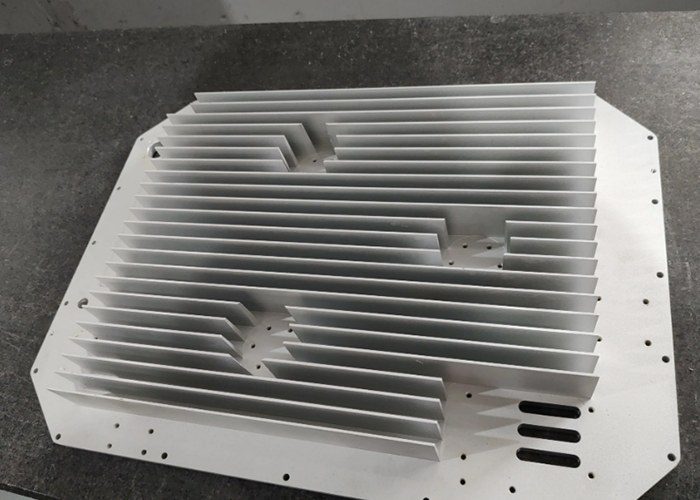
Across the modern manufacturing sector, few technologies have been as profoundly transformative as CNC machining. Among its most vital applications, CNC milling and turning stand as the twin pillars of precision industrial parts production. From aerospace components to medical implants, automotive drivetrains to hydraulic systems, these subtractive manufacturing processes continue to shape the physical world with unmatched accuracy, repeatability, and efficiency. This article explores the principles, capabilities, materials, and evolving role of CNC milling and turning in producing high-quality industrial parts.
Understanding the Core Processes
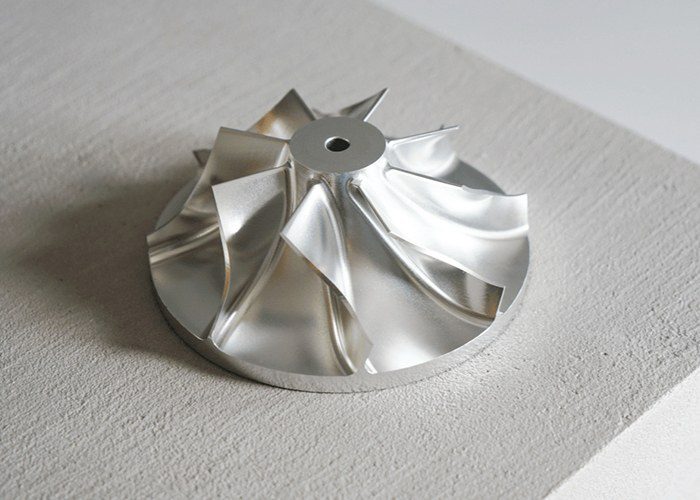
CNC milling is a subtractive process in which rotating multi-point cutters machine material away from a securely clamped, stationary workpiece. The cutting head moves along multiple axes—typically three to five—allowing complex geometries such as slots, pockets, threads, and contoured surfaces to be machined. Vertical and horizontal milling machines each offer distinct advantages, with 5-axis systems enabling the production of parts with undercuts and compound angles in a single setup. This capability is indispensable for industries like aerospace, where impellers and turbine blades demand organic, freeform surfaces.
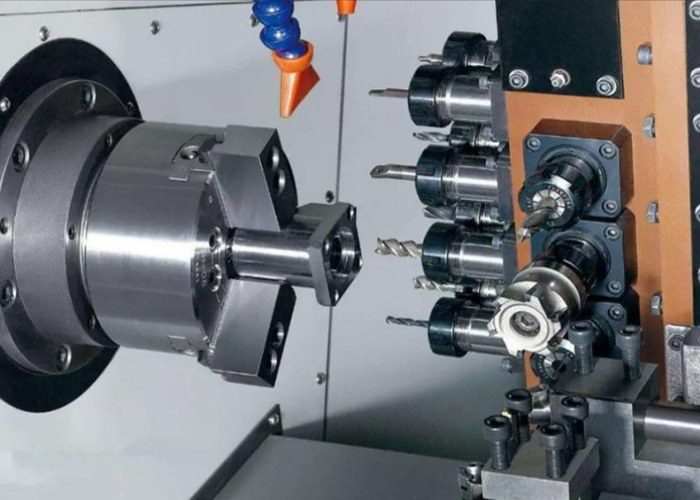
CNC turning, on the other hand, rotates the workpiece against a single-point cutting tool. It excels at producing cylindrical, conical, and spherical profiles—think shafts, bushings, pulses, and valve bodies. Modern CNC lathes with live tooling and Y-axis capability blur the traditional line between milling and turning, allowing milling operations such as cross-drilling and keyway cutting to be performed without transferring the workpiece to a second machine. This combined approach reduces handling errors and accelerates production cycles.
Materials and Applications
Industrial parts are demanded across a vast spectrum of materials. Aluminum alloys are favored for their lightweight and machinability, used extensively in automotive and electronics enclosures. Stainless steel and titanium offer superior strength and corrosion resistance, making them ideal for medical instruments and aerospace structural components. Engineering plastics like PEEK, acetal, and nylon are also machined for bearing and seal applications, particularly where weight reduction and chemical inertness are priorities.
High-temperature superalloys such as Inconel and Monel present considerable challenges due to their work-hardening tendencies, yet CNC milling and turning, with appropriate tooling and cooling strategies, produce critical components for gas turbines and nuclear reactors. The adaptability of CNC processes to such a wide material range underscores their irreplaceable position in industrial supply chains.
The Advantages of Precision and Repeatability
Industrial manufacturing tolerances are shrinking. Today, many CNC machining centers can hold dimensions within ±0.005 mm, with some ultra-precision systems reaching sub-micron levels. This precision is not an accident—it results from closed-loop feedback systems, thermal compensation, and high-rigidity machine construction. Equally important is repeatability: once a program is validated, the thousandth part will be identical to the first. This consistency is crucial for assemblies that rely on interchangeability, such as hydraulic valve stacks or bearing housings in gearboxes.
Technological Advancements Shaping the Field
The field is undergoing rapid evolution. High-speed machining (HSM) combined with advanced tool coatings enables faster metal removal while maintaining surface finishes below 0.4 µm Ra—often eliminating secondary finishing operations. The integration of in-process probing and adaptive control allows machines to automatically compensate for tool wear and thermal drift, ensuring part quality even during long production runs.
Digitalization is another frontier. CNC machines are increasingly connected to IIoT platforms, enabling real-time monitoring of spindle loads, vibration, and coolant temperature. Predictive analytics can flag anomalies before they result in scrap, while cloud-based CAM software allows engineers to simulate toolpaths and detect collisions virtually. These capabilities reduce setup time, tool breakage, and material waste, contributing to lean manufacturing goals.
Cost, Lead Time, and Scalability
While CNC milling and turning require higher initial investment than manual machining, the total cost of ownership is often lower for mid-to-high volume production. Setup times have been drastically reduced through quick-change workholding and standardized tooling systems. For prototypes and low-volume orders, CNC machining remains highly competitive due to minimal tooling costs compared to injection molding or casting. Lead times can be compressed to days rather than weeks, a critical advantage in today’s fast-paced markets where product lifecycles are shortening.
Quality Assurance and Compliance
Industrial parts often serve safety-critical functions, so quality assurance is non-negotiable. CNC machining facilitates statistical process control by generating automated inspection data. Coordinate measuring machines (CMMs) can be programmed to verify critical dimensions, with results fed back into the production loop. Many facilities now achieve ISO 9001 and AS9100 certifications, demonstrating robust traceability from raw material certification to final inspection reports. This documentation provides end-users with confidence in component integrity.
Sustainability and the Future
Sustainability considerations are increasingly influencing manufacturing decisions. CNC milling and turning produce metal chips that are readily recyclable, and advanced coolant filtration systems extend fluid life while reducing disposal impacts. The shift toward near-net-shape preforms, such as forged or cast blanks, reduces machining stock and energy consumption. Additionally, the rise of additive manufacturing does not diminish the importance of CNC processes; rather, they are often complementary, with 3D-printed near-net shapes being finished to final dimensions via CNC machining.
Looking ahead, artificial intelligence and machine learning will likely optimize cutting parameters in real-time, adapting to material variations and tool conditions. Hybrid machines combining additive and subtractive capabilities on a single platform are already emerging, offering unprecedented design freedom. However, the fundamental principles of CNC milling and turning—removing material precisely and economically—will remain indispensable for the foreseeable future.
Conclusion
CNC milling and turning represent more than production methods; they are enablers of modern engineering. Their ability to produce industrial parts with exceptional accuracy, from lightweight aluminum housings to heat-resistant superalloy discs, keeps global industries moving. As technology continues to evolve, these processes will integrate deeper into the digital manufacturing ecosystem, becoming smarter, faster, and more sustainable. For any engineer, procurement specialist, or manufacturer, understanding the capabilities and nuances of CNC milling and turning is not merely beneficial—it is essential to maintaining competitive advantage in a precision-driven world.