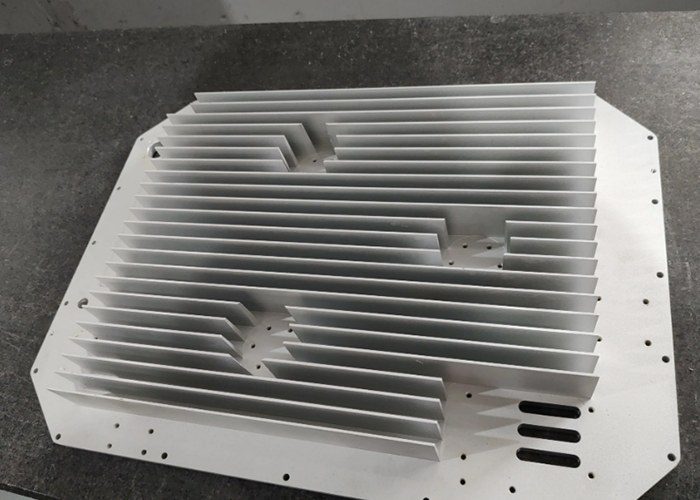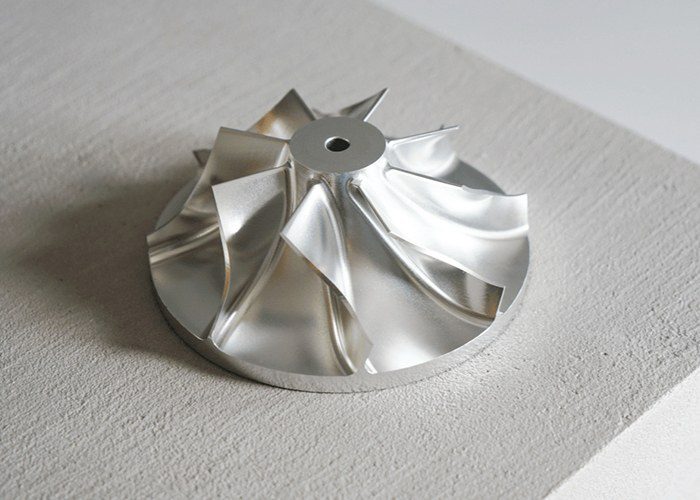
In the high-stakes world of automotive manufacturing, precision is not merely a technical specification—it is a matter of performance, safety, and survival. Modern vehicles contain up to 30,000 components, and a significant portion of these require tolerances so tight that only computer numerical control (CNC) machining can consistently deliver. Custom CNC machining has emerged as the indispensable backbone of automotive parts production, bridging the gap between conceptual design and high-performance reality across everything from prototype validation to full-scale series manufacturing.
The Foundation: Precision Engineering
At its core, custom CNC machining is a subtractive manufacturing process in which pre-programmed computer software dictates the movement of cutting tools to remove material from a solid billet—whether metal, plastic, or composite—to produce a part with extraordinary precision. The technology, refined over six decades, remains a cornerstone of modern manufacturing because of its unmatched ability to achieve extremely tight tolerances, often in the range of ±0.005 mm or even less. For critical automotive components such as engine blocks, cylinder heads, and transmission housings, this level of precision ensures proper fitment, optimal performance, and long-term reliability. Key engine components like main bearing journals demand tolerances of ±0.005 mm, while crankpin journals require ±0.008 mm—specifications that directly influence engine balance, vibration reduction, and service life.
Versatility in Materials and Applications
One of the defining strengths of custom CNC machining lies in its remarkable material versatility. Modern CNC operations can process over 50 material options, encompassing a wide spectrum of metals and engineering plastics. Aluminum alloys such as 6061 and 7075 are favored for their excellent strength-to-weight ratio and machinability, making them ideal for lightweight structural components, engine brackets, and suspension parts. Stainless steel and alloy steel provide the durability and heat resistance required for high-stress applications like exhaust manifolds and drivetrain components. For the most demanding environments—racing, aerospace-grade automotive applications—titanium and exotic alloys deliver superior strength and corrosion resistance.
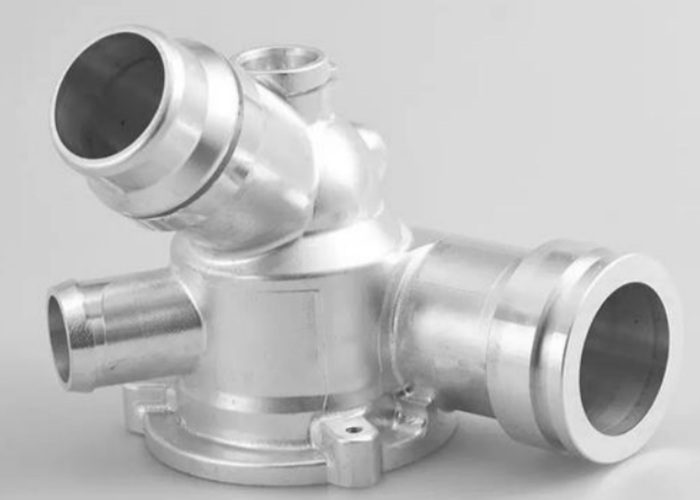
The applications of custom CNC machining span virtually every subsystem of a vehicle. In the engine bay, machined components include custom intake manifolds, throttle bodies, turbocharger housings, valve covers, and pulley systems. The drivetrain relies on CNC-machined gears, shafts, differential covers, and transmission housings. Suspension and braking systems benefit from aluminum control arms, knuckles, coilover components, and lightweight brake caliper brackets. Even aesthetic and interior components—custom grilles, emblems, pedal sets, and gear shift knobs—are increasingly produced through CNC machining.
Rapid Prototyping and Development Acceleration
The role of custom CNC machining extends well beyond production. In an industry characterized by ever-shortening development cycles, CNC technology enables engineers to transform CAD models into functional prototypes in days rather than weeks. Rapid prototyping accelerates the design cycle, enabling teams to iterate faster, validate real-world performance, and catch flaws early—bypassing the steep costs of production tooling. Studies indicate that 65% of electric vehicle prototype parts now rely on 5-axis CNC machining, underscoring its critical role in developing complex components such as inverters and gear housings. For motorsports and performance applications—where there is no room for error—racing teams routinely turn to CNC machining for one-off or low-volume parts that optimize performance and reduce weight.
Quality Control and Industry Standards
In automotive manufacturing, quality control is not a box to be checked—it is the foundation upon which every part is built. Automotive suppliers are generally required to hold IATF 16949 certification, which entails documented control plans, statistical process data, and full material traceability across all production tiers. In-process measurement has become the standard that separates reliable suppliers from the rest; verifying dimensions mid-production catches drift early, reduces scrap, and prevents out-of-spec parts from advancing further down the line. The consequences of deviation are severe: a single process drift in the machining workflow can contaminate an entire production run before anyone catches it.
The Electric Vehicle Revolution and Future Trends
The automotive industry’s transformation toward electrification is reshaping CNC machining demands in profound ways. While internal combustion engines will not disappear overnight, production focus is shifting decisively toward electric motors, battery housings, and power electronics. Battery housings require precise machining of large-area lightweight structures, while electric motor components—housings, stator casings, rotor shafts, and gearboxes—demand the tight tolerances and thermal management capabilities that only CNC machining can provide. The global market for automotive parts CNC machining services was estimated at US$8.3 billion in 2025 and is projected to reach nearly US$11 billion by 2032, reflecting a compound annual growth rate of approximately 4.1%.
Emerging technologies are poised to redefine our current limitations. Hybrid additive-subtractive manufacturing—combining 3D printing with CNC precision—enables the production of lightweight lattice structures and optimized cooling channels impossible to achieve through traditional methods alone. Artificial intelligence-driven process optimization and predictive maintenance are reducing programming time by up to 50% while improving surface finish and tool life.
Conclusion
Custom CNC machining has evolved from a manufacturing technique into a strategic enabler of automotive innovation. It delivers the exceptional strength, unmatched precision, and material integrity that safety-critical components demand. It accelerates development cycles through rapid prototyping. It adapts seamlessly to the industry’s most transformative shift in a century—the transition to electric mobility. As vehicles become lighter, more efficient, and more technologically sophisticated, the role of custom CNC machining will only grow in importance. In an industry where precision is performance and quality is safety, CNC machining is not just a process—it is the standard by which automotive excellence is measured.