
In an era defined by technological convergence and unprecedented demand for accuracy, Precision CNC Machining Services have emerged as the indispensable backbone of modern manufacturing. From the turbine blades that power commercial aircraft to the surgical instruments that save lives, precision CNC machining transforms digital designs into physical realities with a level of fidelity that was unimaginable just decades ago. As industries push the boundaries of what is possible, the role of precision machining continues to expand, driven by advances in automation, artificial intelligence, and hybrid manufacturing technologies.
Defining Precision in CNC Machining
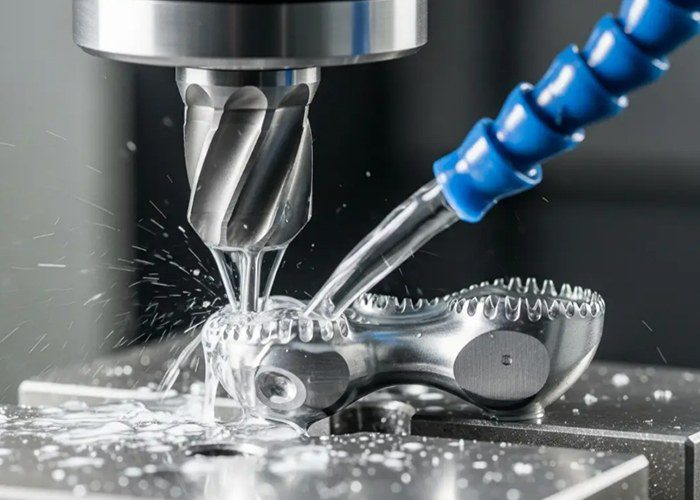
Precision CNC (Computer Numerical Control) machining refers to the use of computer-controlled machines to produce highly accurate and detailed parts from materials such as metals, plastics, and composites. While standard CNC machining typically achieves tolerances of approximately 0.12 to 0.2 millimeters, precision machining elevates this standard considerably, achieving tolerances as close as 0.0001 inches (0.0025 millimeters). To a CNC specialist, precision isn’t a slogan; it is the rigorous standard of consistently holding tolerances to within 0.01 mm—and beyond.
Achieving this level of accuracy requires far more than high-end equipment. It necessitates a comprehensive grasp of thermal behavior, tool deflection mechanics, and material-induced harmonics.. Machine rigidity and tooling quality form the foundation of the system; a rigid machine frame dampens vibrations that cause “chatter,” while high-quality tools resist deflection to ensure the cutting edge remains exactly on the programmed path. Even the most rigid machine, however, cannot overcome poor thermal stability. Because metals expand and contract with temperature shifts, a workshop without climate control introduces constant dimensional drift—a change of just a few degrees can cause a part to expand beyond its specified limits.
Market Growth and Global Significance
The global Precision CNC Machining Service market reflects the technology’s growing importance. Estimated at USD 3,581 million in 2025, the market is projected to grow at a compound annual growth rate of 8.10% during the forecast period. The broader CNC metal cutting service market was valued at USD 52,723 million in 2024 and is expected to reach USD 88,649 million by 2031, growing at a CAGR of 7.7%. This expansion is fueled by increasing demand for high-precision components across aerospace, automotive, medical, and electronics industries, where reliability and precision are critical.
Core Capabilities and Technologies
Precision CNC machining services encompass a range of processes, including CNC turning for cylindrical and rotational components such as shafts and pins, CNC milling for flat, contoured, and multi-feature components, CNC drilling, and increasingly, multi-axis machining. Five-axis machining, in particular, has shed its reputation as a costly niche capability and is becoming accessible to mid-sized job shops. By 2026, five-axis machines are expected to account for over 35% of new CNC lathe and machining center purchases. The efficiency gains are dramatic: a single five-axis setup can often replace three separate three-axis operations, reducing cycle time by 40-60% while improving surface finish and eliminating positional errors.
Applications Across Critical Industries
The applications of precision CNC machining span virtually every sector of advanced manufacturing. In aerospace, the technology ensures safety and performance in turbine blades, structural parts, and avionics components. The ability to machine high-strength, difficult-to-process materials with exacting tolerances is essential for maintaining safety and performance in flight. In the medical device sector, custom implants, surgical instruments, and diagnostic equipment rely on ultra-precise machining to meet strict ISO and FDA standards. CNC machining remains essential to achieving the tight tolerances, polished surface finishes, and accuracy required for customized medical components. The automotive industry depends on precision machining for engine housings, transmission components, and EV battery casings, where consistent quality and high-volume production are paramount. Advanced CNC Swiss machines allow multiple machining operations—turning, milling, threading, and drilling—to occur simultaneously, streamlining production while maintaining tight dimensional control.
The 2026 Transformation: Intelligence, Integration, and Sustainability
As the industry moves toward 2026, precision CNC machining is being reshaped by several transformative trends. AI-native machining is moving beyond the pilot phase to become a cornerstone of everyday machine operations. AI-driven systems use real-time sensor feedback to adjust feeds, speeds, and toolpaths automatically, responding to vibration, load, or temperature changes as they happen. The outcomes include superior surface uniformity, diminished tool wear, and a marked reduction in production interruptions. Digital twins—once a buzzword for simulation—are maturing into living ecosystems that mirror the entire machining process, integrating design, process engineering, machining, and inspection into continuously updated models. Virtual commissioning, clash detection, and kinematic validation are now completed entirely in the digital realm, long before a single physical chip is cut. Hybrid manufacturing, which combines additive metal deposition with CNC cutting on a single platform, is gaining traction in aerospace, energy, and medical sectors, solving long-standing challenges of material waste and complex geometry. Sustainability is also becoming a core metric, with advanced CNC machining services optimizing resource utilization by reducing material scrap rates by up to 30%. Factories are adopting robot-assisted production lines, digital twin technology, and AI-driven inspection systems to reduce costs and enhance efficiency.
Quality Assurance and Process Control
Quality control in precision machining extends far beyond final inspection. Success in high-precision machining requires commitment, discipline, and an extensive range of high-quality machine tools and inspection equipment. Modern facilities employ automated optical inspection systems, coordinate measuring machines, and in-process probing to verify conformance to specifications throughout the production cycle. Geometric Dimensioning and Tolerancing (GD&T) ensures that features such as holes and bores are not just the right size but are also perfectly aligned and oriented relative to the rest of the part.
Conclusion
Precision CNC Machining Services stand at the intersection of digital innovation and physical production. As industries continue to demand lighter, stronger, and more complex components, the precision machining sector will remain a vital backbone of global supply chains. Providers that combine technical expertise, material versatility, and international service capabilities will secure a competitive edge in this fast-evolving market. Tomorrow’s winners turn every machine cycle into a data loop—instantly captured, intelligently analyzed, and actively used to optimize the next run. In a world where precision is not just a requirement but a competitive advantage, Precision CNC Machining Services are not merely a manufacturing capability—they are the foundation upon which the future of industry is being built.


