
In the rapidly evolving landscape of modern manufacturing, the demand for complex geometries, tighter tolerances, and faster production cycles has never been greater. At the forefront of this technological revolution stands 5-axis CNC milling machining—a process that has fundamentally reinvented the way manufacturers approach precision component production. What was once considered a high-end technique reserved for the most demanding aerospace applications has now become almost industry-standard, delivering cost reductions, superior precision, and enhanced production capabilities across a wide range of sectors.
Understanding 5-Axis CNC Milling
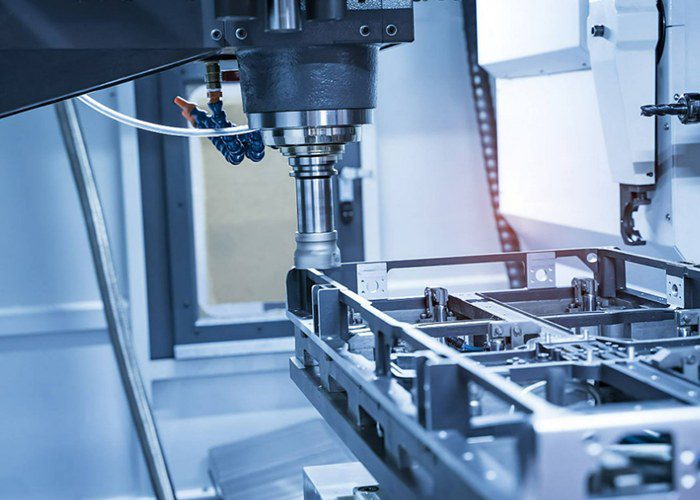
At its core, a 5-axis milling machine is a type of CNC system that moves a cutting tool or workpiece along five different axes simultaneously. While conventional 3-axis machines operate along three linear axes—X (left-right), Y (front-back), and Z (up-down)—5-axis machining adds two rotational axes, typically designated as A, B, or C. Axis A revolves around X, axis B around Y, and axis C around Z. This configuration allows the cutting tool to approach the workpiece from virtually any direction, making it possible to machine complex contours, undercuts, and curved surfaces in a single operation.
There are three primary machine configurations in 5-axis milling: table-table, head-head, and head-table. In table-table machines, the workpiece rotates around the cutting tool via two rotary tables. Head-head machines instead use the spindle head to perform all rotary and pivoting motions while the workpiece remains stationary. Head-table configurations combine both approaches, with some rotational motions executed by the table and others by the articulating spindle head. Each configuration offers distinct advantages depending on the size, weight, and complexity of the parts being machined.
The Distinction Between 3+2 and Simultaneous 5-Axis
It is important to distinguish between 3+2 (positional) machining and true simultaneous 5-axis milling. In 3+2 machining, the rotational axes lock into position, after which conventional 3-axis machining takes place—ideal for angled holes and multi-side features with fewer setups. True 5-axis simultaneous machining, however, involves the interpolation of all five axes moving together continuously. As one rotary axis rotates, the orientation of the linear axes is continuously adjusted, enabling the machining of randomly shaped free-form surfaces. This capability, developed in the early 1990s, was a revolution that still sets standards in manufacturing today.
Key Advantages Over Traditional Machining
The benefits of 5-axis milling are transformative. First and foremost is the dramatic reduction in setups. Complex parts that would typically demand multiple repositioning steps on a 3-axis machine can instead be completed in a single clamping. Each additional setup introduces incremental time and risk, and the compounding effect of these factors often exceeds what program managers anticipate. By eliminating the need for manual repositioning, 5-axis machining not only reduces cycle times but also eliminates the cumulative alignment errors that arise from multiple setups.
The single-setup capability also enables part consolidation. Designers are no longer constrained by the limitations of 3-axis machining; instead of machining separate components and assembling or welding them, complex parts can be produced as a single item, reducing weight and increasing structural integrity.
Precision is another major advantage. By maintaining optimal tool engagement and reducing manual intervention, 5-axis systems minimize tolerance stack-up and maintain accuracy across multiple surfaces. The ability to use shorter, more rigid cutting tools—freed from the need to reach deep into pockets—results in less deflection under cutting loads, superior surface finishes, and extended tool life.
Applications Across Critical Industries
5-axis CNC milling has become indispensable across industries where complex geometries, tight tolerances, and high performance are non-negotiable. In aerospace, it enables the production of complex turbine blades, structural components, and intricate airframe parts. The medical sector relies on 5-axis machining for implants, surgical instruments, and patient-specific devices machined directly from CT scan data. Automotive manufacturers use it for engine components, mold tooling, and prototypes. Energy sector applications include impellers, valves, and specialized components for oil, gas, and renewable energy systems. The technology is equally vital in mold and die making, where free-form surfaces and complex contours are the norm.
The Software Behind the Machine
Modern 5-axis machining relies just as heavily on advanced CAM software as it does on machine hardware. Generating 5-axis toolpaths demands advanced programming logic, robust collision avoidance, adaptive machining strategies, and exacting regulation of cutter engagement.. While this represents a higher level of complexity than 3-axis programming, modern CAM systems have made the technology increasingly accessible, even for smaller shops.
Challenges and Considerations
Despite its numerous advantages, 5-axis machining does present challenges. The machines themselves involve significant upfront investment, and the programming demands are substantially greater than those of 3-axis systems. The increased range of motion also raises the risk of tool or fixture collisions, making simulation and verification essential. Furthermore, operating these advanced systems effectively requires highly trained personnel—a consideration for shops with limited expertise.
The Future of 5-Axis Machining
The trajectory of 5-axis technology points toward even wider adoption. In 2026, five-axis machines are expected to account for over 35% of new CNC lathe and machining center purchases. A single five-axis setup can replace three separate three-axis operations, reducing cycle time by 40-60% while improving surface finish and eliminating positional errors. The global market for 5-axis CNC machining centers, valued at USD 3.45 billion in 2025, is projected to reach USD 5.64 billion by 2032. Automation integration—including robotic part handling, pallet pool systems, and lights-out machining—is increasingly being paired with 5-axis capabilities to further enhance productivity and reduce labor dependency.
Conclusion
5-axis CNC milling represents a fundamental shift in precision manufacturing. By enabling complex geometries to be machined in a single setup with superior accuracy and surface finish, it has liberated designers from the constraints of traditional manufacturing methods and empowered engineers to create parts that more closely align with design intent. As the technology continues to evolve—driven by advances in CAM software, automation, and machine design—5-axis machining is cementing its position not as a niche capability but as an essential foundation of modern manufacturing. For manufacturers seeking to remain competitive in an increasingly demanding global market, embracing 5-axis CNC milling is no longer a question of if, but when.


